Tower Hamlets is one of East London’s most historically layered boroughs. It stretches from the City of London and Tower of London in the west to the Queen Elizabeth Olympic Park area and Three Mills in the east, with the River Thames forming its southern edge. The borough combines medieval landmarks, Georgian streets, Victorian markets, former docks, canals, parks, museums, galleries and modern business districts.
- Why is Tower Hamlets an important destination for tourists in East London?
- Which historic streets should you explore in Tower Hamlets?
- What makes Spitalfields and Brick Lane important historic areas?
- Which markets are best for experiencing traditional East London?
- How can you experience Tower Hamlets’ maritime and docklands heritage?
- What modern attractions should you visit in Canary Wharf?
- Which museums and cultural attractions explain Tower Hamlets’ history?
- Where can you find green spaces and outdoor attractions in Tower Hamlets?
- How can visitors understand Tower Hamlets’ diverse cultural history?
- How should you plan a historic Tower Hamlets walking route?
- How can digital nomads and business travellers use Tower Hamlets during downtime?
- What makes Tower Hamlets different from other London tourist areas?
- Why is Tower Hamlets heritage still relevant to modern London?
- What is the best way to experience Tower Hamlets as a visitor?
For visitors, Tower Hamlets offers a concentrated introduction to London’s East End. Historic areas such as Whitechapel, Spitalfields, Wapping, Stepney, Limehouse and Bethnal Green sit alongside contemporary destinations including Canary Wharf. Markets remain central to the local identity, while museums and cultural venues explain the borough’s industrial, maritime and migration history.
The borough also contains an unusually strong concentration of protected heritage. Tower Hamlets Council currently identifies 58 conservation areas, covering places including Brick Lane and Fournier Street, Artillery Passage, Narrow Street, Wapping Pierhead, Stepney Green, Roman Road Market, Whitechapel Market and West India Dock.
Why is Tower Hamlets an important destination for tourists in East London?
Tower Hamlets is a major East London destination because it combines royal heritage, historic neighbourhoods, traditional markets, docklands, museums, parks, cultural venues and modern architecture within a compact London borough. Visitors can experience centuries of urban development across relatively short distances.
The borough’s geographical position explains much of its importance. Its western edge borders the historic City of London, while the River Thames provides a southern route through Wapping, Limehouse, the Isle of Dogs and Canary Wharf.
The area developed through several major phases. Medieval settlement expanded beyond the City walls. Later, docks transformed the riverside into an international trading centre. Industrialisation created dense working-class neighbourhoods, markets and rail connections. Migration added new languages, religions, cuisines and businesses. Contemporary redevelopment then transformed former industrial land into offices, residential districts and cultural spaces.
This history remains visible in the street pattern. Narrow lanes around Spitalfields contrast with broad commercial roads such as Whitechapel Road. Georgian terraces stand near Victorian railway infrastructure. Former dock warehouses sit beside glass office towers.
Tower Hamlets therefore works particularly well for visitors interested in urban history. A single day can include medieval royal architecture, eighteenth-century streets, nineteenth-century markets, twentieth-century migration history and twenty-first-century business districts.
Which historic streets should you explore in Tower Hamlets?
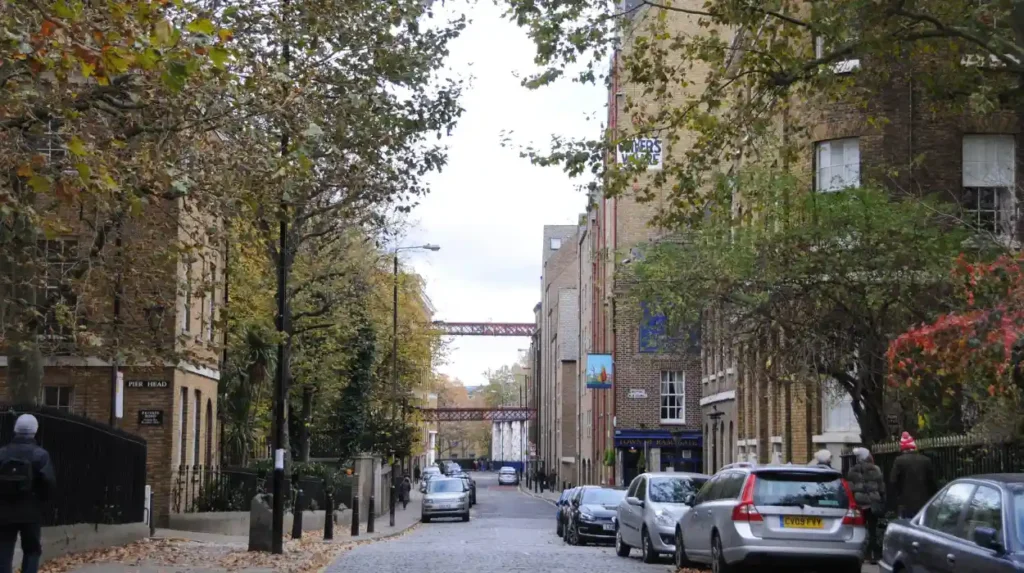
The strongest historic streets for visitors include Fournier Street, Princelet Street, Artillery Passage, Narrow Street, Wapping Wall, Commercial Street, Whitechapel Road and selected streets around Stepney Green, each revealing a different period of East London’s development.
Fournier Street is one of the most recognisable historic streets in Spitalfields. Its eighteenth-century houses reflect the planned residential development that accompanied the growth of the area. The street sits beside Christ Church Spitalfields, designed by Nicholas Hawksmoor and completed in 1729. Tower Hamlets describes the church as one of England’s finest Baroque churches.
Princelet Street provides another important example of historic Spitalfields. Together with nearby streets, it preserves the narrow urban grain associated with the area’s seventeenth- and eighteenth-century development.
Artillery Passage provides a different experience. Its narrow route retains the scale of an older pedestrian street close to the City. It is particularly useful for visitors walking between the City, Spitalfields and Brick Lane.
Commercial Street forms a larger route through Spitalfields. It connects historic buildings and markets with contemporary shops, restaurants and offices.
Whitechapel Road is one of the borough’s major historic commercial routes. Its development accelerated during the eighteenth and nineteenth centuries as London expanded eastwards. The surrounding district became associated with successive immigrant communities and working-class industries. Tower Hamlets’ historical character study records settlement along Whitechapel Road from the eighteenth century and substantial urban growth connected with the docks.
Wapping offers a riverside interpretation of the borough. Narrow Street and Wapping Wall preserve connections with the former docklands and maritime economy. The streets are especially useful for visitors who want to understand how the Thames shaped employment, housing and trade.
As you explore these modern visitor routes, you are crossing land with a deep heritage. Read about the full to understand its origins.
What makes Spitalfields and Brick Lane important historic areas?
Spitalfields and Brick Lane combine protected eighteenth-century architecture, historic markets, religious buildings, former industrial premises, street art and independent businesses. Their significance comes from continuous change, with Huguenot, Jewish, Bangladeshi and other communities shaping the district.
Spitalfields developed rapidly from the seventeenth century. Huguenot refugees settled in the district, contributing to textile production and specialist trades. The built environment retains evidence of this period through terraces, workshops, churches and commercial buildings.
Later Jewish communities established businesses and institutions in the area. During the twentieth century, Bangladeshi migration transformed Brick Lane and surrounding streets. Restaurants, textile businesses, grocery shops, cultural organisations and religious institutions became important parts of the local economy.
Brick Lane Jamme Masjid is a notable example of the district’s changing religious history. The building has served different religious communities during its history, reflecting the changing population of Spitalfields.
Tower Hamlets Council’s cultural trail identifies 20 sites around Brick Lane and Spitalfields. These include Boundary Estate, Redchurch Street, Brick Lane Sunday Market, Sclater Street, Old Truman Brewery, Princelet Street, Brick Lane Jamme Masjid, Christ Church Spitalfields, Old Spitalfields Market, Fournier Street, Whitechapel Art Gallery, Altab Ali Park and Toynbee Hall.
The area therefore functions as an open-air heritage district. Visitors do not need to enter a museum to see historical evidence. Architectural details, street layouts, religious buildings and market activity provide context throughout the neighbourhood.
Which markets are best for experiencing traditional East London?
Tower Hamlets has a long market tradition, with major markets including Whitechapel Market, Brick Lane, Columbia Road, Roman Road, Petticoat Lane, Chrisp Street and Watney Market. Each combines everyday commerce with distinctive local cultural character.
Tower Hamlets Council identifies 10 street markets across the borough. They include Brick Lane, Bethnal Green Road, Chrisp Street, Columbia Road, Petticoat Lane, Roman Road, Roman Road Square, Sclater Street, Watney Market and Whitechapel Market.
Whitechapel Market is one of the most historically significant. The council records market activity in the area for centuries, including references to farmers selling animal feed at the Whitechapel hay market from 1665. The modern market operates six days a week and has more than 80 traders.
The market currently sells fresh produce, fish, clothing, household goods and street food. Its importance also reflects the history of migration into Whitechapel. Jewish communities became prominent in the district during the late nineteenth century, followed by a substantial Bangladeshi population from the 1970s onwards.
Brick Lane is strongly associated with vintage clothing, food, independent businesses and Sunday market activity. Its surrounding streets provide a useful connection between historic architecture and contemporary East London culture.
Columbia Road is particularly associated with flowers and horticulture. Its market environment contrasts with the food, clothing and international retail focus found elsewhere in the borough.
Roman Road provides a neighbourhood market experience in Bow. Its history is linked to one of East London’s major east-west routes and the residential expansion of Bow and Bethnal Green.
Petticoat Lane, centred around Wentworth Street in Tower Hamlets, provides another long-established market environment. Tower Hamlets Council lists weekday street food trading around Goulston Street, Wentworth Street and Bell Lane.
How can you experience Tower Hamlets’ maritime and docklands heritage?
Tower Hamlets’ maritime heritage is concentrated around Wapping, Limehouse, the Isle of Dogs and West India Dock, where warehouses, canals, riverside streets, dock basins and museums explain London’s former global trading economy and its relationship with the Thames.
The River Thames was fundamental to Tower Hamlets’ development. Ships brought goods into London, while warehouses and dock facilities supported storage, processing and distribution.
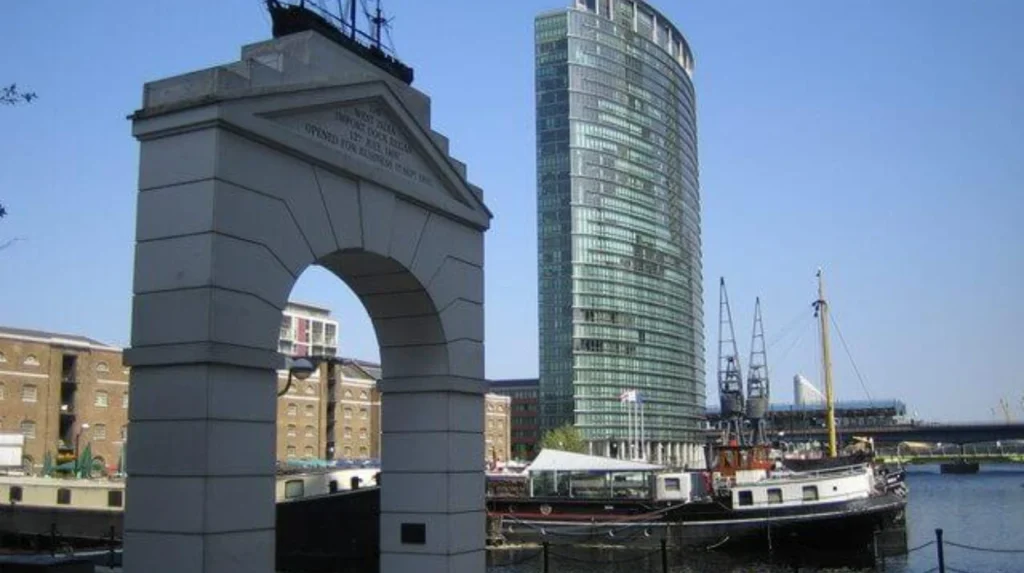
The West India Docks were among the most important commercial dock complexes in London. Their development helped establish the Isle of Dogs as a major centre for international trade.
The surviving dock basins provide visitors with a clear understanding of the scale of the former port. Modern buildings now surround many of these waters, creating a strong contrast between nineteenth-century infrastructure and contemporary architecture.
Limehouse provides another important maritime landscape. The area historically contained docks, warehouses, workshops and housing connected with river commerce. Limehouse Cut, a historic waterway, remains part of the borough’s canal network.
Wapping provides some of the most distinctive riverside streets. Wapping Pierhead and Wapping Wall are both protected conservation areas.
The Museum of London Docklands provides the strongest indoor introduction to this history. It explains London’s relationship with the river, docks, trade and migration and is located within the former West India Docks area.
For visitors with limited time, combining the museum with a walk around West India Dock creates a clear sequence from historical evidence to the surviving physical landscape.
What modern attractions should you visit in Canary Wharf?
Canary Wharf is Tower Hamlets’ most prominent modern business district, combining high-rise architecture, public spaces, retail, restaurants, transport connections, art and waterside environments around the former West India Dock complex.
Canary Wharf demonstrates the scale of late twentieth-century regeneration in East London. Former docklands were redeveloped into a major international financial and business centre.
The district’s towers create one of London’s most recognisable modern skylines. Public spaces around the docks provide pedestrian routes between offices, shops, restaurants, transport stations and cultural installations.
The contrast with nearby historic areas is important. Visitors can travel from Georgian Spitalfields to Canary Wharf within a short journey and see two radically different stages of London’s urban development.
Canary Wharf is also useful for domestic business travellers. The district provides offices, hotels, restaurants, shopping facilities and transport connections, making it practical for visitors with limited leisure time.
The Jubilee line, Elizabeth line and Docklands Light Railway provide connections between Canary Wharf and other parts of London. This makes the area suitable as either a destination or a transport interchange during an East London itinerary.
Which museums and cultural attractions explain Tower Hamlets’ history?
The Museum of London Docklands, Whitechapel Gallery, Wilton’s Music Hall, local heritage sites and cultural institutions provide complementary perspectives on trade, migration, art, entertainment, architecture and social change across Tower Hamlets.
The Museum of London Docklands focuses on the history of London’s river and docks. Its location inside the former docklands gives the exhibitions a direct physical relationship with the landscape being interpreted.
Whitechapel Gallery provides a contemporary and modern art focus. It sits within one of the borough’s most historically diverse districts and forms part of the cultural landscape around Whitechapel High Street.
Wilton’s Music Hall is another significant cultural site. The venue represents London’s historic entertainment culture and retains an unusual connection with the nineteenth-century East End.
Toynbee Hall provides an important social-history perspective. Founded in the nineteenth century, it became associated with settlement work and efforts to address poverty and social inequality in the East End.
These institutions demonstrate why Tower Hamlets cannot be understood through architecture alone. Its history includes economic activity, migration, religion, education, art, entertainment and social reform.
Where can you find green spaces and outdoor attractions in Tower Hamlets?
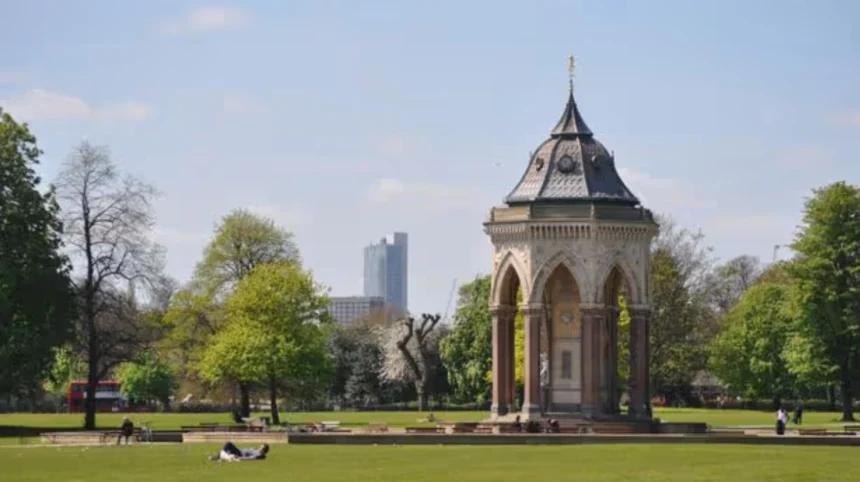
Tower Hamlets has substantial green spaces alongside dense urban districts, with Victoria Park, Mile End Park, Altab Ali Park and riverside routes providing places for walking, recreation, heritage viewing and breaks between cultural attractions.
Victoria Park is one of the borough’s most important open spaces. It contains historic lakes, a bandstand, the Burdett-Coutts Memorial and two original London Bridge stone alcoves.
The park opened in the nineteenth century and remains a major recreational destination for residents and visitors. It is particularly useful for travellers seeking a break from the dense streets of Bethnal Green, Bow and Mile End.
Mile End Park provides a different landscape. It is a 32-hectare linear park running from Victoria Park towards Limehouse Basin, following the Regent’s Canal for much of its route.
The park was developed on land affected by Second World War bombing and later regeneration. Its Green Bridge crosses Mile End Road and provides a distinctive piece of contemporary park infrastructure.
Altab Ali Park sits near Whitechapel Road and provides an important public space within the historic Whitechapel district. Its location makes it useful during walking routes between Whitechapel Market, Brick Lane and the wider East End.
These green spaces also provide practical benefits for tourists. They create places for walking, photography, rest and informal observation without requiring admission fees.
How can visitors understand Tower Hamlets’ diverse cultural history?
Tower Hamlets’ cultural identity reflects centuries of migration and community formation, including Huguenot, Jewish, Irish, South Asian and Bangladeshi histories alongside long-established East End communities and newer international populations.
Migration is central to the borough’s history. Spitalfields became associated with Huguenot textile workers. Whitechapel later developed major Jewish communities. Bangladeshi migration transformed Brick Lane and surrounding areas during the late twentieth century.
The physical environment records these changes. Religious buildings, restaurants, food shops, market stalls, community organisations and street names reveal different periods of settlement.
Whitechapel Market is particularly important because its commercial identity has changed alongside the surrounding population. The council’s conservation documentation describes the market as a longstanding focus of the area’s Bangladeshi community.
The cultural trail around Brick Lane and Spitalfields provides another practical method for understanding this history. Its 20 identified sites connect architecture, markets, religion, migration and social reform within a walkable area.
Visitors should therefore treat Tower Hamlets as a multicultural historical landscape rather than a collection of isolated attractions. The relationship between communities and places explains why markets, streets and religious buildings remain important today.
How should you plan a historic Tower Hamlets walking route?
A practical historic route starts around the Tower of London, continues through Wapping and Whitechapel, crosses into Spitalfields and Brick Lane, then finishes towards Bethnal Green, providing a chronological journey through royal, commercial, industrial and multicultural East London.
Begin near the Tower of London. The fortress was founded by William the Conqueror after the Norman Conquest, with the White Tower forming the core of the complex. UNESCO describes it as an outstanding example of late eleventh-century Norman military architecture and a major symbol of royal power.
Continue east towards Wapping to see the relationship between the Thames and former docklands. The route then reaches Whitechapel, where the historic market provides a direct connection with East End commerce.
From Whitechapel, walk towards Brick Lane and Spitalfields. This section provides the greatest concentration of historic streets and cultural landmarks, including Fournier Street, Christ Church Spitalfields and Old Spitalfields Market.
Old Spitalfields Market has particularly deep commercial roots. The present market buildings were constructed between 1883 and 1893 on the site of an older market licensed by Charles II in 1682. The market operated as a major fruit and vegetable market before closing in 1986 and later becoming a retail destination.
Finish towards Bethnal Green or continue east towards Mile End. This extends the itinerary from historic commerce into parks, canals and residential East London.
How can digital nomads and business travellers use Tower Hamlets during downtime?
Tower Hamlets suits digital nomads and business travellers because it combines strong public transport, cafés, markets, cultural venues, parks, work-oriented districts and walkable neighbourhoods, allowing visitors to combine professional commitments with short cultural and recreational breaks.
Canary Wharf provides the strongest business environment. Its concentration of offices, restaurants, retail facilities and transport connections makes it convenient for corporate visitors.
Spitalfields and Brick Lane provide a different working environment. Cafés, independent businesses and public spaces create options for informal work between appointments, subject to individual venue policies.
Mile End Park provides outdoor space close to transport connections. The park’s proximity to Mile End Underground station makes it practical for short walks between meetings.
Business travellers can also use museums, galleries and markets as short cultural excursions. Whitechapel Market provides a particularly efficient introduction to local food and commercial culture without requiring a long journey.
The key advantage is geographical variety. A visitor can move from a financial district to a historic market, a museum or a riverside environment within the same borough.
What makes Tower Hamlets different from other London tourist areas?
Tower Hamlets stands out because royal history, docklands, markets, migration, art, parks and modern finance occupy the same borough. Its heritage is not confined to one attraction but remains embedded across streets, buildings, markets and public spaces.
Many London districts have individual historic landmarks. Tower Hamlets has a broader urban sequence. The Tower of London represents Norman royal power. Spitalfields represents migration, textiles and Georgian development. Whitechapel represents market culture and successive immigrant communities. Wapping and the Isle of Dogs represent maritime commerce. Canary Wharf represents modern financial redevelopment.
This variety creates strong thematic opportunities for visitors.
Architecture is one theme. Markets form another. Food provides a third. Maritime history creates another route. Migration history connects several districts. Parks and canals provide outdoor alternatives.
The borough’s conservation framework reinforces this depth. Tower Hamlets Council identifies 58 conservation areas, demonstrating the scale of architectural and historical interest across the borough.
The result is a destination where modern attractions do not replace historic ones. They exist beside them.
Explore More Area Guide
Best Cultural Places to Visit in Tower Hamlets, London
Tower Hamlets Highlights: Top Places to Explore East London 2026
Why is Tower Hamlets heritage still relevant to modern London?
Tower Hamlets remains relevant because its historic markets, streets, docks and communities continue to influence London’s economy, culture, architecture and identity, while regeneration adds new homes, workplaces, transport links, public spaces and visitor attractions.
Heritage affects how the borough develops. Conservation areas protect historic character and guide changes to buildings, streets and public spaces. Tower Hamlets Council states that conservation areas receive special planning protection because of their architectural or historical interest.
Local heritage also supports tourism. Markets attract visitors while continuing to serve residents. Historic streets provide distinctive environments for businesses. Museums interpret the economic and social forces that created modern East London.
The relationship between preservation and redevelopment is especially visible around Canary Wharf, West India Dock and Spitalfields. Modern offices and residential buildings exist alongside protected buildings and historic landscapes.
Tower Hamlets therefore provides a useful case study in how London manages historic urban environments while accommodating contemporary economic activity.
For tourists, this creates an unusually dense destination. A visit can move from a Norman fortress to a Victorian market, from Georgian terraces to former docks, and from traditional street commerce to a global financial centre.
What is the best way to experience Tower Hamlets as a visitor?
The best approach is to combine one historic walking district, one traditional market, one museum or cultural venue, one riverside area and one modern destination, creating a balanced itinerary across Tower Hamlets’ architecture, history, food, culture and contemporary cityscape.
For a first visit, begin with the Tower of London and the riverside. Continue towards Wapping and Whitechapel to understand the borough’s relationship with the Thames and East End commerce.
Move into Spitalfields and Brick Lane for historic architecture, markets, food and multicultural heritage. Include Fournier Street, Christ Church Spitalfields and Old Spitalfields Market.
Add Whitechapel Market when it is operating to experience one of the borough’s established trading environments. The council currently lists Whitechapel Market as operating Monday to Saturday, 8am to 6pm.
Use the Museum of London Docklands when maritime history is the priority. Choose Victoria Park or Mile End Park when outdoor space is more important.
Finish in Canary Wharf for a contrasting modern landscape. The transition demonstrates the full scope of Tower Hamlets: medieval foundations, Georgian expansion, Victorian commerce, docklands, migration, cultural change and contemporary regeneration.
Tower Hamlets is therefore best understood as a connected historical and contemporary landscape. Its streets explain the past, its markets show living commerce, its museums interpret change, and its modern districts demonstrate how East London continues to evolve.
What is Tower Hamlets best known for?
Tower Hamlets is best known for the Tower of London, Brick Lane, Spitalfields, Whitechapel Market, Canary Wharf, historic docklands, multicultural communities and East London heritage. It combines medieval landmarks, Georgian streets, Victorian markets and modern architecture.