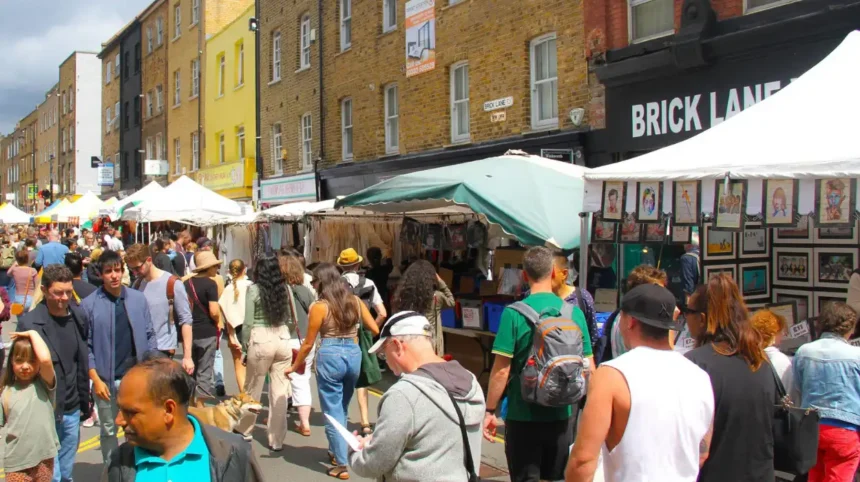
Tower Hamlets is one of East London’s most varied boroughs, combining historic streets, multicultural neighbourhoods, independent businesses, markets, canals, parks, galleries and riverside districts. It sits between the City of London and the Queen Elizabeth Olympic Park, making it highly accessible while retaining a distinct East End identity.
- What makes Tower Hamlets a good place to experience London like a local?
- Which parts of Tower Hamlets should tourists explore for an authentic local experience?
- Why is Brick Lane one of the best places to experience Tower Hamlets like a local?
- How can tourists experience Tower Hamlets through its local markets?
- Which parks offer the most local outdoor experiences in Tower Hamlets?
- Where can visitors experience art and contemporary culture in Tower Hamlets?
- Where should tourists go for independent food in Tower Hamlets?
- What historical attractions should tourists include without losing the local experience?
- How can tourists explore Tower Hamlets through canals and the River Thames?
- Which Tower Hamlets attractions are suitable for digital nomads and business travellers?
- How should tourists plan a local-style day in Tower Hamlets?
- Why should tourists choose local experiences instead of only major Tower Hamlets attractions?
For visitors seeking more than conventional sightseeing, Tower Hamlets offers a practical way to experience everyday London. A local-style visit involves walking through neighbourhood high streets, eating at independent venues, shopping at traditional markets, using public parks, visiting community-focused cultural institutions and exploring streets shaped by successive migrant communities.
The borough also contains major attractions, including the Tower of London and Museum of London Docklands, but its strongest local character often appears outside the headline attractions. Brick Lane, Spitalfields, Whitechapel, Bethnal Green, Bow, Stepney, Poplar and Limehouse each provide different perspectives on East London.
What makes Tower Hamlets a good place to experience London like a local?
Tower Hamlets combines historic neighbourhoods, diverse communities, independent businesses, markets, parks, galleries and waterways within a compact East London area, allowing visitors to experience everyday culture alongside major attractions without travelling across London.
Tower Hamlets is particularly suitable for travellers who want neighbourhood experiences rather than a fixed sightseeing itinerary. The borough contains some of London’s best-known street markets alongside quieter residential streets and community spaces.
The London Borough of Tower Hamlets identifies ten street markets, including Brick Lane, Bethnal Green Road, Chrisp Street, Columbia Road, Petticoat Lane, Roman Road, Sclater Street, Watney Market and Whitechapel Market.
This concentration of markets is important because markets remain closely connected to local shopping, food, small businesses and community activity. They also provide visitors with opportunities to see different parts of the borough rather than remaining around one attraction.
Tower Hamlets is also highly walkable between several major districts. Whitechapel connects naturally with Spitalfields and Brick Lane. Bethnal Green connects with Columbia Road and Victoria Park. Mile End connects parks, canals and cultural attractions. Limehouse provides access to the Thames and historic dockland landscapes.
The result is a destination where a visitor can combine tourism with ordinary neighbourhood activity.
Which parts of Tower Hamlets should tourists explore for an authentic local experience?
Visitors should explore Brick Lane, Spitalfields, Whitechapel, Bethnal Green, Bow, Mile End, Limehouse, Poplar and Stepney because each neighbourhood presents distinct food, markets, architecture, public spaces, cultural institutions and community history within Tower Hamlets.
Brick Lane is one of the strongest starting points. Tower Hamlets Council describes it as one of London’s iconic streets and identifies its historic connections with French Huguenot and Jewish communities and its present-day importance to the Bangladeshi community.
The street combines restaurants, food shops, vintage businesses, independent retailers, street art and cultural venues. The Old Truman Brewery functions as a creative hub, while Rich Mix provides another important cultural venue.
Spitalfields offers a different environment. Its historic market area sits close to Commercial Street, Brick Lane and Liverpool Street. Visitors can combine shopping with food, architecture and independent retail.
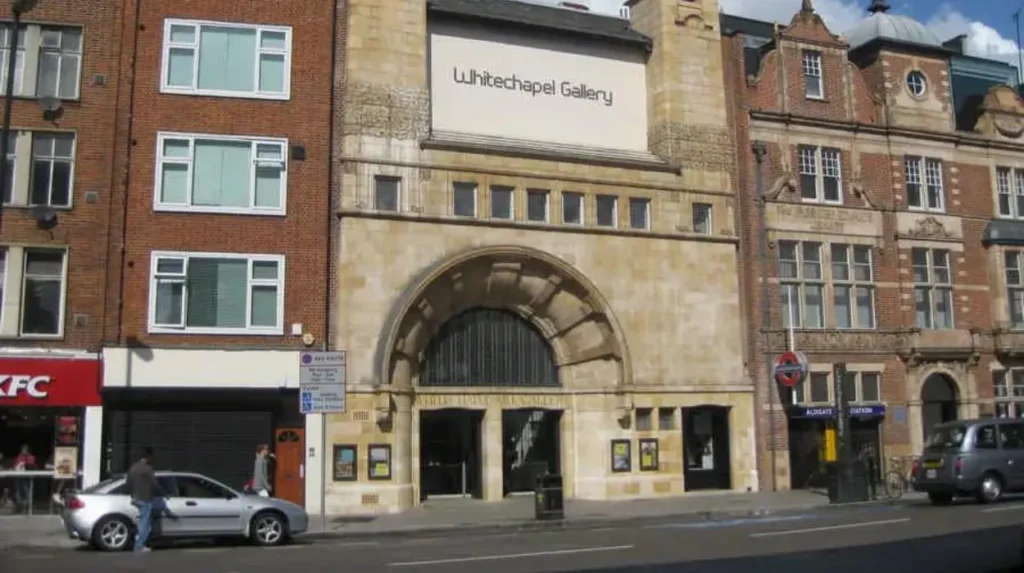
Whitechapel provides a strong connection between contemporary culture and East End history. It is also home to Whitechapel Gallery, which has operated since 1901.
Bethnal Green is useful for visitors seeking a neighbourhood atmosphere with access to Columbia Road, Victoria Park and independent cafés and shops.
Bow and Mile End offer green spaces, canals and residential streets. Limehouse adds docklands heritage and riverside walking. Poplar provides access to Chrisp Street Market and Canary Wharf connections, while Stepney offers quieter streets and historic buildings.
Together, these districts demonstrate why Tower Hamlets is better understood as a collection of connected neighbourhoods rather than a single tourist zone.
Why is Brick Lane one of the best places to experience Tower Hamlets like a local?
Brick Lane combines food, independent retail, street markets, art, migrant heritage and everyday East End activity, making it one of the clearest places for visitors to experience Tower Hamlets’ contemporary multicultural identity.
Brick Lane is particularly valuable because its character extends beyond tourism. It remains a functioning neighbourhood street with restaurants, shops, food businesses, creative organisations and community activity.
The street’s Bangladeshi identity is especially visible through its restaurants and food businesses. Tower Hamlets Council describes curry restaurants and 24-hour beigel shops as London landmarks and notes the availability of international cuisines including Turkish, Japanese and Argentinian food.
Brick Lane Market operates on Sundays from 10am to 3pm according to the council’s market information. Its stalls include fashion, food, art, jewellery, household goods and vintage products.
For visitors, the best local-style approach is to combine the market with the surrounding streets rather than treating Brick Lane as a single attraction. Walk through the side streets, explore independent businesses and observe how commercial activity changes from one section of the neighbourhood to another.
The area also has a strong street-art presence. This makes Brick Lane relevant to visitors interested in contemporary visual culture as well as food and shopping.
The annual Brick Lane Curry Festival also demonstrates the continuing connection between food, cultural identity and local commerce. Tower Hamlets Council confirmed the festival’s return for 20 September 2026, with a focus on Bangladeshi and South Asian food, culture and community.
As you explore the modern street, you are crossing land with a deep heritage. Read about the full [Insert Anchor Text for History Article Here] to understand its origins.
How can tourists experience Tower Hamlets through its local markets?
Tower Hamlets markets provide direct access to everyday shopping, independent traders, street food, flowers, clothing, household goods and specialist products, giving visitors a practical way to experience local commerce beyond conventional London attractions.
Markets are central to the borough’s identity. Tower Hamlets Council states that the borough has ten street markets, creating one of the strongest concentrations of contrasting markets in London.
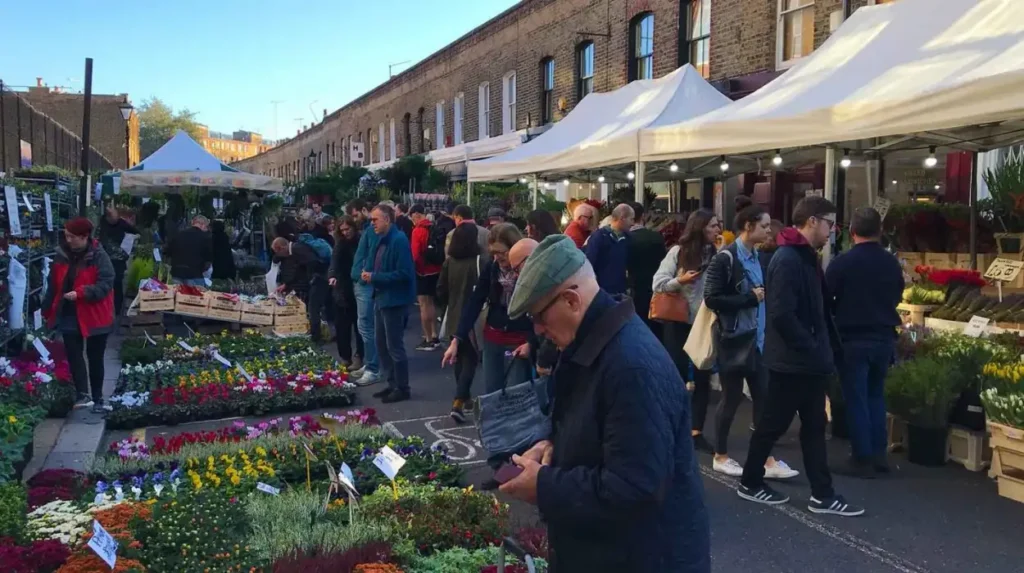
Brick Lane Market is particularly suitable for fashion, food and art. Columbia Road Flower Market focuses on plants and flowers and operates on Sundays.
Columbia Road is also surrounded by independent businesses. The council notes that the street has around 60 independent shops, art galleries, antique sellers, cafés and pubs.
The market has also received national recognition. In 2026, Tower Hamlets Council reported that Columbia Road Flower Market won a Great British Market Award for the second consecutive year.
Visitors should also consider Roman Road Market in Bow, Whitechapel Market and Chrisp Street Market in Poplar. These markets provide different experiences because their locations serve different residential and commercial communities.
Market visits are particularly effective for travellers interested in independent businesses. They also offer a more flexible experience than ticketed attractions because visitors can walk through trading areas, browse stalls and combine the market with nearby cafés, parks and streets.
Market schedules change, particularly around bank holidays and special events, so checking the council’s current information before travelling is sensible.
Which parks offer the most local outdoor experiences in Tower Hamlets?
Victoria Park and Mile End Park provide the strongest combination of green space, recreation, walking routes, historic features, wildlife and community activity for visitors who want to experience how East London residents use public parks.
Victoria Park is the borough’s largest and oldest public park. Tower Hamlets Council states that it covers 86 hectares and receives more than nine million visits each year. It opened in 1845 for the benefit of the working population of the East End.
The park contains lakes, historic features, open lawns, a bandstand and the Burdett-Coutts Memorial. It also contains two original stone alcoves from old London Bridge.
Victoria Park is therefore suitable for both sightseeing and ordinary recreation. Visitors can walk, exercise, relax beside the water or continue towards the Regent’s Canal.
Mile End Park provides a different experience. It is a 32-hectare linear park running from Victoria Park towards Limehouse Basin along the Regent’s Canal.
The park includes ecological areas, the Arts Pavilion, play facilities, sports spaces and walking and cycling routes. The Green Bridge crosses Mile End Road and forms an important connection through the park.
Tower Hamlets also contains smaller green spaces and nature areas. Tower Hamlets Cemetery Park and Mudchute Park and Farm are identified by the council as local nature reserves.
These spaces are particularly useful for visitors who want to slow down between urban sightseeing stops.
Where can visitors experience art and contemporary culture in Tower Hamlets?
Whitechapel Gallery, Rich Mix, independent creative spaces and cultural venues around Brick Lane and Whitechapel provide visitors with access to contemporary art, exhibitions, film, performance and community programmes rooted in East London.
Whitechapel Gallery is one of the borough’s most significant cultural institutions. It was founded in 1901 by Canon Samuel and Henrietta Barnett to present major art to people in the East End.
Its history includes exhibitions by major international artists. Pablo Picasso’s Guernica was displayed there in 1939 during its only British visit. The gallery later presented important exhibitions involving Jackson Pollock, Mark Rothko, David Hockney, Frida Kahlo and other major artists.
The gallery remains relevant to contemporary culture. Its 2026 programme marks its 125th anniversary and continues its focus on contemporary art, under-represented artists and community engagement.
The gallery also has a café and bookshop, making it useful as part of a longer Whitechapel visit. The main entrance is free, while some exhibitions and events are ticketed.
Rich Mix on Bethnal Green Road adds film, performance, music and community programming. Around Brick Lane, the Old Truman Brewery and independent creative businesses further strengthen the area’s cultural identity.
For visitors, these venues provide an alternative to central London’s major museums. They also demonstrate how East London’s cultural infrastructure is embedded within working neighbourhoods.
Where should tourists go for independent food in Tower Hamlets?
Brick Lane, Whitechapel, Spitalfields, Bethnal Green and surrounding neighbourhoods provide some of Tower Hamlets’ strongest independent food experiences, including Bangladeshi cuisine, international restaurants, cafés, bakeries, market food and specialist food shops.
Food is one of the most direct ways to experience Tower Hamlets’ multicultural character.
Brick Lane remains strongly associated with Bangladeshi cuisine. The surrounding Spitalfields and Banglatown area contains restaurants serving traditional dishes alongside other international cuisines. Tower Hamlets Council identifies the area as a major destination for eating and drinking.
Visitors should also explore food outside Brick Lane. Whitechapel, Bethnal Green and Spitalfields contain restaurants, cafés, bakeries and specialist shops serving different communities.
Market food provides another accessible option. Brick Lane Market combines food stalls with fashion, art and other goods. This allows visitors to experience food within an active trading environment rather than only through formal restaurants.
For a local-style food experience, visitors should consider eating at different times of day. Breakfast and bakery stops provide a different perspective from evening restaurant activity.
Food also provides useful cultural context. Tower Hamlets’ food businesses reflect successive migration into East London, with Bangladeshi, Jewish, French Huguenot and other communities contributing to the borough’s commercial and cultural development.
What historical attractions should tourists include without losing the local experience?
The Museum of London Docklands, Ragged School Museum, historic streets, churches, canals and docklands provide historical context while remaining closely connected to the communities, industries, migration patterns and working life that shaped modern Tower Hamlets.
Tower Hamlets contains important historical sites, but visitors do not need to spend the entire day inside formal museums.
The Museum of London Docklands provides a major introduction to the history of the River Thames, London’s docks, trade and migration. Its location at West India Quay also connects naturally with Canary Wharf and the former docklands landscape.
The Ragged School Museum offers a more focused local perspective. It tells the story of London’s largest Victorian Ragged School, opened by Dr Thomas Barnardo in 1877. The institution served some of the poorest children in Victorian East London for three decades.
The museum stands beside the Regent’s Canal near Mile End Park. Its former warehouses have been refurbished, and the site includes an atmospheric café opening onto the canal towpath.
This combination of museum, canal and park demonstrates the value of linking historical attractions with neighbourhood walking.
Visitors can also explore historic streets around Spitalfields, Whitechapel, Stepney and Limehouse. The architecture records different periods of housing, trade, religion, migration and industrial development.
How can tourists explore Tower Hamlets through canals and the River Thames?
The Regent’s Canal, Limehouse Basin and Thames riverside provide quieter alternatives to busy streets, connecting parks, historic docklands, residential districts and waterfront landscapes through practical walking routes across Tower Hamlets.
The canal network is one of the borough’s strongest local-style assets.
The Regent’s Canal runs through or alongside important parts of the borough, connecting Victoria Park with Mile End Park and Limehouse Basin. Mile End Park follows the canal corridor for much of its length.
A canal walk creates a natural route between different experiences. Visitors can begin around Victoria Park, continue through Mile End and finish around Limehouse Basin.
Limehouse adds a different environment through its connection with the River Thames and historic docklands. The area contains residential streets, waterways and routes towards the river.
For tourists, walking these routes provides a useful contrast with central London. The pace is slower and the landscape changes from parkland to canal infrastructure, housing and docklands.
The Thames also connects Tower Hamlets with major East London landmarks and riverside districts. Visitors can combine riverside walking with Canary Wharf, Limehouse and nearby transport connections.
Which Tower Hamlets attractions are suitable for digital nomads and business travellers?
Whitechapel, Spitalfields, Brick Lane, Bethnal Green and Canary Wharf provide practical combinations of cafés, transport connections, cultural venues, food businesses, public spaces and walkable streets for visitors with limited downtime between work commitments.
Tower Hamlets is particularly convenient for business travellers because several neighbourhoods sit close to major transport hubs.
Liverpool Street provides access to national and regional rail services and the London Underground. Whitechapel has Underground and Elizabeth line connections. Shoreditch High Street and other Overground stations provide additional links.
For digital nomads, the strongest advantage is the combination of independent cafés, cultural venues and public spaces. A visitor can work for part of the day and then walk to a market, gallery or park without crossing London.
Whitechapel Gallery provides a useful cultural stop close to Aldgate East and Liverpool Street. Its café and bookshop also make the gallery part of a broader neighbourhood itinerary.
Spitalfields and Brick Lane provide dense concentrations of food and independent businesses. Victoria Park and Mile End Park provide outdoor alternatives after time indoors.
Canary Wharf adds a more corporate environment with modern commercial infrastructure, restaurants and riverside spaces. Combining Canary Wharf with Limehouse creates a clear contrast between contemporary business London and historic East London.
Explore More Area Guide
Tower Hamlets Exploration Guide for Tourists | East London
Best Tower Hamlets Neighbourhoods for Leisure Travellers | East London 2026
How should tourists plan a local-style day in Tower Hamlets?
A practical local-style itinerary should connect neighbourhoods rather than isolated attractions, combining a market, independent food stop, cultural venue, green space and walking route while allowing enough time to explore surrounding streets.
A Sunday is particularly useful for visitors interested in markets. Columbia Road Flower Market operates on Sunday mornings, while Brick Lane Market also operates on Sundays.
A market-focused route can begin at Columbia Road, continue towards Brick Lane and finish around Spitalfields or Whitechapel.
Another itinerary can centre on Victoria Park and Mile End. Visitors can explore Victoria Park before following the canal towards Mile End Park. The route can include the Ragged School Museum and continue towards Limehouse.
An art-focused visit can begin at Whitechapel Gallery before moving towards Brick Lane and Spitalfields. This combines contemporary art, street culture, independent businesses and food.
A history-focused itinerary can combine the Museum of London Docklands with Limehouse and the Thames.
The key principle is geographic clustering. Visitors should explore connected neighbourhoods rather than repeatedly travelling between distant parts of London.
Why should tourists choose local experiences instead of only major Tower Hamlets attractions?
Local experiences reveal the everyday economic, cultural and social character of Tower Hamlets, giving visitors a deeper understanding of East London through markets, independent businesses, public parks, community venues, food traditions and neighbourhood streets.
Major attractions remain important. The Tower of London is one of London’s internationally recognised historic sites, while the Museum of London Docklands provides extensive docklands interpretation.
However, Tower Hamlets becomes more distinctive when visitors move beyond major ticketed attractions.
The borough’s ten street markets demonstrate the importance of local commerce. Its parks provide millions of annual visits and support recreation, biodiversity and community activity. Victoria Park alone receives more than nine million visits each year.
Its cultural institutions also connect international art with local communities. Whitechapel Gallery was founded specifically to bring art to East London and continues to maintain a strong community focus.
This combination gives Tower Hamlets long-term relevance for tourism. The borough is not dependent on a single landmark. Its visitor appeal comes from the interaction between neighbourhoods, people, businesses, public spaces, heritage and culture.
For travellers seeking an authentic East London experience, the most effective approach is therefore simple: use the major attractions as reference points, then explore the surrounding neighbourhoods on foot.
What are the best places to experience Tower Hamlets like a local?
Brick Lane, Spitalfields, Whitechapel, Bethnal Green, Victoria Park, Mile End Park, Columbia Road and Limehouse are among the best places. They combine markets, independent shops, food, green spaces, culture and historic neighbourhoods.