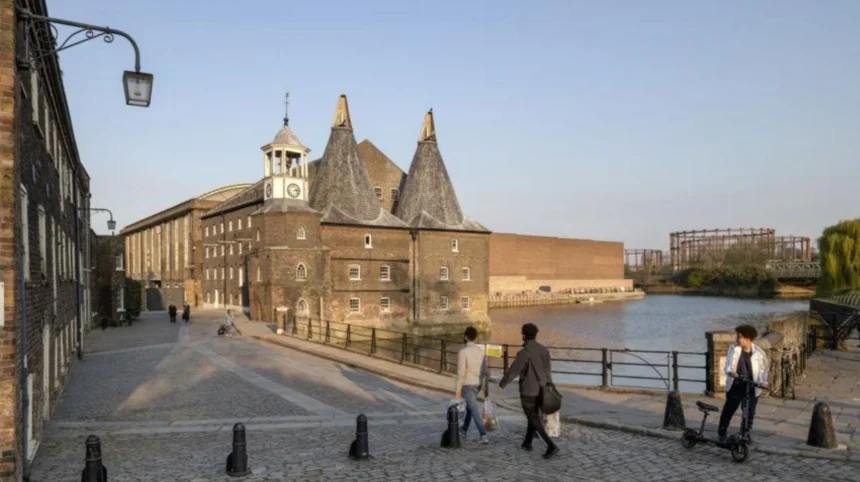
Tower Hamlets is one of East London’s most historically layered boroughs. It contains famous destinations such as the Tower of London, Brick Lane and Victoria Park, but its character extends far beyond the busiest visitor routes. Quiet gardens, historic streets, canals, former docklands, nature reserves, churchyards and residential squares reveal another side of the borough.
- Which quiet places in Tower Hamlets are worth visiting?
- Why is Tower Hamlets Cemetery Park one of the most unusual places to explore?
- Which historic gardens and squares reveal Tower Hamlets’ quieter heritage?
- Where can visitors find quieter waterways and dockland landscapes?
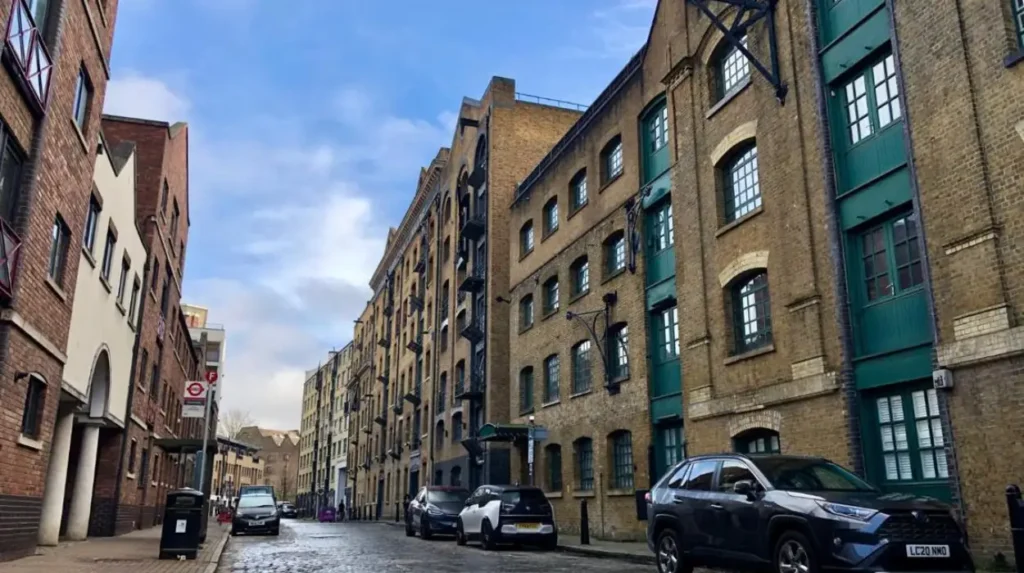
- What can visitors discover in Wapping away from the busiest attractions?
- Which nature-focused places offer a quieter side of East London?
- How can visitors explore Tower Hamlets without following crowded tourist routes?
- Why are Tower Hamlets’ lesser-known places important for understanding East London?
- What should visitors remember when exploring quieter places in Tower Hamlets?
The London Borough of Tower Hamlets currently identifies more than 120 parks and green spaces across the borough. It also has 58 conservation areas, covering places with special architectural or historic interest. These designations provide a useful framework for visitors who want to explore heritage without concentrating their day around the best-known attractions.
The quieter side of Tower Hamlets is particularly valuable because the borough connects several major themes of London’s history. Maritime trade shaped Wapping and Limehouse. Industry influenced Poplar and the docklands. Immigration and commerce transformed Spitalfields and Whitechapel. Victorian urban reform created parks and public gardens. Modern regeneration added new cultural and ecological spaces.
Exploring these places also provides a more complete understanding of East London. A visitor can move from a historic churchyard to a canal basin, from a Victorian cemetery to a riverside garden, or from a conservation area to a community nature site without leaving the borough.
Which quiet places in Tower Hamlets are worth visiting?
Tower Hamlets has quiet places including St George’s Gardens, Stepney Green, Tower Hamlets Cemetery Park, Limehouse Cut, Island Gardens, Wapping’s historic streets, Boundary Gardens and East India Dock Basin, each offering heritage, nature or riverside character away from major tourist crowds.
These locations differ in character but share an important feature: they are part of the everyday historic landscape of Tower Hamlets.
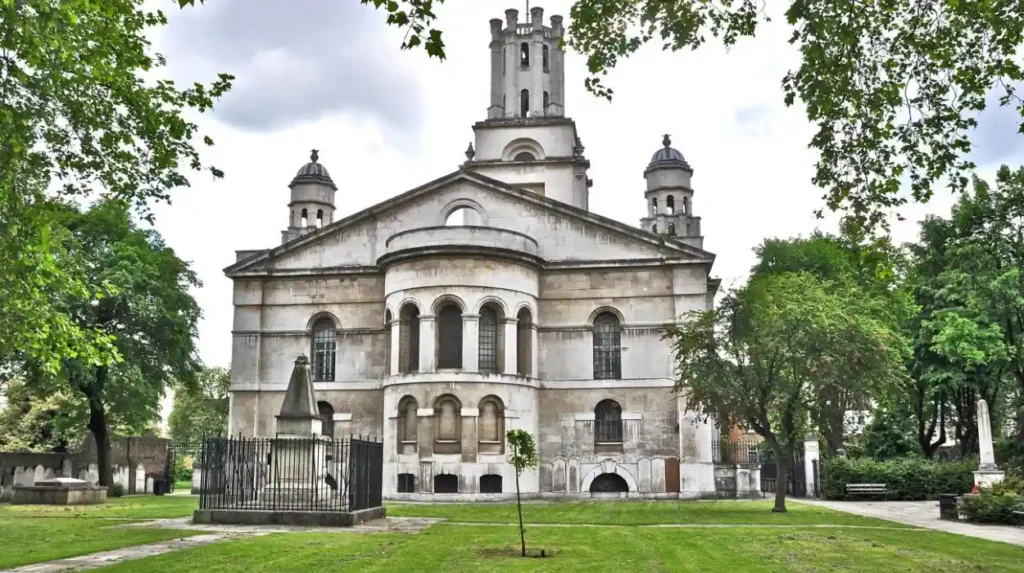
St George’s Gardens in Shadwell is one of the borough’s less well-known historic public gardens. It occupies the former churchyard of St George-in-the-East, a church designed by architect Nicholas Hawksmoor. The gardens opened to the public in 1875 and cover about 1.19 hectares. Heritage panels explain the site’s history.
Stepney Green provides another quieter heritage setting. The historic green originated as part of Stepney Green and was enclosed between 1669 and 1684. It later became a public open space. The surrounding streets contain historic buildings that demonstrate how Stepney developed from an older settlement into a dense East London neighbourhood.
Tower Hamlets Cemetery Park is particularly significant for visitors interested in Victorian history and urban nature. It opened for burials in 1841 and became a public park after burials ended in 1966. The 12.55-hectare site is now a Local Nature Reserve and a Metropolitan Site of Importance for Nature Conservation.
Island Gardens offers a different experience. The riverside landscape faces Greenwich across the Thames. Its historic purpose was connected with preserving the view towards Greenwich after the Admiralty saved the land from redevelopment. Island Gardens is also a Grade II registered historic garden.
These places demonstrate why a quieter Tower Hamlets itinerary does not require abandoning significant heritage. The heritage is often embedded in ordinary streets, gardens and public spaces.
Why is Tower Hamlets Cemetery Park one of the most unusual places to explore?
Tower Hamlets Cemetery Park combines Victorian cemetery history, wildlife habitat, mature vegetation, memorials and public walking space on a 12.55-hectare site. Opened in 1841, it became a public park in 1966 and remains an important nature and heritage site.
The cemetery is one of London’s historic Victorian cemeteries and forms part of the group commonly known as the “Magnificent Seven”. Its original purpose was commercial burial during a period of rapid population growth in London.
Burials began in 1841. Over time, the cemetery became densely occupied and suffered periods of neglect. The site was eventually closed for burials in 1966 through an Act of Parliament and re-designated as public open space.
Today, the site has a dual identity. It is both a historic landscape and a wildlife habitat. The council recognises Tower Hamlets Cemetery Park and Ackroyd Drive Green Link as a Metropolitan Site of Importance for Nature Conservation.
The Friends of Tower Hamlets Cemetery Park play an important role in conservation, heritage and community activity. Their programme includes guided walks and activities connected with the site’s history and natural environment.
The location is also convenient for visitors using public transport. The main entrance is on Southern Grove, around five minutes’ walk from Mile End Underground station. The park is free to visit and opens from dawn until dusk.
Visitors should treat the cemetery as a heritage landscape rather than simply a shortcut or recreational park. Memorials, vegetation and historic structures form part of its cultural significance.
For travellers seeking quieter East London experiences, this site provides an unusual combination of history and nature within an urban setting.
Which historic gardens and squares reveal Tower Hamlets’ quieter heritage?
Historic gardens and squares such as Boundary Gardens, Stepney Green Gardens, Albert Gardens, Island Gardens and St George’s Gardens reveal Tower Hamlets’ urban history through preserved landscapes, churchyards, residential planning and public recreation created across several centuries.
Tower Hamlets contains a substantial network of historic gardens and squares. The council identifies 16 designated London squares, while several parks and gardens have national historic importance.
Boundary Gardens is particularly interesting because it forms part of the Boundary Estate landscape around Arnold Circus. The estate was developed in the early twentieth century as a major social housing scheme. The circular garden became a defining feature of the estate.
The council’s historic open-space record identifies Arnold Circus and Boundary Gardens as a Grade II historic landscape.
Albert Gardens offers another example of planned urban greenery. It was built during the 1840s and opened to the public through the London County Council in 1906. Its survival illustrates the importance of landscaped open space within dense residential districts.
Stepney Green Gardens has an older history. The surviving green landscape is associated with the historic Stepney area and became a public garden in the nineteenth century. Its surrounding streets provide a useful setting for understanding the transition from historic village-like development to metropolitan London.
St George’s Gardens connects architecture and public landscape. The former churchyard belongs to St George-in-the-East, one of three Tower Hamlets churches designed by Nicholas Hawksmoor. The other two are Christ Church, Spitalfields and St Anne’s, Limehouse.
These spaces matter because they show that Tower Hamlets heritage is not limited to major monuments. Historic landscapes can preserve information about housing, religion, public health, planning and social reform.
As you explore the modern streets and gardens, you are crossing land with a deep heritage. Read about the full [Insert Anchor Text for History Article Here] to understand its origins.
For visitors avoiding crowded routes, historic gardens also provide natural pauses between larger attractions. They are suited to walking, photography, architectural observation and short breaks.
Where can visitors find quieter waterways and dockland landscapes?
Limehouse Cut, Limehouse Basin, Shadwell Basin, East India Dock Basin, Blackwall Basin and Poplar Dock form part of Tower Hamlets’ water network, linking canals and former docklands with wildlife habitat, industrial heritage and quieter walking environments.
Water is central to Tower Hamlets’ identity. The borough sits beside the River Thames and contains canals, basins and former docklands associated with London’s maritime economy.
The council identifies London’s canals, including Regent’s Canal, Limehouse Cut, Limehouse Basin and the Hertford Union Canal, as Sites of Metropolitan Importance for Nature Conservation. The River Thames and Bow Creek also have metropolitan importance.
Limehouse Cut is particularly valuable because it connects industrial history with contemporary waterside landscapes. The waterway forms part of a wider canal network that supported movement of goods around London’s historic industrial districts.
Limehouse Basin provides another important connection between canal and dockland environments. Its location makes it possible to understand how inland waterways connected with the Thames.
Shadwell and Hermitage Basins offer another perspective. The council identifies the area, together with Wapping Wood and Wapping Canal, as a Site of Borough Importance for Nature Conservation.
East India Dock Basin represents the relationship between maritime infrastructure and modern ecological value. It is identified as a Grade 1 Site of Borough Importance for Nature Conservation.
Poplar Dock and Blackwall Basin are also recognised within the borough’s nature-conservation network. These places demonstrate how former industrial landscapes can retain environmental significance after their original economic functions have changed.
Waterways also provide a different pace of exploration. A visitor can follow a canal edge, examine surviving dock structures and observe wildlife without following the concentrated pedestrian routes around central London landmarks.
For photography, the docklands offer industrial architecture, bridges, narrow waterways, warehouses, modern buildings and changing river views. The contrast between historic infrastructure and contemporary development is particularly clear around Limehouse and the Isle of Dogs.
What can visitors discover in Wapping away from the busiest attractions?
Wapping combines historic riverside streets, former maritime industry, old warehouses, church landscapes and Thames views. Its history stretches from medieval marshland and Tudor London to the intensive maritime activity that shaped East London during the seventeenth and eighteenth centuries.
Wapping is immediately east of the Tower of London, but its character is distinct from the major visitor zone around the Tower.
The name Wapping is associated with an early Saxon settlement. Historically, the area contained marshland that was drained and developed. By the early modern period, Wapping had become closely connected with the River Thames and maritime activity.
Its riverside economy included sailors, ship-related trades, timber yards, distilleries and other maritime industries. Wapping High Street became an important route through this riverside community.
Execution Dock is also part of Wapping’s historical record. It was associated with executions for maritime offences. The site is remembered as part of the area’s darker maritime history.
Today, Wapping’s historic street pattern provides a useful contrast with the modern commercial districts elsewhere in East London. Visitors can examine older buildings, riverside views and surviving elements of the area’s maritime identity.
Wapping Pierhead and Wapping Wall are both conservation areas listed by Tower Hamlets Council. The borough’s conservation-area programme identifies these areas as having special architectural and historical character.
A quieter Wapping visit works best as a walking-based exploration. The focus is on the relationship between buildings, streets, water and historic industry rather than on a single ticketed attraction.
Visitors should respect residential areas because much of Wapping remains a lived-in neighbourhood. Quiet exploration is most appropriate on public routes and designated spaces.
Which nature-focused places offer a quieter side of East London?
Tower Hamlets has a substantial network of nature sites, including Mudchute Park and Farm, East India Dock Basin, Bethnal Green Nature Reserve, Mile End Park, Stepney City Farm and Tower Hamlets Cemetery Park, linking wildlife with accessible urban landscapes.
Tower Hamlets is often associated with dense development, but its environmental network is significant. The council identifies Sites of Importance for Nature Conservation where habitats have value for wildlife and local access to nature.
Mudchute Park and Farm is one of the best-known examples. The site is identified as a Metropolitan Site of Importance for Nature Conservation. Its combination of open land, habitats and farming activity creates a distinctive environment within the Isle of Dogs.
Mile End Park also has metropolitan ecological importance. The council describes it as a major urban green space containing natural environments alongside recreational facilities.
Stepney City Farm provides another example of community-based urban nature. It is identified by the council as a Grade 2 Site of Borough Importance for Nature Conservation.
Bethnal Green Nature Reserve, also known as St Jude’s Nature Park, has the same Grade 2 borough-level designation. Such places show how small-scale habitats contribute to biodiversity within densely populated neighbourhoods.
The Greenway provides another route through the borough. It combines walking and cycling infrastructure with ecological value and is recognised as a Grade 1 Site of Borough Importance for Nature Conservation.
Visitors interested in nature should follow local park rules. Tower Hamlets requires visitors not to disturb animals, remove plants or damage vegetation. Feeding wildlife is also prohibited in council-managed parks.
These rules protect the very environments that make quieter locations valuable.
How can visitors explore Tower Hamlets without following crowded tourist routes?
A quieter Tower Hamlets itinerary works by connecting nearby heritage gardens, waterways, conservation areas and nature sites rather than concentrating on major attractions. Walking, public transport and short neighbourhood visits provide an efficient way to discover less prominent locations.
The most effective approach is to treat Tower Hamlets as a network of neighbourhood landscapes rather than a list of major attractions.
A visitor based around Whitechapel can move towards Stepney and explore historic gardens, conservation areas and local green spaces. This route provides architectural context without requiring a full day around major tourist attractions.
A Limehouse-focused route can combine Limehouse Cut, Limehouse Basin, St Anne’s Churchyard and Narrow Street. The council recognises Limehouse Cut, St Anne’s Churchyard and Narrow Street within its conservation and nature-protection framework.
A Wapping route can focus on historic streets, riverside spaces and conservation areas. Wapping Pierhead and Wapping Wall are designated conservation areas, making the district especially relevant for visitors interested in architecture and maritime history.
A Mile End route can connect Mile End Park with Tower Hamlets Cemetery Park. The cemetery is close to Mile End Underground station, making this combination practical for visitors using public transport.
The Isle of Dogs provides another distinct experience. Island Gardens, Millwall Park, Mudchute Park and Farm and surrounding docklands create a combination of riverside views, historic landscapes and ecological sites. Island Gardens is a Grade II registered historic garden.
Timing also affects crowd levels. Early mornings generally provide quieter conditions in public parks. Weekdays offer different conditions from weekends, particularly around markets and major event spaces.
Visitors should check current opening information before travelling. Parks have operating rules, and organised activities can affect access. Council-managed parks also prohibit camping, unauthorised structures and disturbance of wildlife.
The borough’s extensive green-space network makes flexible exploration possible. The council currently lists more than 120 parks and green spaces, while 14 parks hold Green Flag Awards.
Explore More Area Guide
Best Places to Discover Tower Hamlets’ East London Character
Tower Hamlets Hidden Corners Tourists Often Miss
Why are Tower Hamlets’ lesser-known places important for understanding East London?
Tower Hamlets’ quieter places preserve evidence of maritime trade, Victorian urban growth, religious history, housing reform, industrial development, public health and biodiversity. Exploring them provides a broader understanding of East London than visiting major landmarks alone.
The significance of these locations extends beyond tourism.
Tower Hamlets’ conservation areas protect places where architectural form and historic development remain visible. The council currently identifies 58 conservation areas, each supported by a character appraisal and management guidance.
The borough’s parks also document changing approaches to public health and urban planning. Victoria Park was created in the nineteenth century after a campaign for healthier recreation in the overcrowded East End. The council’s conservation strategy records a petition of 30,000 signatures to Queen Victoria connected with its creation.
Historic churchyards reveal another layer. As burial grounds became full, some were converted into public gardens. This process contributed to the creation of accessible green spaces within densely developed neighbourhoods.
The docklands preserve evidence of London’s commercial and industrial expansion. Canals, basins and riverside streets show how goods moved through East London before the area’s economic structure changed.
Nature sites reveal a more recent transformation. Former industrial land and urban fragments now support habitats recognised through the council’s Sites of Importance for Nature Conservation system.
This combination gives Tower Hamlets unusual geographic and historical depth. A visitor can examine a Victorian cemetery, follow a canal, enter a historic square and reach a Thames viewpoint within the same borough.
The quieter attractions therefore serve an important purpose. They distribute visitor interest beyond the most heavily visited landmarks and encourage exploration of neighbourhoods where heritage remains part of everyday life.
For digital nomads and business travellers, these spaces also provide opportunities for short walks between commitments. Parks, waterways and neighbourhood streets offer accessible alternatives to spending every spare hour inside commercial districts.
For residents, the same places provide local recreation and a direct connection with borough history.
For leisure travellers, they create a more detailed picture of East London.
What should visitors remember when exploring quieter places in Tower Hamlets?
Visitors should respect residential neighbourhoods, historic sites, wildlife habitats and park regulations while using public routes and checking current access information. Quiet exploration works best when visitors protect the character, biodiversity and community value of the places they visit.
Tower Hamlets’ less crowded locations are valuable precisely because they retain local character.
Visitors should avoid entering restricted land, climbing historic structures or disturbing memorials. Council park rules prohibit damage to plants and trees, disturbance of animals and unauthorised structures.
Historic cemeteries require particular care. Memorials and burial landscapes are cultural resources, not simply photographic backgrounds.
Nature reserves also require responsible behaviour. Tower Hamlets’ biodiversity strategy recognises protected sites as important places for wildlife and public access to nature.
Photography should remain considerate, particularly around residential streets and places of worship. Visitors should use public paths and avoid obstructing entrances.
The strongest quiet-tourism experience is therefore based on observation rather than consumption. Visitors can study architecture, read heritage information, walk beside waterways, observe wildlife and understand how neighbourhoods developed.
Tower Hamlets rewards this slower approach. Its heritage is distributed across streets, gardens, cemeteries, waterways, docklands and parks rather than concentrated in one location.
The borough currently contains an extensive protected landscape network, including historic parks, conservation areas and Sites of Importance for Nature Conservation. These designations demonstrate that quieter locations are not secondary attractions. They are important components of East London’s cultural and environmental identity.
For travellers searching for interesting places away from crowded tourist routes, the best strategy is simple: explore beyond the headline attractions and follow the borough’s historic geography. Wapping reveals maritime London. Limehouse reveals canals and industry. Stepney reveals historic neighbourhood landscapes. Mile End reveals urban green space. Tower Hamlets Cemetery Park reveals Victorian burial history and biodiversity. Island Gardens reveals the relationship between the Thames and Greenwich.
Together, these places show why Tower Hamlets remains one of East London’s richest areas for independent exploration.
What are the best hidden places to visit in Tower Hamlets?
Some of the best quieter places in Tower Hamlets include Tower Hamlets Cemetery Park, St George’s Gardens, Stepney Green, Boundary Gardens, Island Gardens, Limehouse Cut, East India Dock Basin and Mudchute Park and Farm. These locations combine history, nature, waterways and local character.