Commercial Road is one of the most historically significant routes in East London. Stretching through Whitechapel, Stepney and Limehouse, this busy thoroughfare connects historic dockland neighbourhoods with modern residential developments, independent businesses, cultural attractions and traditional shopping destinations. It offers visitors an opportunity to explore the architectural, commercial and multicultural character of the London Borough of Tower Hamlets.
- Why Is Commercial Road an Important Destination in Tower Hamlets?
- What Historic Buildings Can Visitors Discover Around Commercial Road?
- What Is the Historical Significance of Commercial Road and Limehouse?
- What Can Visitors Explore at Limehouse Basin Near Commercial Road?
- Which Architectural Landmarks Should Visitors See Around Limehouse?
- St Anne’s Church Conservation Area
- The London and Blackwall Railway Viaduct
- The Limehouse Cut and Accumulator Tower
- Narrow Street’s Historic Buildings
- Where Can Visitors Enjoy Shopping Near Commercial Road?
- Which Restaurants and Food Destinations Are Worth Exploring Around Commercial Road?
- South Asian Restaurants in Whitechapel
- Brick Lane’s Restaurants and Cafés
- Limehouse’s Cafés and Riverside Pubs
- Food for Visitors and Digital Nomads
- Which Cultural Attractions Are Near Commercial Road?
- Are There Parks and Outdoor Places Near Commercial Road?
- How Can Visitors Explore the Interesting Places Around Commercial Road on Foot?
- A Short Limehouse Architecture Walk
- A Whitechapel Shopping and Culture Walk
- A Full Docklands Heritage Day
- How Can Visitors Travel to Commercial Road and Nearby Attractions?
- Why Is Commercial Road Important to East London’s Changing Urban Landscape?
- What Should Visitors Know Before Exploring Commercial Road?
Located between the City of London and the historic Docklands, Commercial Road developed as an important transport route during the expansion of London’s port economy. Today, it remains a major East London corridor, with historic churches, Victorian terraces, former maritime buildings, local shops, restaurants and convenient connections to nearby attractions.
Visitors exploring Commercial Road can discover the architectural heritage of Limehouse, walk around the Limehouse Basin, visit traditional East End markets, explore Whitechapel’s cultural institutions and experience the changing character of London’s historic dockland communities.
This guide covers the most interesting places around Commercial Road, including historic buildings, architectural landmarks, shopping areas, restaurants, cultural attractions and nearby places worth including in a walking itinerary.
Why Is Commercial Road an Important Destination in Tower Hamlets?
Commercial Road is an important East London destination because it connects Whitechapel, Stepney and Limehouse with historic docklands, residential neighbourhoods and the City of London. Its architectural heritage, transport connections, shopping facilities and cultural attractions make it a useful starting point for exploring Tower Hamlets.
Commercial Road is a major east–west route in the London Borough of Tower Hamlets. It links the historic commercial districts around Whitechapel and Aldgate with Limehouse and the wider Docklands area. Its location reflects the development of East London as a centre of international trade, shipping and industrial activity.
The road was created during the early nineteenth century to improve connections between the City of London and the expanding East and West India Docks. Tower Hamlets’ planning records identify its development in 1802–1804 as part of the infrastructure supporting the growing port economy.
The route subsequently became an important centre for commercial buildings, housing, transport and local services. Its streetscape developed through different architectural periods, including Georgian and Victorian terraces, religious buildings, railway infrastructure and twentieth-century commercial properties.
Today, Commercial Road serves several purposes. It provides access to residential neighbourhoods, connects visitors with local businesses and offers routes towards Limehouse Basin and the historic riverside districts.
Its location also makes it useful for exploring nearby cultural attractions. Visitors can reach Whitechapel Gallery, traditional markets, historic churches and the former dockland areas through short journeys along connecting streets.
The road is particularly relevant to visitors interested in London’s industrial heritage. Its surrounding buildings demonstrate how East London developed from a landscape of villages and waterways into a major commercial and residential district.
What Historic Buildings Can Visitors Discover Around Commercial Road?
Visitors can discover several historically significant buildings around Commercial Road, including Limehouse Town Hall, St Anne’s Church, Victorian residential terraces and former maritime institutions. These structures represent the area’s religious, civic, industrial and commercial development during the eighteenth, nineteenth and twentieth centuries.
Commercial Road contains a mixture of architectural styles that reflect the changing history of Tower Hamlets. Some buildings retain their original functions, while others have been converted into residential properties, creative workplaces and community facilities.
The London Borough of Tower Hamlets recognises the architectural importance of several surrounding streets through its conservation-area designations and heritage planning policies.
Limehouse Town Hall
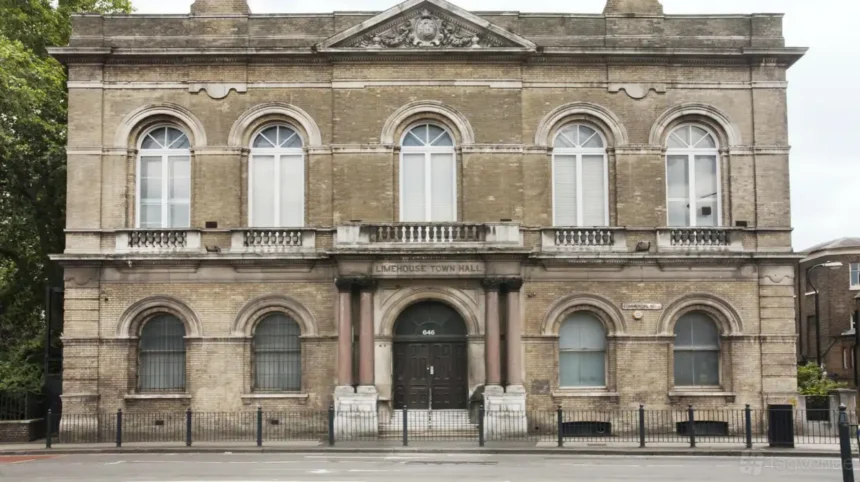
Limehouse Town Hall is one of the most recognisable historic buildings on Commercial Road. Located at Commercial Road in Limehouse, the building dates from 1879 and represents the area’s nineteenth-century civic development.
Historic England identifies the property as a Grade II listed building, first listed on 27 September 1973. Its architectural design includes white brick, white stone detailing, decorative quoins and a central pediment.
The building originally served local government and public administration. During the twentieth century, it experienced wartime blast damage and subsequently underwent restoration.
Its later uses included council offices and a museum dedicated to labour history. The building has also provided space for artists and creative organisations.
Visitors interested in Victorian architecture should examine its symmetrical frontage, decorative windows and traditional masonry. Its position near St Anne’s Church makes it an important part of the historic Limehouse streetscape.
St Anne’s Church, Limehouse
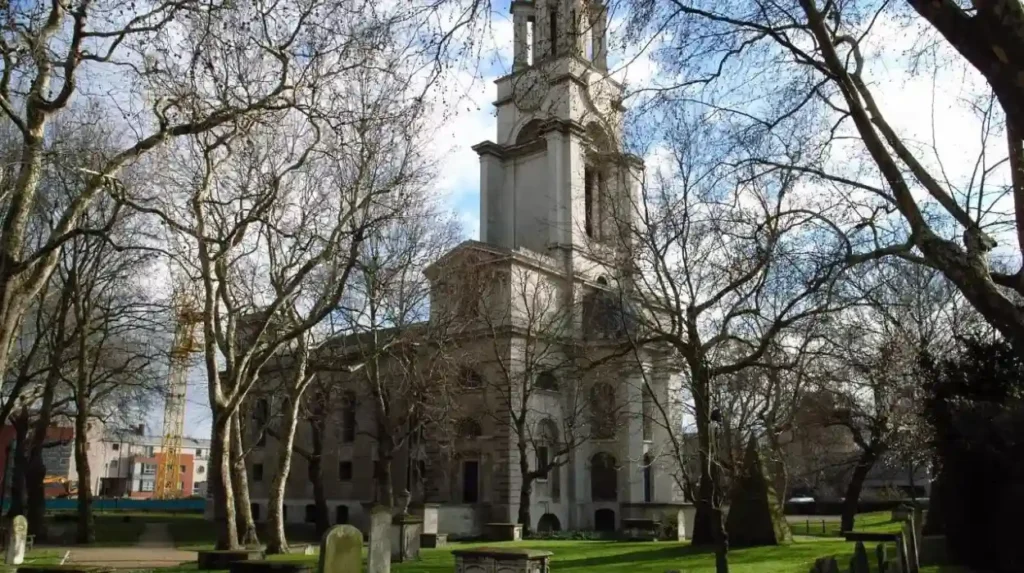
St Anne’s Church is another major architectural landmark near Commercial Road. Designed by architect Nicholas Hawksmoor, it forms part of the historic landscape of Limehouse.
The church was constructed during the eighteenth century as part of the development of London’s new parish churches. Its monumental design and prominent tower distinguish it from the surrounding residential buildings.
The church is especially important because of its relationship with Limehouse’s maritime and industrial history. Its surrounding churchyard, historic railings and nearby public buildings form an important architectural group.
The St Anne’s Church Conservation Area protects the character of this historic setting. Tower Hamlets identifies the church as a central landmark within the conservation area.
Historic Commercial Road Terraces
The historic terraces along Commercial Road provide further evidence of nineteenth-century urban development. Several buildings combine commercial premises at street level with residential accommodation on upper floors.
The Lowell Street Conservation Area includes early nineteenth-century terraced buildings near Commercial Road. Some properties retain Grade II listed architectural features, including recessed window arches and traditional brick façades.
These buildings illustrate how residential and commercial functions developed together along major East London routes.
Visitors can appreciate their historic character by walking along the road and observing the different building heights, window arrangements, decorative details and street-front designs.
What Is the Historical Significance of Commercial Road and Limehouse?
Commercial Road developed as a transport connection between the City of London and the East and West India Docks. Its construction supported maritime trade, employment and urban expansion, transforming the surrounding villages of Limehouse and Stepney into important parts of London’s commercial landscape.
Commercial Road’s history is closely connected with the expansion of London’s port infrastructure.
Before the nineteenth century, Limehouse and neighbouring settlements contained a mixture of residential buildings, industrial premises, waterways and open land. The growth of international shipping increased the need for direct road connections between the docks and central London.
Commercial Road was laid out in the early nineteenth century to serve this requirement. It supported the movement of goods, workers and commercial traffic between the docks and the City.
The development of the East and West India Docks strengthened the area’s economic importance. These docks handled international cargo and supported businesses involved in shipping, storage, transportation and trade.
The surrounding neighbourhoods also experienced population growth. Workers and their families required housing, religious institutions, schools, shops and public services.
Limehouse became closely associated with maritime employment and international communities. Its streets reflected the presence of sailors, dock workers, traders and migrants from different parts of the world.
The district also became associated with London’s early Chinese community. Limehouse Causeway, Pennyfields and West India Dock Road formed important locations in the history of East London’s Chinese population during the nineteenth and early twentieth centuries.
The area’s transport infrastructure changed as railways and canals expanded. The London and Blackwall Railway opened in 1840, improving connections between the City and the eastern districts.
Commercial Road therefore represents more than a historic shopping street. It reflects the relationship between transportation, international commerce, immigration and urban development.
Visitors seeking a deeper understanding of this transformation should explore the full [History of Limehouse and Commercial Road’s Maritime Heritage] to understand how dockland trade shaped the neighbourhood’s present-day character.
What Can Visitors Explore at Limehouse Basin Near Commercial Road?
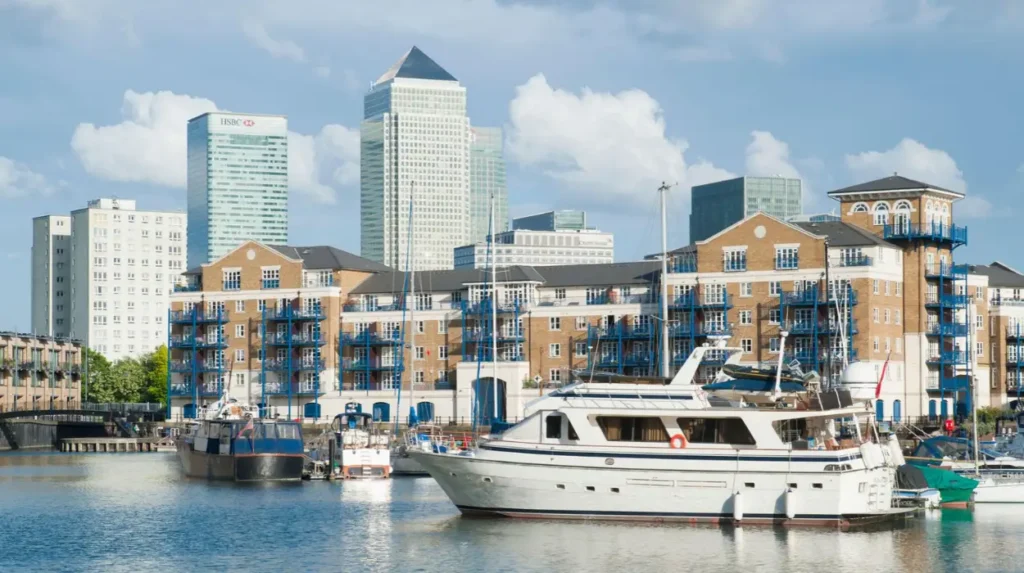
Limehouse Basin is a historic waterside destination connecting the River Thames with the Regent’s Canal network. Visitors can explore its marina, watch boats, enjoy waterfront walks and discover surviving industrial structures while experiencing the area’s transformation into a modern residential district.
Limehouse Basin is one of the most attractive places to visit near Commercial Road. It is located south of the main road, close to Limehouse DLR station and Narrow Street.
The basin originally served as Regent’s Canal Dock. It opened in 1820 and provided an important connection between the River Thames and the inland canal network.
Ships arriving from the Thames transferred goods to smaller canal vessels. These boats transported cargo towards other parts of London and the British canal system.
The Canal & River Trust identifies Limehouse Basin as a gateway between the Thames and more than 2,000 miles of navigable canals and rivers.
Today, the basin functions as a marina for narrowboats, yachts and visiting pleasure craft. Its waterfront also contains residential buildings, pedestrian routes, cafés and local businesses.
What Are the Main Attractions at Limehouse Basin?
Visitors can explore several features around the basin.
- The marina: A collection of moored narrowboats, yachts and pleasure craft.
- The swing bridge: A movable bridge that opens to allow boats with taller masts to pass.
- The historic waterways: Connections to the Regent’s Canal, Limehouse Cut and River Thames.
- The waterfront promenade: A walking area with views of boats and modern residential architecture.
- The surrounding heritage: Historic railway infrastructure and industrial buildings.
One particularly interesting feature is the Limehouse Ship Lock. It allows boats to move between the basin and the tidal Thames.
The Canal & River Trust also provides a one-mile circular walking route from Limehouse Station. The route passes the marina and offers opportunities to examine the area’s waterways and architectural character.
The basin is suitable for visitors interested in photography, walking, local history and waterfront scenery. It also provides a quieter alternative to the busy commercial streets.
Which Architectural Landmarks Should Visitors See Around Limehouse?
Limehouse contains a distinctive collection of religious, industrial, residential and transport architecture. Important examples include St Anne’s Church, Limehouse Town Hall, historic railway viaducts, former warehouses and Victorian terraces that preserve the character of East London’s maritime neighbourhoods.
Limehouse’s architectural identity reflects several centuries of development. Its buildings demonstrate the transition from a maritime settlement into a busy industrial district and subsequently a modern residential neighbourhood.
St Anne’s Church Conservation Area
The St Anne’s Church Conservation Area is particularly important for visitors interested in historic architecture.
A conservation area is a designated location with special architectural or historical interest. Tower Hamlets uses conservation policies to protect buildings, streets, trees and other features that contribute to local character.
The council currently identifies 58 conservation areas across the borough. These include Commercial Road, St Anne’s Church, Narrow Street and Lowell Street.
The St Anne’s area contains historic religious buildings, public institutions, residential developments and railway infrastructure.
The London and Blackwall Railway Viaduct
The railway viaduct provides an important connection between Limehouse’s industrial past and its present-day transport system.
The historic railway structure runs parallel to parts of Commercial Road and crosses the Limehouse Basin area.
The Docklands Light Railway uses sections of the former railway infrastructure. This creates a visible connection between Victorian engineering and modern urban transport.
Visitors can examine the relationship between the railway arches, surrounding buildings and waterways while walking around Limehouse.
The Limehouse Cut and Accumulator Tower
The Limehouse Cut is one of London’s oldest artificial waterways. It dates from 1766 and connects Limehouse Basin with the River Lea navigation system.
The Accumulator Tower is another important industrial landmark in the surrounding area. It formed part of the hydraulic power infrastructure that supported dock operations.
These structures help visitors understand the engineering systems that supported London’s historic port economy.
Narrow Street’s Historic Buildings
Narrow Street provides another opportunity to explore Limehouse’s maritime architecture.
The street contains former warehouses, converted industrial properties, traditional public houses and residential buildings.
Its historic character reflects the development of wharves and commercial facilities along the Thames.
The contrast between converted warehouses and contemporary residential buildings demonstrates how the former dockland economy has influenced modern property development.
Where Can Visitors Enjoy Shopping Near Commercial Road?
Visitors can explore traditional East London markets, independent retailers and specialist shops around Commercial Road. Nearby shopping destinations include Whitechapel Market, Petticoat Lane Market, Brick Lane and Watney Market, offering clothing, jewellery, household products, fresh food and international goods.
Shopping around Commercial Road offers a different experience from the large shopping centres found in central London. The surrounding neighbourhoods contain traditional street markets, independent retailers and businesses serving local communities.
Tower Hamlets has a strong market culture. Its council provides information about established shopping destinations across the borough.
Whitechapel Market
Whitechapel Market is one of the most accessible traditional shopping destinations near the western end of Commercial Road.
It runs along Whitechapel Road and offers a wide selection of everyday products.
Visitors can find:
- Fresh fruit and vegetables.
- Spices and international food products.
- Clothing and cultural garments.
- Jewellery and accessories.
- Household goods and everyday essentials.
The market operates from Monday to Saturday, with published opening hours of 8am to 6pm.
Its location near Whitechapel Underground and Elizabeth line connections makes it convenient for visitors exploring East London.
Petticoat Lane Market
Petticoat Lane is another established East London shopping destination.
The market is particularly associated with clothing, fashion accessories, textiles and affordable shopping.
Its weekday street-food area includes traders around Wentworth Street, Goulston Street and Bell Lane. This gives visitors an opportunity to combine shopping with local food.
The market’s history reflects the commercial and immigrant communities that shaped the East End.
Brick Lane Market
Brick Lane is a well-known destination for visitors exploring East London’s cultural and commercial identity.
Its Sunday market offers vintage clothing, antiques, jewellery, second-hand products, art and street food.
Tower Hamlets identifies Brick Lane as an important historical shopping district associated with successive French Huguenot, Jewish and Bangladeshi communities.
Visitors can also explore the surrounding independent shops, galleries and cafés.
Watney Market
Watney Market is located towards Shadwell and offers a community-focused shopping experience.
Its traders sell fresh produce, clothing, cultural garments, household products and everyday goods.
The market operates from Monday to Saturday, with published opening hours of 8.30am to 6pm.
It is particularly useful for visitors interested in the everyday commercial life of Tower Hamlets rather than conventional tourist shopping.
Which Restaurants and Food Destinations Are Worth Exploring Around Commercial Road?
Commercial Road and its neighbouring districts offer access to traditional East End food, South Asian restaurants, independent cafés, bakeries and international dining establishments. Whitechapel, Brick Lane and Limehouse provide different dining experiences within the wider Tower Hamlets food scene.
Food is an important part of the visitor experience around Commercial Road. The area’s dining culture reflects its long history of international trade, migration and cultural exchange.
Visitors can explore several food destinations within the surrounding neighbourhoods.
South Asian Restaurants in Whitechapel
Whitechapel is particularly associated with South Asian food businesses.
Restaurants and cafés serve dishes influenced by Bangladeshi, Indian and other South Asian culinary traditions.
Visitors can find curries, grilled meats, biryani, rice dishes, vegetarian meals and traditional desserts.
The neighbourhood’s food businesses also reflect the long-standing Bangladeshi community in Tower Hamlets.
Brick Lane’s Restaurants and Cafés
Brick Lane is one of East London’s best-known dining destinations.
Its restaurants have a strong association with Bangladeshi cuisine, particularly curry dishes. The surrounding streets also contain independent coffee shops, bakeries and international food businesses.
Visitors can combine a meal with a walk around the market and the surrounding historic streets.
Limehouse’s Cafés and Riverside Pubs
Limehouse provides a different dining atmosphere.
The area contains cafés and traditional pubs around Narrow Street and the basin. Visitors can enjoy refreshments while exploring the historic waterfront.
The Grapes is a particularly recognisable historic pub on Narrow Street. Its riverside location connects the area’s present-day hospitality industry with its maritime heritage.
Food for Visitors and Digital Nomads
Visitors who need a place to work between sightseeing activities can use cafés around Whitechapel, Limehouse and Canary Wharf.
When choosing a work-friendly venue, check:
- Wi-Fi availability.
- Seating arrangements.
- Power socket access.
- Food and drink prices.
- Busy periods and opening hours.
Independent cafés are useful for short working sessions. Visitors requiring dedicated work facilities should consider established coworking spaces around Canary Wharf.
Which Cultural Attractions Are Near Commercial Road?
Several important cultural attractions are accessible from Commercial Road, including Whitechapel Gallery, London Museum Docklands and historic religious buildings in Shadwell and Limehouse. These destinations help visitors understand East London’s artistic development, maritime history and multicultural identity.
Tower Hamlets has a substantial cultural heritage. Its attractions include museums, galleries, historic churches and public spaces.
Whitechapel Gallery
Whitechapel Gallery is a major contemporary art institution located at 77–82 Whitechapel High Street, London E1 7QX.
The gallery provides exhibitions and cultural programmes featuring modern and contemporary art.
Its location near Aldgate East Underground station makes it accessible from Commercial Road.
The gallery’s published visitor information lists regular opening hours from Tuesday to Sunday, with extended evening opening on Thursday. Visitors should check the current programme and admission arrangements before travelling.
Whitechapel Gallery is particularly relevant to tourists interested in contemporary art, cultural exhibitions and East London’s creative communities.
London Museum Docklands
London Museum Docklands is one of the most informative attractions for understanding the history of East London.
It is located at No. 1 Warehouse, West India Quay, London E14 4AL.
The museum occupies a historic warehouse associated with the former West India Docks. Its galleries examine London’s river, shipping industry, international trade and dockland communities.
Its exhibitions cover subjects including:
- Trade expansion between 1600 and 1800.
- London’s relationship with sugar and slavery.
- Victorian maritime communities.
- The development of the British Empire’s trading network.
- Docklands during the Second World War.
- The redevelopment of the former docks.
The museum provides free entry to its permanent galleries and is open daily from 10am to 5pm according to its published visitor information.
Visitors should allow at least one hour to explore its main galleries.
Although it is further east than Limehouse, it is an excellent addition to a Commercial Road sightseeing itinerary.
St George-in-the-East
St George-in-the-East is a historic church in Shadwell, located at 14 Cannon Street Road.
It is another religious landmark worth considering when exploring the architectural history of Tower Hamlets.
The church serves its local community and provides access to religious services and private prayer.
Its location also makes it relevant to visitors exploring the historic streets between Whitechapel and Shadwell.
Are There Parks and Outdoor Places Near Commercial Road?
Visitors can find several outdoor spaces and waterside walking routes around Commercial Road, particularly near Limehouse Basin, the Limehouse Cut and the Thames. These locations provide opportunities for walking, photography, wildlife observation and relaxation away from busy commercial streets.
Although Commercial Road is a busy urban thoroughfare, its surrounding neighbourhoods contain accessible outdoor spaces.
Ropemakers Fields
Ropemakers Fields is a public green space near Limehouse Basin.
The park provides an outdoor setting for local residents, families and visitors. Its location near the historic waterways makes it a useful stopping point during a walking tour.
Visitors can enjoy open space, take photographs and relax before continuing towards Narrow Street or the Thames.
Limehouse Cut Walking Route
The Limehouse Cut provides a particularly interesting outdoor experience.
This two-mile waterway connects Limehouse Basin with the River Lea in Bromley-by-Bow. It dates from 1766 and is recognised by the Canal & River Trust as London’s oldest canal.
The towpath offers a route for pedestrians and cyclists. It also passes through areas where historic industrial infrastructure meets modern residential development.
The waterway supports an urban wildlife corridor. Visitors can look for waterbirds and other wildlife along the canal.
Regent’s Canal
Regent’s Canal connects Limehouse Basin with other parts of London’s canal network.
The Limehouse section offers views of moored boats, historic structures and contemporary residential buildings.
The Canal & River Trust provides a one-mile walking route beginning at Commercial Road Lock and finishing near Mile End Road.
This route is useful for visitors who want to combine sightseeing with outdoor activity.
How Can Visitors Explore the Interesting Places Around Commercial Road on Foot?
Visitors can explore Commercial Road through a walking itinerary connecting Limehouse’s historic buildings, the marina, traditional markets and nearby cultural attractions. A practical route combines architectural sightseeing with shopping, food stops and waterside walks without requiring extensive travel across East London.
Walking is an effective way to experience the different neighbourhoods surrounding Commercial Road.
The route can be divided into sections according to visitor interests, available time and preferred activities.
A Short Limehouse Architecture Walk
Visitors interested in architecture can begin around Limehouse Town Hall.
The suggested sequence includes:
- Limehouse Town Hall on Commercial Road.
- St Anne’s Church and its historic churchyard.
- The surrounding Newell Street buildings.
- The railway viaduct and Limehouse Cut.
- Limehouse Basin and its marina.
- Narrow Street and its historic buildings.
This route combines civic, religious, industrial and maritime architecture.
Visitors should allow additional time to explore the waterside area and photograph the historic structures.
A Whitechapel Shopping and Culture Walk
Visitors interested in shopping and cultural activities can focus on the western section of Commercial Road.
A suitable sequence includes:
- Explore the Whitechapel area.
- Visit Whitechapel Market.
- Continue towards Whitechapel Gallery.
- Explore the historic streets around Aldgate East.
- Visit Brick Lane for shopping and food.
This route combines traditional shopping with contemporary art and East London’s multicultural identity.
A Full Docklands Heritage Day
Visitors with more time can combine Limehouse with the wider Docklands area.
The itinerary can include:
- Limehouse Town Hall.
- St Anne’s Church.
- Limehouse Basin.
- Narrow Street.
- London Museum Docklands.
- West India Quay.
This itinerary provides a broader understanding of how the East End’s historic port economy developed into the modern Docklands district.
How Can Visitors Travel to Commercial Road and Nearby Attractions?
Commercial Road is accessible through London’s Underground, Docklands Light Railway, buses and nearby Elizabeth line connections. Limehouse, Shadwell, Whitechapel and Aldgate East provide useful transport access for visitors exploring different sections of Tower Hamlets.
Commercial Road is connected to several major public transport routes.
Underground and DLR Connections
Limehouse station is one of the most useful transport points for visitors exploring the eastern section of Commercial Road.
It provides access to the Docklands Light Railway and c2c railway services.
Other useful stations include:
- Aldgate East: Convenient for Whitechapel Gallery and western Commercial Road.
- Whitechapel: Provides Underground, Overground and Elizabeth line connections.
- Shadwell: Useful for visiting the eastern neighbourhoods and historic Shadwell.
- Limehouse: Suitable for Limehouse Basin and Narrow Street.
Bus Services
London buses provide additional connections along Commercial Road.
Whitechapel Gallery identifies routes including the 35, 43, 78, 149, 242, 344 and 388 as services stopping along Commercial Road.
These services provide practical connections between the surrounding neighbourhoods and other parts of East and Central London.
Visitors should use Transport for London’s journey planner to check current routes, service disruptions and travel times.
Walking and Cycling
Walking is particularly suitable for exploring the historic streets around Limehouse.
Cycling also provides access to the canal towpaths and surrounding Docklands routes. Visitors should follow the relevant cycling signs and observe restrictions on shared pedestrian paths.
For visitors travelling from central London, combining Underground or DLR journeys with short walks is a practical way to explore the area.
Explore More Area Guide
Whitechapel History: Exploring London’s Historic East End
Best Places to Experience Traditional East End Culture in Tower Hamlets
Why Is Commercial Road Important to East London’s Changing Urban Landscape?
Commercial Road demonstrates how East London has developed from a major maritime and industrial centre into a mixed residential, commercial and cultural district. Its historic buildings, regenerated waterways and transport connections continue to influence the area’s identity and future development.
Commercial Road remains important because it connects several stages of East London’s urban history.
During the nineteenth century, the surrounding districts depended heavily on shipping, warehouses, manufacturing and dock employment.
The closure and decline of London’s traditional docks during the twentieth century changed the local economy. Former industrial sites experienced redevelopment, while many historic warehouses were converted into homes, offices and creative spaces.
The redevelopment of Docklands introduced modern residential buildings, business districts and transport infrastructure.
Limehouse illustrates this transition particularly clearly. Its former commercial waterfront now contains residential developments, a marina and leisure facilities.
The area also retains its historic buildings and waterways, providing a connection with its industrial past.
The Importance of Conservation Areas
Conservation areas help protect the architectural identity of historic neighbourhoods.
Tower Hamlets identifies 58 conservation areas across the borough. Commercial Road, St Anne’s Church, Narrow Street and Lowell Street are among the designated areas.
These designations help guide development and protect buildings and streetscapes that contribute to local heritage.
The council also maintains information about listed buildings and locally listed heritage assets.
This approach is important because regeneration requires consideration of historic buildings, public spaces and established neighbourhood character.
Commercial Road’s Future Relevance
Commercial Road continues to serve as an important transport and commercial corridor.
Its proximity to Whitechapel, Limehouse and Canary Wharf connects traditional East London neighbourhoods with major employment and business destinations.
The surrounding districts also attract visitors interested in architecture, food, culture and waterside recreation.
The combination of established local businesses and modern residential development supports the area’s continuing importance within Tower Hamlets.
For visitors, this means Commercial Road remains relevant as both a historic sightseeing destination and a practical starting point for exploring contemporary East London.
What Should Visitors Know Before Exploring Commercial Road?
Visitors should plan their Commercial Road trip around the attractions they want to explore, check individual opening hours and use public transport for longer journeys. Markets operate on different days, while museums, galleries, churches and private businesses follow separate visitor arrangements.
A little preparation makes exploring the area easier.
Check Market Days
Not every market operates throughout the week.
For example, Whitechapel Market operates Monday to Saturday, while Brick Lane Market is particularly associated with Sundays.
Petticoat Lane’s market activity varies by location and day.
Visitors should confirm current trading arrangements before travelling.
Check Museum and Gallery Opening Times
London Museum Docklands publishes daily opening hours of 10am to 5pm and offers free entry to its permanent galleries.
Whitechapel Gallery operates on a different weekly schedule, including an extended Thursday opening.
Special exhibitions, events and temporary closures can affect admission arrangements.
Allow Time for Walking
The area contains several attractions spread across different neighbourhoods.
Visitors should allow sufficient time for walking between Commercial Road, Limehouse Basin, Whitechapel and the wider Docklands.
A focused Limehouse visit requires less time than a full-day itinerary covering markets and museums.
Respect Historic and Religious Buildings
Some landmarks remain active religious or community buildings.
Visitors should follow posted access rules, respect worshippers and check arrangements before entering restricted areas.
Historic buildings also require careful treatment. Visitors should avoid climbing on structures or disturbing protected architectural features.
Choose the Right Time to Visit
Weekdays are useful for exploring local shops and markets such as Whitechapel Market.
Sundays are particularly suitable for visitors interested in Brick Lane Market.
Daylight hours provide better conditions for examining architectural details and walking along the canal.
Checking local weather and transport information also helps visitors plan outdoor activities.
Commercial Road is an important destination for discovering the history, architecture and cultural diversity of Tower Hamlets. Its location connects visitors with historic Limehouse, traditional East End markets, independent restaurants, cultural institutions and the regenerated Docklands waterfront.
Limehouse Town Hall, St Anne’s Church and Limehouse Basin provide valuable insights into the area’s architectural and maritime heritage. Whitechapel Market, Petticoat Lane and Brick Lane offer different shopping experiences, while Whitechapel Gallery and London Museum Docklands introduce visitors to East London’s artistic and historical development.
Whether visitors are interested in historic buildings, local food, shopping, photography or walking routes, Commercial Road provides a convenient starting point for exploring East London.
Where is Commercial Road in London?
Commercial Road is located in the London Borough of Tower Hamlets in East London. It connects areas including Whitechapel, Stepney and Limehouse and provides access to historic Docklands neighbourhoods.