Tower Hamlets, in East London, contains some of the capital’s most significant historic burial grounds, Victorian cemetery landscapes and memorial spaces. These sites preserve evidence of centuries of migration, religious traditions, industrial expansion, social change and urban development. From the woodland paths of Tower Hamlets Cemetery Park to the historic Jewish burial grounds of Mile End, the borough offers a distinctive heritage experience for visitors interested in London’s past.
- What Makes Tower Hamlets Important for Historic Cemeteries and Heritage Landscapes?
- How Did Tower Hamlets Cemetery Park Become One of London’s Magnificent Seven?
- What Can Visitors Discover at Tower Hamlets Cemetery Park Today?
- Where Can Visitors Find the Historic Jewish Cemeteries of Mile End?
- What is the history of the Novo Cemetery?
- What was the Velho Cemetery?
- Why is Alderney Road important?
- How Do Tower Hamlets’ Historic Burial Grounds Reflect East London’s Migration History?
- Which Former Burial Grounds Have Become Public Parks and Gardens in Tower Hamlets?
- What is the history of Shandy Street burial ground?
- What is the historical importance of Altab Ali Park?
- Why are Christchurch Gardens historically significant?
- What Historic Architecture and Memorial Features Should Visitors Look For?
- Victorian gravestones and memorials
- Sephardi Jewish gravestones
- Historic boundary walls
- Inscriptions and historical records
- How Are Historic Cemeteries and Heritage Landscapes Protected in Tower Hamlets?
- What does Grade II listing mean for the Novo Cemetery?
- How does the local authority protect historic landscapes?
- Why are archaeological investigations important?
- Which Other Heritage Landscapes Can Visitors Explore Near Tower Hamlets’ Historic Cemeteries?
- What is the historical significance of Victoria Park?
- Why is Island Gardens important?
- What can visitors discover at Stepney Green Gardens?
- How Can Visitors Plan a Historic Cemetery and Heritage Walk Across Tower Hamlets?
- What is a suitable route for cemetery history enthusiasts?
- How can visitors reach the historic sites?
- What should visitors know before entering historic cemeteries?
- Why Will Tower Hamlets’ Cemetery Heritage Remain Important for Future Generations?
The borough’s historic cemeteries provide more than places of remembrance. They reveal how different communities lived, worked, worshipped and commemorated their dead. Their monuments, gravestones, boundary walls and surviving landscapes document the development of East London from the seventeenth century onwards.
Tower Hamlets also contains historic public gardens and green spaces that developed from former churchyards, burial grounds and open landscapes. These locations connect the area’s historic identity with its present-day recreational and environmental importance.
For tourists, history enthusiasts and local residents, exploring these places provides an opportunity to understand the cultural and architectural development of London’s East End.
What Makes Tower Hamlets Important for Historic Cemeteries and Heritage Landscapes?
Tower Hamlets is historically important because it preserves Victorian cemeteries, early Jewish burial grounds, former churchyards and protected green spaces. These locations document the borough’s religious diversity, population growth, migration history, burial traditions and changing relationship between urban development and public open space.
Tower Hamlets developed as an important residential and industrial district on the eastern side of historic London. Its proximity to the River Thames, commercial docks and major transport routes attracted workers, merchants, migrants and religious communities.
Population growth created pressure on traditional burial arrangements. Small churchyards increasingly struggled to accommodate London’s expanding population. Religious communities also required burial grounds that followed their individual customs and traditions.
During the seventeenth, eighteenth and nineteenth centuries, new burial grounds appeared across Mile End, Stepney, Whitechapel and surrounding districts. Their locations reflected religious requirements, available land and the changing geography of London’s expanding urban population.
The borough’s cemetery heritage includes several important categories:
- Victorian commercial cemeteries, including Tower Hamlets Cemetery.
- Jewish burial grounds, including the historic Novo Cemetery and Velho Cemetery sites.
- Former churchyards, including the grounds associated with historic parish churches.
- Former burial grounds converted into public green spaces, including Shandy Street.
Each category represents a different period of development and a different approach to commemorating the dead.
The significance of these locations extends beyond individual graves. Their surviving landscapes preserve historical information about architecture, social class, religious identity and environmental change.
Tower Hamlets’ conservation strategy also recognises the importance of historic landscapes. Five parks within the borough are included on the national Register of Parks and Gardens of Special Historic Interest, demonstrating the wider importance of its protected green spaces.
How Did Tower Hamlets Cemetery Park Become One of London’s Magnificent Seven?
Tower Hamlets Cemetery Park became one of London’s Magnificent Seven after opening in 1841 as a commercial Victorian burial ground. It accommodated more than 350,000 burials before closing in 1966 and becoming a public park with significant historical and ecological value.
Tower Hamlets Cemetery Park is one of the most important historical attractions in the borough. It is situated in the Bow area and is commonly known through its historical association with Bow Cemetery.
The cemetery opened in 1841 during a period of rapid population growth across London. Traditional churchyards were becoming overcrowded, creating demand for larger burial grounds outside the most densely populated central districts.
Parliament passed the Burial Act 1832, which encouraged the establishment of private cemeteries. This legislation supported the development of London’s new commercial burial grounds.
Tower Hamlets Cemetery became the last of the seven major Victorian cemeteries collectively known as the Magnificent Seven. The group also includes Kensal Green, West Norwood, Highgate, Abney Park, Brompton and Nunhead cemeteries.
The original cemetery was designed by architects Thomas Wyatt and David Brandon. Its buildings included two chapels, one serving Anglican burials and another serving nonconformist Christian communities. A lodge also formed part of the original entrance arrangement.
The cemetery followed the Victorian garden cemetery tradition. This approach combined burial plots with planted trees, shrubs, pathways and landscaped areas. The setting provided a more spacious environment than the crowded churchyards of central London.
How many people were buried at Tower Hamlets Cemetery?
The cemetery became the final resting place of more than 350,000 people between 1841 and 1966. Its records and monuments preserve information about working-class families, merchants, local residents and people connected with London’s maritime industries.
The Friends of Tower Hamlets Cemetery Park identify approximately 47,000 monuments across the site. Many have deteriorated because of weather exposure, ageing materials and historical neglect.
The cemetery’s burial population reflects the social structure of nineteenth-century East London. Wealthier families commissioned elaborate memorials, while many working-class residents received simpler graves or shared burial arrangements.
This difference is visible in the surviving monuments. Larger memorials often feature carved stonework, religious symbols and inscriptions recording family relationships. Simpler grave markers provide evidence of more modest funerary practices.
Why did Tower Hamlets Cemetery close?
By the late nineteenth century, the cemetery faced financial and maintenance difficulties. Changing patterns of urban development, increasing burial pressures and inadequate upkeep contributed to its deterioration.
The cemetery suffered further damage during the Second World War. Its condition continued to decline during the following decades.
Burials officially ceased in 1966 following an Act of Parliament that enabled the site to become public open space. Ownership subsequently passed to the Greater London Council and, after its abolition in 1986, to the London Borough of Tower Hamlets.
The Friends of Tower Hamlets Cemetery Park formed in 1990. Their work helped protect the cemetery’s heritage, biodiversity and community value.
Today, the site is recognised as a Local Nature Reserve and a Metropolitan Site of Importance for Nature Conservation.
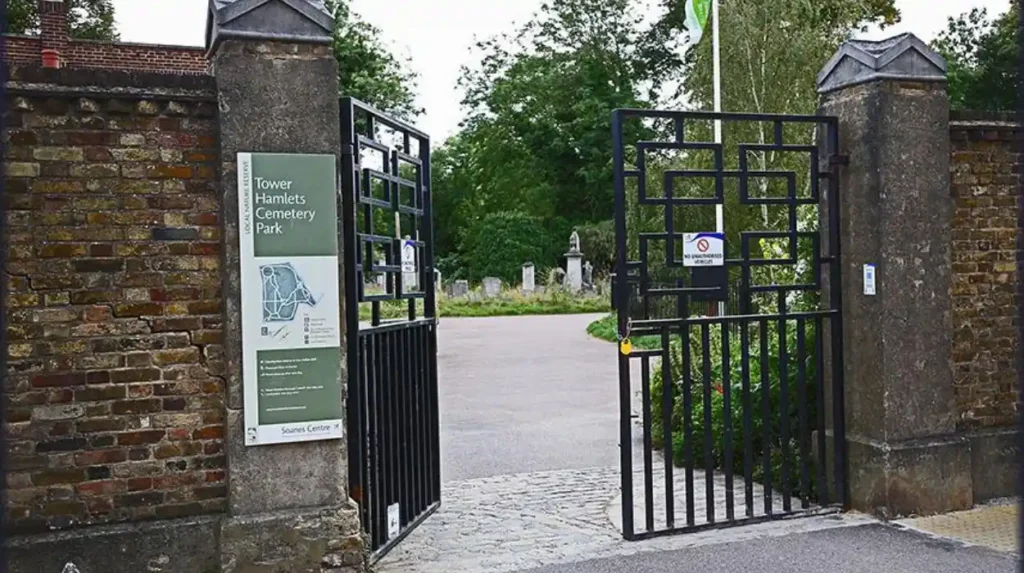
What Can Visitors Discover at Tower Hamlets Cemetery Park Today?
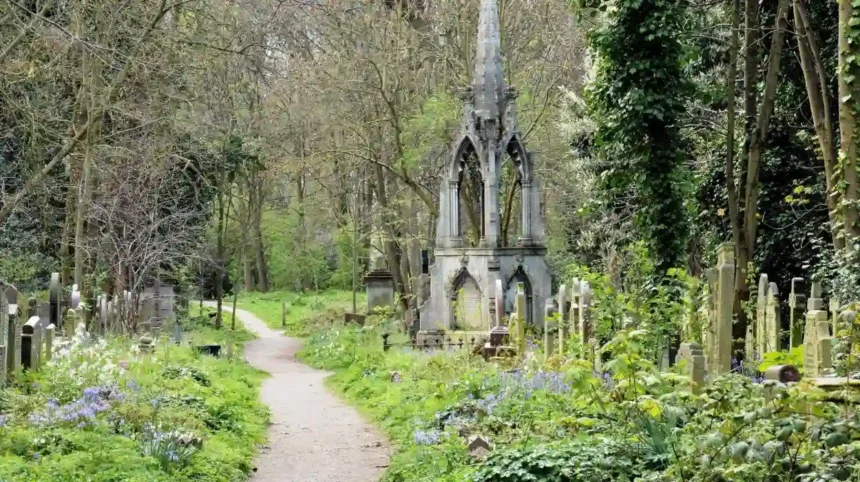
Visitors can explore historic gravestones, Victorian memorials, woodland habitats, mature trees and peaceful walking paths at Tower Hamlets Cemetery Park. The former burial ground combines local history, conservation and public recreation within one of East London’s most distinctive heritage landscapes.
The cemetery park retains a combination of historical features and natural habitats. Its landscape reflects more than 180 years of changing land use, conservation activity and public access.
Visitors can explore several aspects of its heritage.
Victorian memorial architecture
Gravestones and memorial structures provide evidence of nineteenth-century funerary design. Their inscriptions identify individuals, family relationships, occupations and religious affiliations.
Some monuments include carved angels, crosses, decorative borders and classical architectural details. These features help visitors understand the memorial traditions of Victorian London.
Woodland environment
Trees and vegetation now cover substantial areas of the former cemetery. The natural landscape creates habitats for birds, insects and other wildlife.
The park’s woodland character is an important part of its present identity. It also reflects the gradual transformation of a former burial ground into a conservation landscape.
Historical interpretation
The Friends of Tower Hamlets Cemetery Park support heritage education through historical information and community activities. Their work helps visitors understand the cemetery’s relationship with East London’s development.
Walking and outdoor recreation
The pathways provide opportunities for quiet walks, nature observation and historical exploration. Visitors can examine surviving memorials while experiencing the park’s changing woodland environment.
The site is particularly relevant to people researching family history. Its monuments and historical records offer information about individuals buried in the cemetery.
Visitors should remember that the park remains a historic burial ground. Respectful behaviour is important, particularly around graves, memorials and conservation areas.
Where Can Visitors Find the Historic Jewish Cemeteries of Mile End?
Mile End contains important historic Jewish burial grounds connected with London’s Sephardi and Ashkenazi communities. The Novo Cemetery, established in 1733, remains a particularly significant surviving example, while the Velho and Alderney Road sites preserve evidence of earlier Jewish settlement.
Mile End is one of the most important areas for understanding the religious and migration history of Tower Hamlets.
Jewish communities established burial grounds in this part of East London following the resettlement of Jewish people in England during the seventeenth century.
The historical sites represent two important traditions within London’s Jewish population: Sephardi and Ashkenazi communities.
Sephardi Jews have historical origins in Spain, Portugal and other parts of the Iberian and Mediterranean world. Ashkenazi Jews historically originated from Central and Eastern European communities.
Their burial grounds followed distinct religious and cultural practices.
What is the history of the Novo Cemetery?
The Novo Cemetery, also known as the Nuevo or New Beth Chaim Cemetery, opened in 1733. It served London’s Spanish and Portuguese Jewish community.
Historic England recognises the surviving cemetery as a Grade II registered historic park and garden. Its designation reflects its religious, historical and landscape significance.
The original cemetery covered slightly more than three acres. A further 1.7 acres were added in 1855 to provide additional burial space.
For approximately 150 years, the cemetery received a substantial proportion of London’s Sephardi burials. Its historical burial population included merchants, religious leaders and prominent members of the Jewish community.
Notable individuals associated with the cemetery include Diego Pereira, Baron Aguilar, and Daniel Mendoza, the celebrated eighteenth-century prizefighter.
The original cemetery was largely cleared during the 1970s as Queen Mary University of London expanded its Mile End campus. Approximately 7,000 sets of human remains were carefully excavated and reburied at a site near Brentwood in Essex.
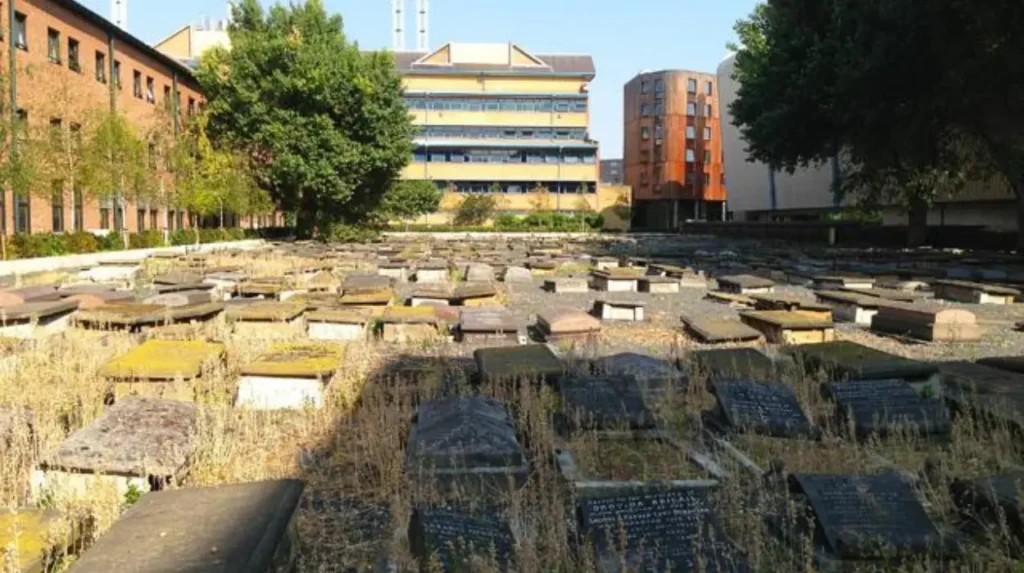
The surviving portion belongs to the 1855 extension. It occupies an enclosed area within the university campus.
Its distinctive low, horizontal gravestones reflect Sephardi burial traditions. The absence of conventional upright monuments forms an important part of its architectural and religious character.
What was the Velho Cemetery?
The Velho Cemetery was London’s first post-Resettlement Sephardi Jewish burial ground. It opened in Mile End in 1657 after the formal return of Jewish communities to England during the Protectorate period.
The cemetery served the Spanish and Portuguese Jewish community. Its establishment followed the development of the Bevis Marks Synagogue community in the City of London.
The burial ground eventually became full. Its replacement was the Novo Cemetery, which opened nearby in 1733.
The former Velho site is associated with the historic Beth Holim complex and the present-day Albert Stern House area on Mile End Road.
The site is important because it demonstrates the early establishment of organised Jewish religious and community institutions in East London.
Why is Alderney Road important?
Alderney Road contains the historic burial ground associated with London’s Ashkenazi Jewish community.
The cemetery began operating in 1696. It developed close to the earlier Sephardi burial grounds of Mile End.
Its history demonstrates the growth of different Jewish communities within the same geographical area. The presence of separate burial grounds reflects religious traditions, community organisation and the development of London’s Jewish population.
Together, the Novo, Velho and Alderney Road sites make Mile End an important destination for understanding the history of Jewish settlement in Britain.
How Do Tower Hamlets’ Historic Burial Grounds Reflect East London’s Migration History?
Historic burial grounds in Tower Hamlets reveal how migration shaped East London’s religious institutions, neighbourhoods and cultural identity. Jewish cemeteries, Victorian memorials and former parish burial grounds preserve evidence of communities arriving, establishing institutions and contributing to the borough’s development.
Tower Hamlets has a long history of international migration. Its location near the River Thames and the historic Port of London attracted people from different parts of Britain, Europe and beyond.
During the seventeenth century, Jewish communities established important religious and burial institutions around Mile End. These sites became part of a wider network of community buildings, synagogues, charitable institutions and residential neighbourhoods.
During the nineteenth century, industrialisation increased migration into the East End. Dock workers, factory employees, merchants and their families settled in areas including Poplar, Stepney, Whitechapel and Bow.
The cemeteries reflect these changing population patterns.
Tower Hamlets Cemetery contains the graves of people associated with different occupations and social backgrounds. Its proximity to the historic docks also connects the site with London’s maritime economy.
The Jewish burial grounds provide a different perspective. Their layouts, inscriptions and religious practices demonstrate how migrant communities maintained cultural traditions while establishing permanent roots in London.
The relationship between burial grounds and migration is important for understanding the borough’s wider historical development.
As you explore modern Mile End, you are crossing land shaped by centuries of migration and religious settlement. Explore the full [Insert Anchor Text: History of Jewish Communities in East London] to understand the origins of these communities and their contribution to the area’s cultural identity.
These historical connections remain relevant to visitors researching family ancestry, religious heritage and the development of multicultural London.
Which Former Burial Grounds Have Become Public Parks and Gardens in Tower Hamlets?
Several historic burial grounds and churchyards across Tower Hamlets have been converted into public gardens and green spaces. These landscapes preserve elements of their former religious and funerary uses while providing recreation, biodiversity and peaceful outdoor environments for modern communities.
The conversion of historic burial grounds into public spaces represents an important part of London’s urban development.
As populations increased and older burial sites became unsuitable for continued use, local authorities and public organisations developed alternative approaches to managing these landscapes.
Tower Hamlets contains several examples of this transformation.
What is the history of Shandy Street burial ground?
Shandy Street is an important example of a former burial ground that became a public park.
The burial ground operated between 1837 and 1852. It served the local population during a period when East London experienced significant demographic growth.
Archaeological investigations have identified human bone and gravestone fragments at the site. These discoveries confirm the area’s historical use as a burial ground.
The investigations also identified evidence of local clay pipe manufacturing, demonstrating the area’s wider industrial and residential history.
Today, the site forms part of the borough’s public open-space network.
Its archaeological significance makes it an important location for understanding how nineteenth-century communities used land for burial, manufacturing and everyday activities.
What is the historical importance of Altab Ali Park?
Altab Ali Park stands on the former churchyard site of St Mary’s Whitechapel.
The churchyard was converted into a public garden during the nineteenth century. The modern park also carries important historical and cultural significance.
It was renamed in memory of Altab Ali, a Bangladeshi textile worker murdered in a racist attack in Whitechapel in 1978.
The park contains the Shaheed Minar monument, which commemorates the Bengali Language Movement of 1952.
This combination of historical churchyard, anti-racism memorial and Bengali cultural monument makes the park an important heritage destination.
It connects the religious history of historic Whitechapel with the modern history of migration, identity and community activism.
Why are Christchurch Gardens historically significant?
Christchurch Gardens are among the public green spaces associated with the transformation of former religious grounds in East London.
The borough’s historic open-space records identify Christchurch Gardens among the churchyards and burial-related landscapes converted into public gardens during the nineteenth century.
These spaces demonstrate how urban authorities adapted existing land to meet the growing need for public recreation.
Their present-day landscape value is closely connected with the historical development of the surrounding neighbourhoods.
What Historic Architecture and Memorial Features Should Visitors Look For?
Historic cemeteries across Tower Hamlets preserve architectural features that reveal religious traditions, Victorian design and social differences. Visitors can identify horizontal gravestones, carved memorials, boundary walls, inscriptions and former cemetery structures that explain how different communities commemorated their dead.
The architectural character of historic burial grounds provides valuable information about the people and communities connected with them.
Tower Hamlets offers several distinctive examples.
Victorian gravestones and memorials
Tower Hamlets Cemetery Park contains numerous examples of nineteenth-century memorial design.
Victorian memorials frequently incorporated religious symbols, decorative carving and inscriptions. Wealthier families commissioned elaborate monuments, while working-class burials often had simpler markers.
These differences reflect the economic structure of nineteenth-century East London.
The cemetery’s approximately 47,000 monuments provide a substantial resource for studying memorial architecture and local social history.
Sephardi Jewish gravestones
The Novo Cemetery contains distinctive low, horizontal tombs.
These memorials reflect traditional Sephardi burial practices and distinguish the site from many conventional Victorian cemeteries.
The arrangement of graves provides information about religious customs and the community’s approach to equality in death.
Historic England identifies this landscape character as one of the principal reasons for the cemetery’s protected status.
Historic boundary walls
Boundary walls are another important feature of Tower Hamlets’ burial heritage.
The Novo Cemetery retains historic boundary structures dating from the eighteenth century. Parts of its boundary walls have Grade II listed status.
These structures demonstrate how burial grounds were separated from surrounding streets and buildings.
Their survival also helps researchers understand the original extent and historical arrangement of the cemetery.
Inscriptions and historical records
Gravestone inscriptions provide evidence of names, dates, occupations, religious affiliations and family connections.
They are particularly valuable for genealogical research.
Researchers combine physical inscriptions with burial registers, historical maps, census records and institutional archives to reconstruct individual histories.
These records also help explain changes in local populations over time.
How Are Historic Cemeteries and Heritage Landscapes Protected in Tower Hamlets?
Historic cemeteries and landscapes in Tower Hamlets receive protection through heritage designations, conservation policies, local authority management and community involvement. These mechanisms help preserve historic monuments, archaeological remains, religious sites, landscape character and important habitats for future generations.
Heritage protection is essential because historic burial grounds contain fragile archaeological and architectural resources.
Their preservation requires attention to buildings, memorials, vegetation, boundary structures and the historical character of the surrounding environment.
What does Grade II listing mean for the Novo Cemetery?
The Novo Cemetery is included on the Register of Parks and Gardens of Special Historic Interest at Grade II.
This designation recognises the site’s special historical and landscape importance.
Historic England identifies its association with one of Britain’s earliest post-Resettlement Jewish communities as a key reason for protection.
The cemetery is also recognised for its distinctive Sephardi burial landscape and its importance within the historic Mile End Jewish community.
The designation helps ensure that its historic character receives appropriate consideration during planning and conservation decisions.
How does the local authority protect historic landscapes?
The London Borough of Tower Hamlets uses conservation policies and planning guidance to protect important historic environments.
Its conservation strategy identifies nationally important historic parks and gardens within the borough.
These include:
- Victoria Park, a Grade II* registered historic park.
- Novo Cemetery, a Grade II registered historic landscape.
- Island Gardens, a Grade II registered historic park.
These designations demonstrate that Tower Hamlets’ heritage extends beyond individual monuments and burial grounds.
The council also considers historic character, archaeological evidence and the relationship between open spaces and surrounding development when managing the borough’s built environment.
Why are archaeological investigations important?
Archaeological investigations help identify historic burial grounds and remains that are not visible above ground.
The Historic England Archaeological Priority Areas research for Tower Hamlets identifies several former burial locations, including Shandy Street and other historic religious sites.
Archaeological evidence can reveal burial arrangements, population characteristics and historical land use.
Human remains also require careful treatment. Investigations involving historic graves must consider applicable legal requirements, archaeological standards and the views of relevant religious communities.
These responsibilities are particularly important where development proposals affect former burial grounds. Historic England
Which Other Heritage Landscapes Can Visitors Explore Near Tower Hamlets’ Historic Cemeteries?
Tower Hamlets contains several historic parks and landscaped environments that complement its cemetery heritage. Victoria Park, Island Gardens and Stepney Green preserve different aspects of the borough’s social, architectural and environmental history, offering visitors additional places to explore.
Historic cemeteries are part of a wider network of heritage landscapes across the borough.
These parks provide additional context about how East London developed and how public open spaces became important to urban communities.
What is the historical significance of Victoria Park?
Victoria Park is one of East London’s most important historic green spaces.
It opened in 1845 following a public campaign for recreational space in the overcrowded East End.
The campaign included a petition to Queen Victoria signed by approximately 30,000 people. Supporters wanted a large public park that improved access to healthy outdoor recreation.
The government acquired land that had previously been used for market gardening, grazing and gravel extraction.
The park became an important recreational destination for working-class residents.
Its historical development reflects nineteenth-century concerns about public health, urban overcrowding and access to green space.
Victoria Park received Grade II* registration as a historic park and garden. towerhamlets.gov.uk+1
Why is Island Gardens important?
Island Gardens is a historic riverside landscape situated on the Isle of Dogs.
It preserves views across the River Thames towards Greenwich, including the historic buildings associated with the Maritime Greenwich World Heritage Site.
The land originally had industrial associations, including manufacturing and ship repair.
Its preservation helped protect important riverside views during a period of development on the Isle of Dogs.
Island Gardens received Grade II registration as a historic park and garden.
Visitors can explore its landscaped setting and understand the historical relationship between the industrial East End and the maritime heritage of Greenwich.
What can visitors discover at Stepney Green Gardens?
Stepney Green Gardens preserve part of the historical landscape of Stepney Green.
The wider green originally served as an important open area for local residents and public gatherings.
Historical records connect the area with public hustings during the nineteenth century. Stepney Green Gardens opened to the public in 1872 under the Metropolitan Board of Works.
The gardens demonstrate how former open land was adapted into managed public recreational spaces as East London became increasingly urbanised.
They provide additional context for visitors studying the historical development of Stepney and its surrounding residential neighbourhoods.
Explore More Area Guide
Tower Hamlets Museums: Best Educational Attractions in East London
Best Places to Experience Docklands Waterfront in East London
How Can Visitors Plan a Historic Cemetery and Heritage Walk Across Tower Hamlets?
Visitors can organise a heritage walk by combining Tower Hamlets Cemetery Park, Mile End’s historic Jewish burial grounds and nearby public gardens. Planning around opening arrangements, walking distances, religious sensitivities and public transport makes exploring these historic locations easier.
A heritage walk provides a practical way to understand the relationship between historic burial grounds and the modern borough.
However, the sites are spread across different neighbourhoods. Visitors should plan their route according to the locations they want to explore.
What is a suitable route for cemetery history enthusiasts?
Visitors interested in Jewish heritage can concentrate on Mile End and its surrounding historic sites. The Novo Cemetery, Velho Cemetery historic location and Alderney Road burial ground provide a focused introduction to the borough’s Jewish history.
Tower Hamlets Cemetery Park offers a separate experience focused on Victorian funerary architecture and woodland conservation.
A wider heritage itinerary can include Altab Ali Park, Stepney Green Gardens and Victoria Park.
These locations provide different perspectives on the borough’s religious, social and environmental history.
How can visitors reach the historic sites?
Tower Hamlets has several Underground, Overground, DLR and bus connections.
Mile End Underground station provides access to the Mile End heritage area. It is served by the Central, District and Hammersmith & City lines.
Bow Road and Mile End stations provide access to Tower Hamlets Cemetery Park, depending on the chosen walking route.
Whitechapel station connects visitors with Altab Ali Park and the surrounding historic Whitechapel neighbourhood.
Visitors should check current transport services and walking directions before travelling.
What should visitors know before entering historic cemeteries?
Not every historic burial ground operates as a public park.
Tower Hamlets Cemetery Park is a public green space, while the Novo Cemetery is enclosed within Queen Mary University of London’s campus and has different access arrangements.
Other historic Jewish burial grounds also have religious and ownership restrictions.
Visitors should:
- Check access arrangements before visiting enclosed burial grounds.
- Respect religious customs and memorials.
- Avoid touching fragile gravestones.
- Follow photography restrictions where applicable.
- Remain on permitted paths.
- Check whether guided heritage tours are available.
These precautions help protect historic structures and respect the religious significance of the sites.
Why Will Tower Hamlets’ Cemetery Heritage Remain Important for Future Generations?
Tower Hamlets’ historic cemeteries and heritage landscapes preserve evidence of London’s migration, religious diversity, social development and environmental history. Their continued conservation supports historical research, public education, biodiversity and cultural understanding as the borough experiences further urban development.
The borough’s historic burial grounds provide an irreplaceable record of East London’s development.
Tower Hamlets Cemetery Park demonstrates the transformation of Victorian burial infrastructure into a public conservation landscape. Its monuments and burial records preserve information about generations of local residents.
The Novo Cemetery represents the historical establishment of Sephardi Jewish communities in East London. Its surviving gravestones and protected landscape provide evidence of religious traditions that developed over nearly three centuries.
The former Velho and Alderney Road burial grounds demonstrate the earlier presence and growth of Jewish communities in Mile End.
Other locations, including Shandy Street and Altab Ali Park, connect historic burial landscapes with modern public spaces and community identity.
These locations also contribute to environmental conservation. Mature trees, woodland habitats and green corridors support urban biodiversity and provide access to nature within a densely developed part of London.
Future conservation work requires cooperation between local authorities, heritage organisations, religious communities, universities and residents.
Historic England’s protection of significant landscapes, the London Borough of Tower Hamlets’ conservation policies and the work of organisations such as the Friends of Tower Hamlets Cemetery Park all contribute to preserving these resources.
For visitors, exploring historic cemeteries across Tower Hamlets provides a deeper understanding of East London’s past. The borough’s burial grounds, memorials, gardens and historic parks demonstrate how religious traditions, migration, urban growth and environmental conservation have shaped its identity.
These landscapes remain important cultural resources for residents, researchers and future generations interested in London’s history.
What is the most famous historic cemetery in Tower Hamlets?
Tower Hamlets Cemetery Park is the borough’s most recognised historic cemetery. It opened in 1841, became one of London’s Magnificent Seven Victorian cemeteries and contains more than 350,000 burials.