
Canary Wharf is one of London’s most distinctive destinations for discovering contemporary public art. Located in the Isle of Dogs in East London, the financial district combines modern architecture, landscaped squares, waterfront promenades and an extensive collection of outdoor sculptures and installations.
- What Is the Canary Wharf Public Art Trail?
- How Did Canary Wharf Develop Its Public Art Collection?
- Where Does the Canary Wharf Public Art Trail Begin?
- Which Sculptures Should You See Along the Canary Wharf Art Trail?
- Draped Seated Woman by Henry Moore
- Couple on Seat by Lynn Chadwick
- Minotaur and Hare on Bench by Sophie Ryder
- The Knot by Richard Hudson
- Metamorphosis by Helaine Blumenfeld
- What Are the Most Interesting Public Art Installations in Canary Wharf?
- Columbus Screen by Wendy Ramshaw
- Chimney by Andrew Burton
- Shine Your Colours by Tine Bech
- Skystation by Peter Newman
- Wharf Walk by Emma Biggs
- bit.fall by Julius Popp
- Where Can You Discover Public Art Around Canary Wharf’s Squares and Gardens?
- How Does the Waterfront Environment Enhance the Canary Wharf Art Trail?
- How Can Visitors Plan a Self-Guided Canary Wharf Art Walk?
- When Is the Best Time to Explore the Canary Wharf Public Art Trail?
- How Can You Reach the Canary Wharf Public Art Trail?
- Is the Canary Wharf Public Art Trail Free to Visit?
- What Should Art Enthusiasts Look for During Their Visit?
- How Does Public Art Contribute to Canary Wharf’s Cultural Identity?
- What Is the Future of Public Art Around Canary Wharf?
The Canary Wharf Public Art Trail offers visitors an opportunity to explore more than 100 artworks displayed throughout the estate. The collection includes large-scale sculptures, abstract installations, decorative architectural features, murals and interactive artworks. Many pieces are positioned in open squares, beside historic docks and within landscaped gardens.
Unlike traditional art galleries, the trail allows visitors to experience art as part of an everyday urban environment. There is no general admission charge for exploring the outdoor collection, and visitors do not need to follow a fixed route.
The collection is managed by Canary Wharf Group, which has developed public art as an important part of the area’s urban environment. Its artworks include pieces by internationally recognised sculptors and contemporary artists, making Canary Wharf an important destination for outdoor art enthusiasts.
Whether visitors have an hour between business meetings or an entire afternoon for sightseeing, the public art trail provides an accessible way to explore the cultural character of East London.
What Is the Canary Wharf Public Art Trail?
The Canary Wharf Public Art Trail is a free outdoor art collection featuring more than 100 permanent and temporary artworks. It includes sculptures, murals, architectural installations and interactive pieces displayed across the Canary Wharf estate in East London.
The collection extends across pedestrian squares, waterfront locations, gardens, office developments and public spaces. It is not restricted to one gallery or exhibition building. Visitors discover artworks while walking between Canary Wharf’s transport stations, shopping destinations and landscaped areas.
Canary Wharf Group owns, commissions, purchases and displays works within the collection. Some artworks are permanent installations, while others appear through seasonal exhibitions and temporary cultural programmes.
According to the group’s July 2024 art brochure, the collection contains more than 100 pieces. The brochure organises the artworks into five geographical zones, helping visitors understand their locations across the estate.
The collection includes several artistic formats:
- Standalone sculptures: Three-dimensional works such as Henry Moore’s Draped Seated Woman, also known as Old Flo.
- Architectural artworks: Artistic features incorporated into buildings, gates, bridges and other structures.
- Light installations: Illuminated works such as bit.fall by Julius Popp.
- Mosaics and decorative surfaces: Examples include Emma Biggs’s Wharf Walk.
- Interactive installations: Works designed to encourage visitors to sit, observe or engage with their surroundings.
This variety makes the trail relevant to visitors interested in sculpture, contemporary design, architecture, photography and urban regeneration.
How Did Canary Wharf Develop Its Public Art Collection?
Canary Wharf’s public art collection developed from an exhibition held in 1999 called The Shape of the Century: 100 Years of Sculpture in Britain. Selected sculptures from that exhibition were subsequently acquired, establishing the foundation of today’s expanding collection.
The history of the collection is closely connected to the transformation of London’s Docklands.
Canary Wharf occupies an area that formed part of the former West India Docks. These docks opened in 1802 and became important centres for international trade, particularly the movement of goods between Britain and overseas markets.
Commercial dock activity declined during the twentieth century. The West India Docks eventually closed in 1980, leaving large areas of industrial land available for redevelopment.
The Canary Wharf development programme transformed this former dockland landscape into a major financial and commercial district. Construction introduced office towers, pedestrian squares, landscaped areas and new transport connections.
Public art became part of this development strategy. Rather than concentrating cultural activity inside museums, Canary Wharf Group incorporated artworks into the estate’s streets, squares and waterfront environments.
The 1999 sculpture exhibition provided the starting point for the permanent collection. Selected works remained part of the estate after the exhibition ended. Subsequent commissions, acquisitions and loans expanded the collection.
Today, this artistic environment connects the district’s contemporary identity with its industrial heritage. For a deeper understanding of the transformation, explore the [history of the West India Docks and Canary Wharf’s transformation into a financial district].
The collection also demonstrates how public art contributes to urban placemaking. Placemaking is the process of designing and managing public spaces to encourage cultural activity, social interaction and a stronger sense of place.
Where Does the Canary Wharf Public Art Trail Begin?
Visitors can begin the Canary Wharf art trail at several accessible locations, including Westferry Circus, Cabot Square, Canada Square and Jubilee Park. Starting at Westferry Circus provides a convenient west-to-east route towards Wood Wharf.
The official Canary Wharf art brochure divides the estate into five geographical zones. These zones make it easier to organise a self-guided visit without repeatedly crossing the same pedestrian areas.
Zone A – Westferry
The western section includes Westferry Circus and Columbus Courtyard. Visitors encounter works such as Windwand by Ron Arad, Chimney by Andrew Burton and Columbus Screen by Wendy Ramshaw.
Zone B – Cabot
Cabot Square and the surrounding pedestrian areas contain sculptures and artistic features by established artists. Henry Moore’s Draped Seated Woman is an important landmark in this section.
Zone C – Canada Square and Churchill Place
This area connects office buildings, pedestrian routes and public spaces. It includes artworks associated with Canada Square, North Dock and Churchill Place.
Zone D – Jubilee Park and surrounding areas
The southern-central section includes landscaped public spaces, pedestrian connections and sculptures around Jubilee Park and Bank Street.
Zone E – Montgomery Square and Wood Wharf
The eastern section features contemporary sculptures and installations around Montgomery Square, South Dock and Wood Wharf.
Which Sculptures Should You See Along the Canary Wharf Art Trail?
Canary Wharf features sculptures by internationally recognised artists, including Henry Moore, Lynn Chadwick, Helaine Blumenfeld and Richard Hudson. Notable works include Draped Seated Woman, Couple on Seat, Minotaur and Hare on Bench, and The Knot.
The collection includes traditional figurative sculpture alongside contemporary abstract forms. Each artwork uses different materials, dimensions and artistic techniques.
Draped Seated Woman by Henry Moore
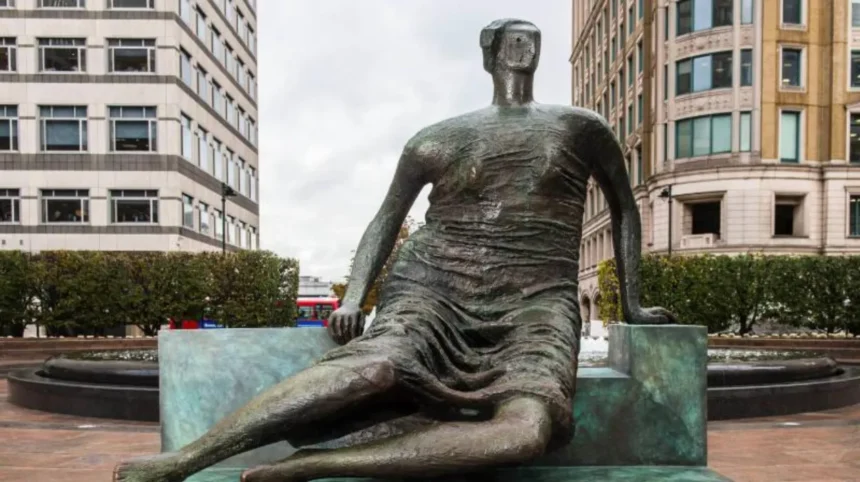
Draped Seated Woman, commonly known as Old Flo, is a bronze sculpture created by British sculptor Henry Moore in 1957–58.
The sculpture represents a seated female figure with simplified forms and substantial proportions. Moore’s work explores the relationship between the human body, space and sculptural material.
Old Flo has an important connection with East London’s cultural history. The sculpture previously stood in other locations before returning to the area in 2017. It is now displayed in Cabot Square.
Its position within the landscaped square makes it one of the most recognisable artworks on the trail.
Couple on Seat by Lynn Chadwick
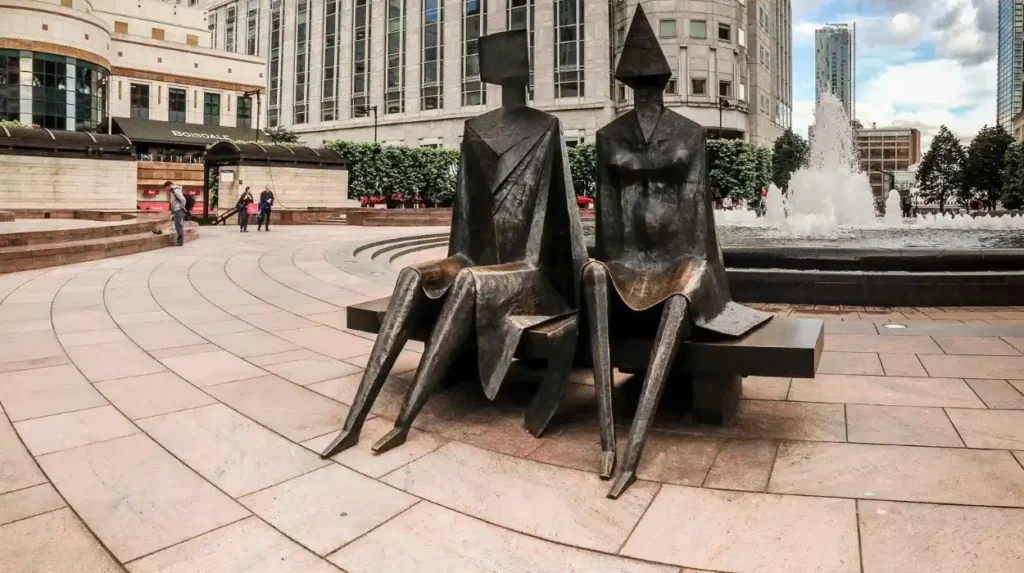
Lynn Chadwick’s Couple on Seat is another notable sculpture within the Canary Wharf collection.
Chadwick was a British sculptor recognised for his distinctive figurative metal sculptures. His work frequently explores human relationships through angular shapes and simplified human forms.
The sculpture is located near Cubitt Steps and the Cabot Square area. Its placement encourages visitors to examine how figurative sculpture interacts with pedestrian spaces.
Minotaur and Hare on Bench by Sophie Ryder
Sophie Ryder’s Minotaur and Hare on Bench introduces mythological and animal-inspired figures into the public environment.
Ryder is a British sculptor known for creating large-scale representations of hares, human figures and mythological creatures.
The artwork combines sculpture with seating, making it an example of how public art can also support everyday activities.
Its placement in the Wood Wharf area provides another reason to extend the trail beyond the central financial district.
The Knot by Richard Hudson
Richard Hudson’s The Knot is a contemporary sculptural work displayed within the estate.
Hudson’s artistic practice explores organic shapes, polished surfaces and abstract forms. His sculptures often encourage visitors to consider how material, reflection and three-dimensional space influence visual perception.
The work contributes to the variety of contemporary sculpture displayed around Wood Wharf and the surrounding pedestrian areas.
Metamorphosis by Helaine Blumenfeld
Helaine Blumenfeld is an internationally recognised sculptor whose work explores movement, transformation and organic forms.
Her sculpture Metamorphosis is included in the Wood Wharf collection. The title refers to transformation, a concept reflected in the changing shapes and forms associated with her artistic practice.
Together, these sculptures demonstrate how Canary Wharf combines established British sculpture with contemporary international artistic contributions.
What Are the Most Interesting Public Art Installations in Canary Wharf?
Canary Wharf’s installations include interactive seating, illuminated displays, decorative screens, mosaics and architectural artworks. Examples include Skystation, Columbus Screen, Wharf Walk, Shine Your Colours and the illuminated installation bit.fall.
Columbus Screen by Wendy Ramshaw
Columbus Screen was created by British artist and jewellery designer Wendy Ramshaw in 2000.
The installation measures approximately 15 metres by 2 metres. Its circular decorative forms reference Christopher Columbus and the historical maps associated with exploration.
The work demonstrates how artistic design can transform an ordinary pedestrian space into a place for cultural discovery.
Chimney by Andrew Burton
The sculpture is constructed from numerous small bricks arranged in colourful patterns. Its design references the Qutub Minar in Delhi, India, one of the world’s most recognisable historic brick minarets.
The installation draws attention to traditional building materials while presenting them through contemporary sculptural design.
Visitors can walk around the structure to examine its different patterns and colours.
Shine Your Colours by Tine Bech
Tine Bech created Shine Your Colours in 2021 for Canary Wharf’s Summer Lights festival.
The installation uses coloured glass panels to change the way visitors perceive the surrounding environment. Light passing through the panels produces coloured reflections on nearby surfaces.
Its interactive character makes it particularly suitable for photography and family visits.
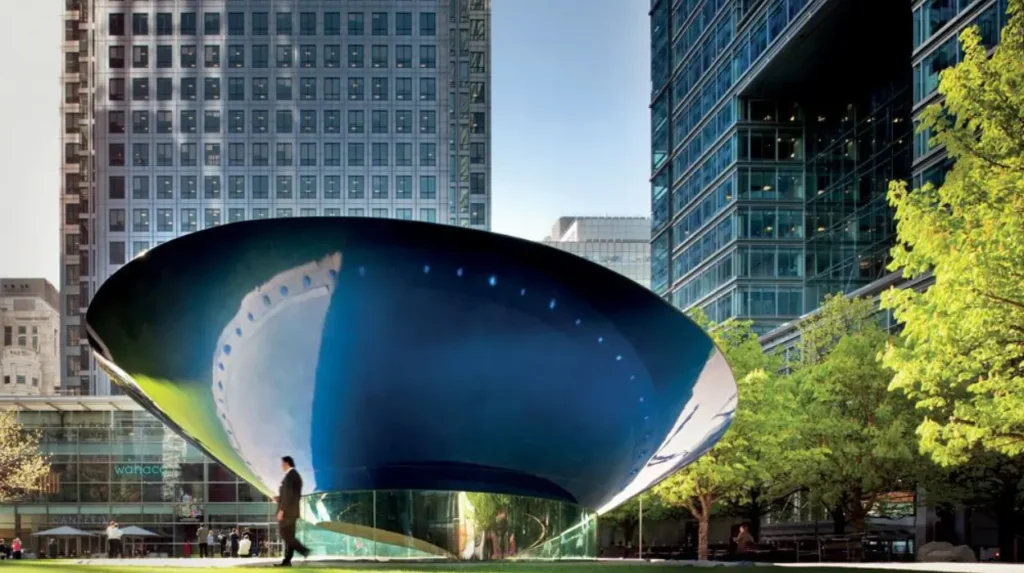
Skystation by Peter Newman
The installation combines sculpture with seating. Its curved structure encourages visitors to sit or lie down and look towards the surrounding buildings and sky.
This work demonstrates how public art can perform a practical function while maintaining an artistic identity.
Wharf Walk by Emma Biggs
Emma Biggs created Wharf Walk in 2013. It is a mosaic installation located on level -2 of Jubilee Place Mall.
A mosaic is an artwork produced by arranging small pieces of coloured materials into a larger pattern or image.
The designs reference the commercial activities and trades associated with the historic docklands. This creates a direct visual connection between contemporary Canary Wharf and its industrial past.
bit.fall by Julius Popp
bit.fall is a digital installation by German artist Julius Popp.
The work uses controlled water droplets to produce changing visual patterns and words. Its technology connects digital information with a physical installation.
The piece demonstrates how contemporary public art incorporates engineering, programming and interactive systems.
These installations show that the Canary Wharf collection extends beyond conventional statues. It includes works that use light, water, digital technology, architectural materials and functional design.
Where Can You Discover Public Art Around Canary Wharf’s Squares and Gardens?
The main public art locations include Cabot Square, Canada Square, Jubilee Park, Montgomery Square, Westferry Circus and Wood Wharf. Each location combines artworks with landscaped spaces, pedestrian routes, seating and surrounding architecture.
Cabot Square
Cabot Square is one of the central public spaces within Canary Wharf.
The square contains a fountain, landscaped surroundings and several artworks. Henry Moore’s Draped Seated Woman is one of its most prominent sculptures.
The surrounding office buildings create a distinctive architectural setting. Visitors can examine the relationship between sculpture, water features and modern commercial architecture.
Canada Square
Canada Square is a major pedestrian and commercial destination.
The surrounding buildings include One Canada Square, one of London’s most recognisable skyscrapers. Public artworks in this area create visual contrasts with the surrounding glass and steel architecture.
Visitors interested in architectural photography can examine how sculptures and open spaces contribute to the district’s urban design.
Jubilee Park
Jubilee Park provides landscaped green space above Canary Wharf Underground station.
The park features planting, water elements, pedestrian paths and seating. It offers visitors a quieter environment between the district’s office towers and shopping areas.
Artworks and sculptural features around the park make it a useful stopping point during the trail.
Montgomery Square
Montgomery Square is an important cultural and public gathering space.
The square hosts artworks, public events and seasonal installations. Its open layout makes it suitable for temporary exhibitions and community activities.
Visitors can combine the square with a walk towards Wood Wharf and South Dock.
Westferry Circus
Westferry Circus is situated towards the western end of the Canary Wharf estate.
Its landscaped gardens and architectural surroundings create a setting for several outdoor artworks. Sculptures such as Windwand and Vanishing Point form part of the collection in this area.
The location also provides access to waterfront walking routes and views towards the River Thames.
Wood Wharf
Wood Wharf is an eastern extension of the Canary Wharf estate.
Its contemporary residential buildings, pedestrian streets and waterfront areas contain additional public artworks. The collection includes sculptures such as The Knot, Metamorphosis and Minotaur and Hare on Bench.
Wood Wharf provides a different environment from the main financial district because its public spaces connect residential development with waterfront landscaping.
How Does the Waterfront Environment Enhance the Canary Wharf Art Trail?
Canary Wharf’s waterfront setting connects public art with former dock basins, pedestrian promenades and landscaped waterside spaces. Locations around North Dock, South Dock, Eden Dock and Wood Wharf offer opportunities to experience sculptures alongside water and modern architecture.
The waterfront is an important part of the district’s identity. Canary Wharf developed around former commercial docks, and the retained water features provide a visible connection with its industrial landscape.
Eden Dock
Eden Dock is a landscaped waterfront environment within Canary Wharf.
The area incorporates ecological planting, water-based features and spaces for visitors to observe the natural environment. It connects environmental design with the wider public realm.
Visitors interested in sustainable urban development can examine how planting and water management contribute to the experience of the district.
South Dock
South Dock provides an attractive setting for waterfront walks and photography.
Its surrounding buildings create reflections across the water, particularly in changing daylight conditions. Visitors can combine the dockside route with sculptures and installations around Wood Wharf.
Whale on the Wharf
Whale on the Wharf (Skyscraper) is a large-scale public artwork by artists Jason Klimoski and Lesley Chang.
The sculpture is located around Wood Wharf and adds a distinctive contemporary artwork to the waterfront environment.
Its subject connects the experience of the urban landscape with marine life and environmental awareness. It is also an important photographic landmark within the eastern section of the trail.
The waterfront setting gives visitors another way to understand the relationship between public art, landscape design and Canary Wharf’s former dockland geography.
How Can Visitors Plan a Self-Guided Canary Wharf Art Walk?
Visitors can explore the Canary Wharf art trail independently using the official collection map or digital guide. A practical visit includes Westferry Circus, Cabot Square, Canada Square, Jubilee Park, Montgomery Square and Wood Wharf.
A self-guided walk gives visitors flexibility to spend more time examining particular artworks. The official collection brochure provides artwork names, artists and geographical zones.
A suggested west-to-east itinerary is:
- Westferry Circus: Begin with the western sculptures and landscaped surroundings.
- Columbus Courtyard: Discover Columbus Screen and nearby artistic features.
- Cabot Square: Visit Henry Moore’s Draped Seated Woman and other sculptures.
- Canada Square: Explore artworks around the financial district’s central buildings.
- Jubilee Park: Take a break and examine the surrounding installations.
- Montgomery Square: Discover contemporary sculpture and seasonal cultural displays.
- Wood Wharf: Finish with waterfront artworks and sculptures around South Dock.
The route can be adjusted according to available time and personal interests. Visitors concentrating on sculpture can spend longer at Cabot Square, while photography enthusiasts can extend their walk towards Wood Wharf.
The official art brochure is particularly useful because the collection is distributed across several locations rather than concentrated in one area.
Canary Wharf Group also provides a digital art guide through the Bloomberg Connects application. The guide includes photographs and audio information that help visitors understand the artworks.
The application is useful for visitors who prefer additional background information while exploring independently.
When Is the Best Time to Explore the Canary Wharf Public Art Trail?
The Canary Wharf Public Art Trail is available throughout the year, with daylight hours providing clear views of sculptures, architectural details and landscaped spaces. Evening visits offer opportunities to experience illuminated artworks and seasonal light installations.
The best visiting time depends on the type of artwork visitors want to explore.
Morning visits
Morning is suitable for visitors who prefer quieter pedestrian areas and natural daylight. Sculptures are easier to photograph when surrounding spaces experience less pedestrian activity.
Afternoon visits
Afternoons provide opportunities to combine the art trail with shopping, dining and waterfront sightseeing. Visitors can explore the central collection before continuing towards Wood Wharf.
Evening visits
Evening visits provide a different perspective on illuminated installations and modern architecture. The surrounding office buildings also create an interesting photographic environment.
Seasonal Light Installations
Canary Wharf hosts seasonal cultural programmes that introduce temporary artworks into the estate.
Winter Lights is an established annual light art festival featuring illuminated installations across public spaces. The festival combines technology, lighting design and contemporary artistic expression.
The Summer Lights programme also introduces installations and cultural activities.
These events are different from the permanent art collection. Temporary artworks appear for limited periods, so visitors should check the official event information before planning a visit.
The distinction is important because the permanent collection remains available throughout the year, while festival installations follow individual event schedules.
How Can You Reach the Canary Wharf Public Art Trail?
Canary Wharf is accessible through the Jubilee line, Elizabeth line and Docklands Light Railway. Visitors can also use local bus services, river transport and pedestrian routes to reach the public art collection in East London.
Underground
Canary Wharf Underground station is served by the Jubilee line. It provides connections with central London destinations, including London Bridge, Westminster and Bond Street.
Elizabeth Line
Canary Wharf Elizabeth line station provides connections towards Paddington, Heathrow Airport and eastern London destinations.
It is particularly convenient for international visitors arriving through Heathrow Airport.
Docklands Light Railway
The Docklands Light Railway (DLR) connects Canary Wharf with destinations across London’s Docklands.
Nearby stations provide access to areas such as West India Quay, Heron Quays and the surrounding Isle of Dogs.
River Transport
Canary Wharf Pier provides access to river transport services on the Thames.
River journeys offer an alternative way to reach the district while experiencing London’s waterfront landscape.
Walking and Cycling
Canary Wharf has pedestrian routes connecting its squares, docks, gardens and commercial areas. Visitors can explore much of the public art collection on foot.
Cyclists can also use the surrounding road and cycle network, following local signage and designated cycling arrangements.
The central collection is relatively compact, but exploring every zone requires additional walking time.
Is the Canary Wharf Public Art Trail Free to Visit?
The outdoor Canary Wharf public art collection is free to explore. Visitors do not need a general admission ticket or advance booking to view the permanent sculptures and installations displayed in accessible public areas across the estate.
Free access is one of the collection’s defining features.
Unlike traditional museums and commercial galleries, the trail places artworks within everyday public environments. Visitors can encounter sculptures while walking to restaurants, offices, shopping centres and waterfront destinations.
There are, however, practical considerations.
- Temporary exhibitions and special events follow their own admission arrangements.
- Some artworks are located inside shopping or commercial buildings.
- Individual indoor locations follow their own opening hours and access arrangements.
- Certain temporary installations operate only during scheduled events.
- Weather conditions sometimes affect access to outdoor installations.
Visitors should also respect private building entrances, residential areas and any restricted spaces.
The permanent outdoor collection provides a substantial cultural experience without requiring visitors to purchase an exhibition ticket.
What Should Art Enthusiasts Look for During Their Visit?
Art enthusiasts should examine the relationship between artistic materials, architectural surroundings, public space and the docklands landscape. Canary Wharf offers opportunities to study figurative sculpture, abstract forms, digital installations, decorative design and environmental artworks.
A more detailed visit involves examining the artistic characteristics of individual works rather than simply identifying their locations.
Materials and Construction
Visitors can observe how artists use bronze, metal, glass, stone, brick and other materials to create different visual effects.
Henry Moore’s bronze sculpture demonstrates the use of traditional sculptural materials, while Tine Bech’s coloured glass installation explores transparency and light.
Scale and Proportion
Large-scale installations provide opportunities to examine the relationship between artworks and surrounding buildings.
Sculptures positioned near high-rise developments often create strong contrasts in scale, making the district particularly relevant to architecture enthusiasts.
Light and Reflection
Light plays an important role in several Canary Wharf installations.
Glass panels, reflective surfaces and illuminated artworks change their visual appearance according to daylight and viewing position.
Public Interaction
Some artworks invite visitors to sit, walk around or observe their surroundings from different perspectives.
Peter Newman’s Skystation is an example of sculpture that combines artistic expression with a practical function.
These characteristics make the trail useful for students, photographers, designers and visitors interested in contemporary urban culture.
Explore More Area Guide
Exploring Historic Bridges and Canals Across Tower Hamlets
Best Outdoor Photography Spots in Tower Hamlets, East London
How Does Public Art Contribute to Canary Wharf’s Cultural Identity?
Public art contributes to Canary Wharf’s cultural identity by making creative work accessible beyond traditional galleries. Its collection connects contemporary sculpture, architecture, environmental design and the area’s industrial heritage through artworks distributed across everyday public spaces.
Canary Wharf is primarily recognised as an international financial district. However, its cultural environment extends beyond offices, commercial buildings and shopping centres.
The public art collection introduces opportunities for cultural participation within a busy commercial neighbourhood.
Its impact can be understood through several aspects.
Cultural accessibility: Free outdoor artworks allow residents, workers and tourists to experience contemporary art without purchasing museum tickets.
Urban regeneration: Artistic installations contribute to the identity of redeveloped docklands. They create visual landmarks within an area transformed from an industrial port into a modern business district.
Tourism: The collection provides another reason for visitors to explore East London. Art enthusiasts can combine sculpture viewing with waterfront walks, architecture and shopping.
Education: Public artworks introduce visitors to artistic techniques, historical references and contemporary design. Families and students can use the collection as an informal learning environment.
Community engagement: Temporary exhibitions, public festivals and interactive installations introduce additional cultural activities into the estate.
The collection also demonstrates how contemporary urban development incorporates cultural infrastructure. Art is not restricted to exhibition buildings but becomes part of the wider pedestrian environment.
What Is the Future of Public Art Around Canary Wharf?
Canary Wharf’s public art programme continues to develop through permanent commissions, temporary exhibitions, digital installations and seasonal cultural events. Future additions maintain the district’s connection with contemporary artistic practice and accessible public spaces.
The collection’s development reflects changing approaches to urban art and public engagement.
Several areas are particularly relevant to its future.
Digital and technological art: Digital installations introduce programming, electronic systems and interactive experiences into public environments.
Environmental themes: Artworks connected with marine life, biodiversity and sustainable development provide opportunities to discuss environmental issues.
Temporary cultural programmes: Seasonal exhibitions allow the estate to introduce new artistic approaches without replacing the permanent collection.
Public participation: Interactive artworks and family-focused trails encourage visitors to participate rather than simply observe.
An example of this changing programme is the development of Canary Wharf’s children’s art trail. The 2026 edition includes 12 artworks distributed around the estate, providing a more accessible introduction to public art for younger visitors.
Canary Wharf Group’s continuing investment in its collection demonstrates the importance of cultural programming within large-scale urban developments.
The district’s public spaces therefore remain relevant to visitors interested in contemporary art, architecture and the relationship between culture and city planning.
The Canary Wharf Public Art Trail provides an accessible introduction to contemporary sculpture and outdoor installations in East London. Its collection of more than 100 artworks combines established sculptors, contemporary artists, interactive installations and architectural features.
Locations such as Cabot Square, Canada Square, Jubilee Park, Westferry Circus and Wood Wharf offer different opportunities to discover the collection.
Visitors can explore Henry Moore’s Draped Seated Woman, examine Wendy Ramshaw’s Columbus Screen, discover the colourful Chimney by Andrew Burton and experience contemporary installations throughout the waterfront district.
The trail also provides an opportunity to understand Canary Wharf’s transformation from a historic dockland area into a major financial and cultural destination.
With free access to its outdoor collection, convenient transport connections and a variety of landscaped public spaces, Canary Wharf offers an engaging destination for art enthusiasts, tourists, residents and business travellers.
What is the Canary Wharf Public Art Trail?
The Canary Wharf Public Art Trail is an outdoor collection of more than 100 artworks displayed across Canary Wharf. It includes sculptures, murals, interactive installations and contemporary art by internationally recognised artists.