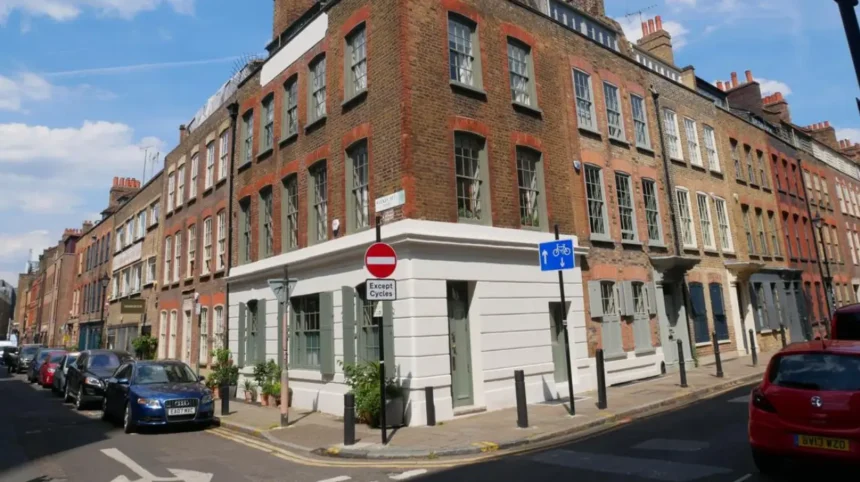
Spitalfields is one of East London’s most historically significant neighbourhoods. Located in the London Borough of Tower Hamlets, close to Liverpool Street, Shoreditch and Whitechapel, the area combines Georgian architecture, traditional markets, independent retailers, historic religious buildings and multicultural heritage.
- What Makes Spitalfields Historically Important in East London?
- Which Historic Streets Should Visitors Explore in Spitalfields?
- Why Is Old Spitalfields Market an Essential Visitor Attraction?
- What Architectural Heritage Can Visitors Discover Around Christ Church Spitalfields?
- How Does Spitalfields Reflect London’s Huguenot and Silk-Weaving Heritage?
- Which Cultural Attractions Reveal Spitalfields’ Multicultural History?
- What Can Visitors Experience at Dennis Severs’ House and Other Historic Properties?
- How Can Visitors Plan a Walking Tour of Historic Spitalfields?
- How Can Visitors Reach Spitalfields Using London’s Transport Network?
- How Does Historic Spitalfields Support Modern Tourism and Local Businesses?
- What Should Visitors Know Before Exploring Spitalfields?
- Why Should Spitalfields Be Included in an East London Visitor Itinerary?
For tourists, Spitalfields offers an opportunity to explore London’s changing social, architectural and commercial history within a compact urban area. Its streets preserve evidence of medieval religious institutions, French Huguenot immigration, silk weaving, Victorian commerce and successive migrant communities. These influences remain visible in its buildings, markets, places of worship and independent businesses.
The neighbourhood is particularly attractive to visitors interested in historic London streets, traditional shopping experiences, cultural attractions and local food. Old Spitalfields Market provides a central destination, while Fournier Street, Brick Lane, Christ Church Spitalfields and Folgate Street reveal different aspects of the area’s development.
Spitalfields also offers convenient access to central London transport connections. Its location makes it suitable for day visitors, international tourists, domestic travellers and professionals exploring East London during a business trip.
What Makes Spitalfields Historically Important in East London?
Spitalfields is historically important because it preserves evidence of medieval settlement, French Huguenot immigration, silk weaving, Victorian market trading and later migrant communities. Its architectural and cultural heritage reflects centuries of economic development and changing populations in London’s East End.
Spitalfields developed around the medieval religious institution known as St Mary Spital. The name combines the words hospital and fields, referring to the priory and hospital established in the area in 1197. The institution served religious and charitable purposes outside London’s historic eastern boundary.
The medieval settlement influenced the neighbourhood’s identity and subsequent development. Archaeological investigations around the market site revealed evidence of Roman activity and burial grounds, demonstrating that the area’s history extends further back than its surviving Georgian buildings.
During the seventeenth century, Spitalfields developed into an increasingly important residential and commercial district. Its location outside the historic City of London provided space for manufacturing, housing and trading activities.
The arrival of French Protestant refugees, known as Huguenots, transformed the neighbourhood. Many settled in Spitalfields following religious persecution in France, particularly after the Revocation of the Edict of Nantes in 1685. They brought specialist knowledge of silk weaving, textile production and related trades.
Their influence contributed to the area’s reputation as an important centre for silk manufacturing. Wealthier merchants established substantial Georgian houses, while workshops and domestic production supported the textile industry.
Later immigration introduced additional cultural and commercial influences. Jewish communities from Eastern Europe established businesses and religious institutions, followed by significant Bangladeshi settlement during the twentieth century. These communities contributed to the neighbourhood’s food culture, religious architecture and commercial identity.
The London Borough of Tower Hamlets recognises Spitalfields as an area with significant architectural, archaeological and cultural heritage. Its neighbourhood planning documents identify the historic environment as an important part of local identity, tourism and economic activity.
Understanding this background helps visitors appreciate why Spitalfields contains such a distinctive combination of architectural styles, historic streets and contemporary cultural attractions.
Which Historic Streets Should Visitors Explore in Spitalfields?
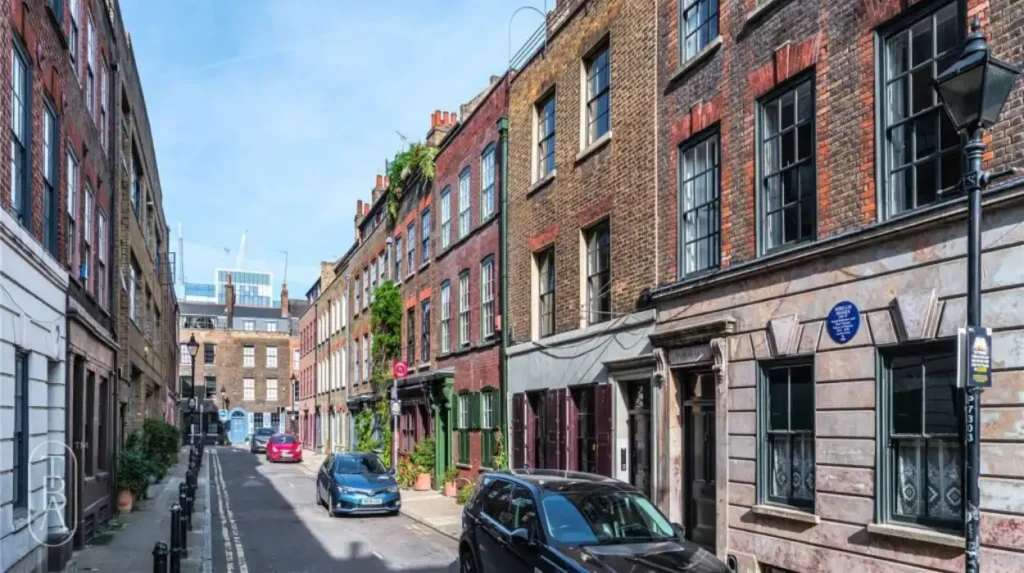
Fournier Street, Princelet Street, Folgate Street, Brushfield Street and Spital Square are among Spitalfields’ most interesting historic streets. They feature Georgian townhouses, traditional brickwork, historic commercial buildings and architectural details associated with the neighbourhood’s development.
Walking through Spitalfields provides a practical way to understand its architectural development. Many historic buildings remain integrated into active residential, retail and commercial streets.
Fournier Street
Fournier Street is particularly important for its collection of eighteenth-century Georgian houses. These properties reflect the prosperity of Huguenot silk merchants and textile manufacturers who established businesses in the neighbourhood.
The houses feature distinctive brick façades, sash windows, decorative doorways and carefully proportioned architectural designs. Their original residential layouts also reflect the relationship between domestic living and textile production.
Visitors should examine the buildings from the pavement and observe their architectural details. Several properties have undergone restoration and now accommodate residential, commercial or cultural uses.
Princelet Street
Princelet Street contains historic buildings associated with different immigrant communities. Its architectural character reflects the neighbourhood’s changing population and religious history.
One particularly important property is 19 Princelet Street. This historic Huguenot merchant’s house also contains a nineteenth-century synagogue, illustrating the transition between communities that shaped Spitalfields.
The building is an important heritage property associated with The Spitalfields Trust. Visitors should check its official information before planning a visit because access arrangements differ from ordinary public streets.
Folgate Street
Folgate Street is another significant historic location. Its buildings preserve elements of eighteenth-century Spitalfields, including traditional brick façades and period architectural features.
Number 18 is particularly notable because it houses Dennis Severs’ House. The property was built in 1724 and later transformed into an immersive historical installation.
Brushfield Street
Brushfield Street connects visitors with Old Spitalfields Market and its surrounding commercial architecture. The street demonstrates how traditional market activity influenced the area’s urban development.
Its location makes it a convenient starting point for exploring the market, historic buildings and nearby Georgian streets.
Spital Square
Spital Square provides another opportunity to explore the area’s architectural character. Its surroundings contain historic buildings connected with the commercial and residential development of the neighbourhood.
Together, these streets provide an accessible introduction to Spitalfields’ architectural heritage without requiring visitors to travel between distant attractions.
Why Is Old Spitalfields Market an Essential Visitor Attraction?
Old Spitalfields Market is a historic East London trading destination combining independent retailers, street food, specialist shopping and traditional market architecture. Established as a recognised market in the seventeenth century, it remains an important commercial and cultural attraction.
Old Spitalfields Market is located at 16 Horner Square, London E1 6EW. Its history extends across several centuries and reflects the development of London’s wholesale food trade.
The market received a Royal Charter in 1682, granted by King Charles II to John Balch. It authorised regular market trading on Thursdays and Saturdays. The market subsequently expanded to serve London’s growing demand for fresh fruit and vegetables.
During the nineteenth century, market activity increased considerably. Robert Horner acquired a lease in 1876 and began developing a new market building. The main Victorian market building was completed in 1893.
The City of London acquired the market in 1920 and expanded its facilities during the following decade. The wholesale fruit and vegetable market eventually relocated to Leyton in 1991, allowing the historic Spitalfields site to develop a different commercial purpose.
Today, the market combines traditional architecture with contemporary shopping and dining.
Independent shopping
The daily market features independent traders, creative businesses and specialist retailers. Visitors encounter fashion, accessories, artwork, handmade products and homewares.
These businesses provide an alternative to conventional high-street shopping. The market also supports independent producers and emerging creative businesses.
Food and dining
The Kitchens section provides a central dining area with different food traders. Visitors can explore street food and contemporary dining options while experiencing the market atmosphere.
The surrounding retail spaces also contain restaurants, cafés and food businesses.
Specialist markets
Old Spitalfields Market hosts dedicated trading events alongside its regular retail activity. These include its Thursday Antiques Market and scheduled vinyl market events.
The antiques market attracts visitors interested in vintage objects, collectables and decorative items. The vinyl market provides a destination for music enthusiasts searching for records and specialist releases.
Architecture and market heritage
The Victorian roof structure and traditional brick exterior remain important features of the market. Visitors should look upwards to appreciate the historic construction and architectural details.
The market demonstrates how historic commercial buildings can accommodate contemporary retail, hospitality and cultural activities.
Opening times and visitor information
The market’s published visitor information gives the following general trading schedule:
- Monday, Tuesday, Wednesday and Friday: 10am–6pm.
- Thursday: 8am–6pm.
- Saturday: 10am–6pm.
- Sunday: 10am–5pm.
Individual shops, restaurants and events operate separate schedules. Visitors should check the official Old Spitalfields Market website before travelling, particularly on bank holidays and during seasonal events.
What Architectural Heritage Can Visitors Discover Around Christ Church Spitalfields?
Christ Church Spitalfields is an important eighteenth-century Anglican church designed by architect Nicholas Hawksmoor. Its monumental Baroque architecture, historic surroundings and relationship with Georgian streets make it one of Spitalfields’ most recognisable heritage landmarks.
Christ Church Spitalfields stands near Fournier Street and Brick Lane. Its architecture forms an important part of the historic streetscape and provides evidence of eighteenth-century religious and urban development.
The church was designed by Nicholas Hawksmoor, an English architect associated with the English Baroque architectural tradition. Construction began in the early eighteenth century, following the 1711 Act of Parliament that authorised the building of new churches in London.
Christ Church was consecrated in 1729. Its monumental design reflected the importance of establishing a prominent Anglican presence in a rapidly growing urban neighbourhood.
The exterior features a substantial stone tower, classical architectural elements and a distinctive spire. Its scale contrasts with the smaller Georgian houses surrounding it.
The building also illustrates the relationship between religion, urban planning and social development. Churches served as important community institutions during a period when Spitalfields experienced considerable population growth.
Visitors interested in architecture should examine the relationship between the church and neighbouring streets. Fournier Street provides particularly useful views of the building and its surrounding Georgian houses.
The church remains an active religious and cultural institution. It also hosts concerts, performances and other events, creating additional reasons to visit beyond its architectural significance.
Visitors should check the church’s official website for current opening arrangements, worship schedules, exhibitions and event information.
Christ Church is especially relevant to visitors studying Georgian London because it demonstrates how religious architecture influenced the identity and appearance of developing urban neighbourhoods.
How Does Spitalfields Reflect London’s Huguenot and Silk-Weaving Heritage?
Spitalfields became a major centre of silk weaving after French Huguenot refugees settled in the neighbourhood during the late seventeenth century. Their specialist textile skills influenced local manufacturing, employment, architecture and London’s historic luxury fabric industry.
The Huguenots were French Protestants who experienced religious persecution in France. Following the Revocation of the Edict of Nantes in 1685, many refugees relocated to Britain and other European countries.
London became an important destination because it offered commercial opportunities and religious communities where Protestant refugees established new lives.
Spitalfields attracted Huguenot families because of its developing manufacturing economy and access to London’s markets. Many newcomers possessed specialist knowledge of silk weaving, textile finishing and related trades.
The development of silk manufacturing
Silk weaving became one of Spitalfields’ most important industries. Skilled workers produced decorative fabrics, including patterned silks and brocades used for clothing and interior furnishings.
The industry connected household production with merchants, workshops and London’s wider textile economy.
Some wealthy silk merchants constructed substantial Georgian residences in the neighbourhood. These properties reflected the economic success of the trade and the social position of their owners.
The architectural legacy
The surviving houses around Fournier Street and Princelet Street provide physical evidence of this prosperity.
Their large windows, spacious interiors and architectural proportions reflected the requirements of merchant households. Some buildings also accommodated workshops and domestic textile activities.
The wider cultural influence
Huguenot settlement influenced local religious life, commercial practices and the neighbourhood’s identity. Their contribution forms an important part of East London’s history.
Visitors interested in understanding this period should explore the historic streets around Christ Church and the properties associated with Huguenot merchants.
As you explore modern Spitalfields, you are crossing streets shaped by centuries of migration and industry. Read about the full \(History of Spitalfields and Its Changing Communities\) to understand the origins of its architectural and cultural heritage.
The legacy of silk manufacturing remains an important part of the area’s historical identity, even though the original industry no longer defines its commercial economy.
Which Cultural Attractions Reveal Spitalfields’ Multicultural History?
Spitalfields’ multicultural history is visible through its historic religious buildings, community institutions, independent businesses and food culture. Brick Lane, the former Huguenot properties, historic synagogues and the Brick Lane Jamme Masjid demonstrate successive waves of settlement.
Spitalfields’ cultural identity developed through successive waves of migration. French Huguenots, Jewish communities from Eastern Europe and Bangladeshi residents all contributed to the area’s changing social and commercial landscape.
This history is especially visible around Brick Lane and the surrounding streets.
Brick Lane
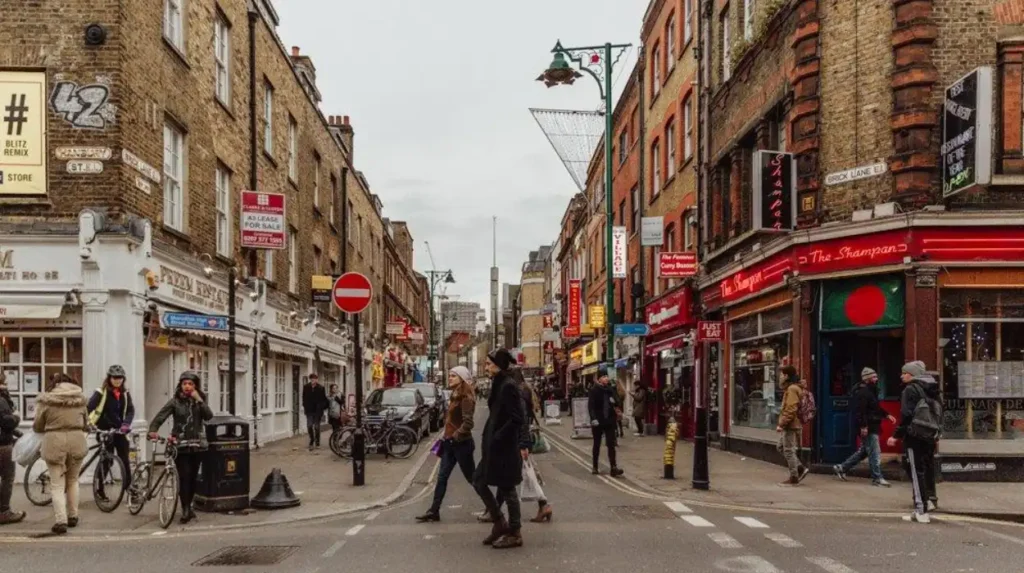
Brick Lane is one of East London’s best-known cultural destinations. It connects Spitalfields with the wider history of immigration, food, independent retail and creative activity.
The street is particularly associated with Bangladeshi heritage. Restaurants, food shops and specialist businesses contribute to its distinctive commercial identity.
Visitors also encounter street art, vintage retailers and independent fashion businesses. These contemporary features demonstrate how the neighbourhood continues to develop.
Brick Lane Jamme Masjid
Brick Lane Jamme Masjid is an important example of the area’s changing religious history.
The building was originally constructed as a French Protestant church in 1743. It subsequently became a Methodist chapel and later a synagogue before serving as a mosque.
This sequence reflects the religious and demographic changes experienced by Spitalfields over several centuries.
The building is particularly significant because its architectural history documents the presence of different communities within the same neighbourhood.
Sandys Row Synagogue
Sandys Row Synagogue provides another connection with the area’s Jewish heritage. Its history reflects the settlement of Jewish communities in East London and the establishment of religious institutions that supported local residents.
It is an important heritage location for visitors researching the history of Jewish life in Spitalfields.
Street art and contemporary culture
The wider Spitalfields and Brick Lane district is also recognised for its street art and independent creative businesses.
Murals, painted façades and changing artistic displays contribute to the contemporary appearance of the neighbourhood.
Tower Hamlets’ cultural trail identifies 20 locations of historical and cultural interest across the Brick Lane and nearby Spitalfields area. These include Christ Church, Old Spitalfields Market, Fournier Street, Princelet Street and the Old Truman Brewery.
Exploring these locations helps visitors understand that Spitalfields’ heritage is not limited to eighteenth-century architecture. Its cultural identity also reflects the experiences of communities that shaped modern East London.
What Can Visitors Experience at Dennis Severs’ House and Other Historic Properties?
Dennis Severs’ House and other preserved Spitalfields properties provide opportunities to understand Georgian domestic life, Huguenot heritage and historic building conservation. They connect architectural preservation with cultural interpretation and the neighbourhood’s residential history.
Historic residential buildings provide a different perspective on Spitalfields compared with its markets and public streets.
They reveal how residents lived, worked and adapted their homes during different periods.
Dennis Severs’ House
Dennis Severs’ House is located at 18 Folgate Street. The building dates from 1724 and is one of the area’s most distinctive historic properties.
Dennis Severs acquired the derelict house in 1979 and developed it into an immersive historical installation.
The interiors represent the imagined domestic world of a Huguenot family across different historical periods. The installation uses furniture, household objects, lighting and room arrangements to communicate aspects of eighteenth-century life.
It is important to distinguish the installation from a conventional historic house museum. The family represented inside the property is fictional, although the setting draws on the real history of Huguenot settlement in Spitalfields.
The Spitalfields Trust took responsibility for the property in 1999 and continues to maintain it.
Visitors should check the official Dennis Severs’ House website for admission arrangements, available experiences and booking requirements.
19 Princelet Street
Number 19 Princelet Street is another important heritage property. It is a former Huguenot merchant’s house containing a nineteenth-century synagogue.
The building represents the transition between different communities that occupied Spitalfields during the eighteenth and nineteenth centuries.
Its historical significance extends beyond architecture because it documents the relationship between migration, religion and urban settlement.
Access arrangements should be checked before visiting.
Historic building conservation
The preservation of these properties demonstrates the importance of protecting historic buildings in changing urban neighbourhoods.
The Spitalfields Trust was established in 1977 following a campaign to protect early Georgian buildings in the area. Its work includes restoring important historic properties and campaigning for the wider historic environment.
This conservation activity supports the survival of architectural features that contribute to Spitalfields’ cultural identity.
How Can Visitors Plan a Walking Tour of Historic Spitalfields?
Visitors can explore historic Spitalfields on foot by combining Old Spitalfields Market, Fournier Street, Christ Church, Princelet Street, Brick Lane and Folgate Street. A self-guided route connects important heritage sites within a compact East London area.
Walking is an effective way to discover Spitalfields because many of its important attractions are located close together.
A carefully planned route allows visitors to explore the neighbourhood’s architecture, market culture and multicultural history without relying on multiple transport connections.
Suggested walking route
Begin at Old Spitalfields Market. Explore the Victorian market building, independent stalls and food traders before heading towards Fournier Street.
Continue to Fournier Street to examine the Georgian townhouses associated with Huguenot merchants. The street also provides views towards Christ Church Spitalfields.
Visit Christ Church and examine its monumental architectural design. Allow time to appreciate its relationship with the surrounding historic buildings.
Continue towards Princelet Street to discover the area’s immigrant and religious heritage. Number 19 is particularly relevant to the history of Huguenot and Jewish communities.
From Princelet Street, head towards Brick Lane. Explore its restaurants, independent shops, street art and historic religious buildings.
Finish the route at Folgate Street and explore the exterior of Dennis Severs’ House. Visitors with advance bookings can arrange a separate interior visit.
How much time should visitors allow?
A short walking visit covering the market and surrounding streets requires approximately 1.5 to 2 hours. Visitors interested in architecture, historic properties, food and shopping should allow 3 to 4 hours.
The time required depends on individual interests and access to attractions.
When is the best time to explore?
Weekdays provide opportunities to explore the architecture and streets with a different atmosphere from busy weekend trading periods.
Thursday is particularly relevant for visitors interested in antiques because Old Spitalfields Market operates its specialist antiques market on that day.
Weekends offer a lively market environment, with opportunities to explore independent traders and food businesses.
Visitors should consider seasonal weather, market schedules and individual attraction opening arrangements when planning their route.
How Can Visitors Reach Spitalfields Using London’s Transport Network?
Spitalfields is well connected to London’s public transport network through Liverpool Street, Aldgate East and Shoreditch High Street stations. Visitors can reach the neighbourhood using Underground services, Elizabeth line trains, Overground connections and local buses.
Spitalfields is conveniently positioned near the eastern edge of the City of London. Its location makes it accessible from major London railway stations, central attractions and surrounding East London neighbourhoods.
Liverpool Street Station
Liverpool Street is one of the most convenient transport connections for visitors exploring Spitalfields.
The station serves several Underground lines, including the Central, Circle, Hammersmith and City, and Metropolitan lines. It also provides Elizabeth line and National Rail services.
Old Spitalfields Market is approximately five minutes’ walk from Liverpool Street Station.
Shoreditch High Street Station
Shoreditch High Street provides an alternative connection through the London Overground network. The station is approximately seven minutes’ walk from Old Spitalfields Market.
It is useful for visitors combining Spitalfields with Shoreditch’s independent shops, creative businesses and street art.
Aldgate East Station
Aldgate East provides access through the District and Hammersmith and City lines. It is approximately eight minutes’ walk from the market.
The station is particularly useful for visitors exploring Brick Lane and Whitechapel alongside Spitalfields.
Local bus services
Several London bus routes serve the surrounding streets. Routes serving the Liverpool Street and Primrose Street area include numbers 8, 26, 35, 48, 78, 135, 149, 205, 242 and 388.
Visitors should check Transport for London’s journey planner for current routes, service disruptions and departure information.
Accessibility considerations
Old Spitalfields Market provides accessible facilities, including step-free access and lifts. Its visitor information also identifies wheelchair access and assistance-dog facilities.
However, accessibility varies between individual historic properties and surrounding streets. Older buildings contain original architectural features that affect entrance access and internal movement.
Visitors using wheelchairs or travelling with pushchairs should check individual attraction information before arrival.
How Does Historic Spitalfields Support Modern Tourism and Local Businesses?
Spitalfields supports modern tourism through its combination of heritage attractions, independent retail, hospitality, creative businesses and cultural events. Its historic buildings provide a setting for contemporary economic activity while maintaining the neighbourhood’s distinctive East London identity.
Spitalfields demonstrates how historic neighbourhoods contribute to modern urban economies. Its heritage attracts visitors, while its commercial facilities support residents, workers and independent businesses.
Independent retail and creative businesses
The neighbourhood contains independent fashion retailers, specialist shops, galleries and creative businesses. These establishments contribute to the area’s commercial diversity.
Old Spitalfields Market provides an organised location for small traders, designers and food businesses. Its combination of traditional architecture and contemporary retail supports the continued commercial use of a historic building.
Food tourism
Food is an important part of the Spitalfields visitor experience. The area offers traditional market food, independent cafés, restaurants and international cuisine.
Brick Lane is particularly associated with Bangladeshi food culture and its longstanding curry-house reputation. Visitors also encounter bakeries, coffee shops and contemporary street food businesses.
These establishments reflect the influence of migration on East London’s food industry.
Heritage tourism
Historic attractions encourage visitors to explore the neighbourhood beyond conventional shopping destinations.
Christ Church Spitalfields, Dennis Severs’ House, Fournier Street and Princelet Street provide opportunities to engage with architectural and social history.
Heritage tourism also increases the relevance of historic building preservation. Maintained buildings support cultural education, commercial activity and the long-term character of the neighbourhood.
Business and professional visits
Spitalfields’ location near the City of London makes it convenient for domestic business travellers and professionals.
Visitors attending meetings around Liverpool Street can explore the market, historic streets and nearby cultural attractions during their available time.
The neighbourhood also provides cafés and informal meeting locations for people working remotely. Visitors should check individual businesses for seating arrangements, facilities and operating hours.
The importance of conservation
Spitalfields faces the challenge of balancing development with heritage protection. Historic buildings require maintenance, while commercial spaces must respond to contemporary economic demands.
The Spitalfields and Banglatown planning framework identifies the importance of protecting architectural character and recognising the contribution of successive migrant communities.
Conservation therefore supports more than the appearance of historic streets. It preserves evidence of local history and maintains the cultural resources that distinguish Spitalfields from other London destinations.
Explore More Area Guide
Tower Hamlets for Slow Travel: Best East London Neighbourhoods
Tower Hamlets Maritime History: Historic East London Landmarks
What Should Visitors Know Before Exploring Spitalfields?
Visitors should plan their Spitalfields trip around market opening times, historic property access, walking distances and public transport. Checking individual attraction information in advance helps organise a practical visit while respecting residential streets and protected historic buildings.
Spitalfields is an active residential and commercial neighbourhood rather than an open-air museum. Visitors share its streets with residents, workers, shopkeepers and local businesses.
A few practical considerations improve the experience.
Check attraction opening arrangements. Old Spitalfields Market operates throughout the week, but individual traders and restaurants have different schedules. Historic properties such as Dennis Severs’ House require separate checks for admission and available visits.
Allow time for walking. The principal heritage streets are close together. Walking provides opportunities to examine architectural details that are easily overlooked when travelling by vehicle.
Respect residential properties. Many Georgian buildings remain private homes or working businesses. Visitors should photograph buildings responsibly and avoid obstructing entrances.
Explore beyond the main market. Brick Lane, Princelet Street and Folgate Street provide additional historical and cultural context. These locations help visitors understand the neighbourhood beyond its main shopping destination.
Check accessibility information. Historic buildings do not always provide the same facilities as modern visitor attractions. Confirm step-free access and entrance arrangements before travelling.
Use official travel information. Transport for London provides current journey information, while individual attractions publish their own opening arrangements.
These preparations help visitors experience Spitalfields as both a historic destination and a living East London neighbourhood.
Why Should Spitalfields Be Included in an East London Visitor Itinerary?
Spitalfields deserves a place in an East London itinerary because it combines historic Georgian architecture, Victorian market heritage, Huguenot history, multicultural landmarks and independent shopping. Its central location also makes it convenient for exploring neighbouring East London attractions.
Spitalfields offers a concentrated introduction to the historical development of East London. Its streets reveal how religious institutions, immigration, manufacturing and commercial activity influenced the neighbourhood over several centuries.
Fournier Street and Princelet Street preserve important architectural evidence of eighteenth-century settlement. Christ Church Spitalfields demonstrates the influence of Georgian religious architecture, while Dennis Severs’ House interprets historic domestic life.
Old Spitalfields Market provides a connection between the neighbourhood’s trading history and its contemporary commercial identity. Its Victorian structure continues to accommodate independent retailers, food businesses and specialist markets.
Brick Lane introduces another dimension of local heritage through its Bangladeshi cultural influence, historic religious buildings, food businesses and creative activity.
The area’s appeal extends to different visitor groups. International tourists can explore its historic landmarks, residents can discover local cultural attractions, digital nomads can use its surrounding cafés and professionals can visit its market and heritage streets during a business trip.
Spitalfields also provides an important example of urban heritage conservation. Its historic buildings and multicultural identity remain relevant to contemporary tourism, local businesses and community life.
For visitors exploring East London, Spitalfields offers an accessible destination where architectural heritage, commercial history and modern culture remain closely connected.
What is Spitalfields famous for?
Spitalfields is famous for its historic Georgian architecture, Old Spitalfields Market, Huguenot heritage, silk-weaving history and multicultural atmosphere. Brick Lane and Fournier Street are among its best-known locations.