Tower Hamlets is one of East London’s most varied destinations, combining royal heritage, historic docks, markets, museums, canals, parks, multicultural food districts and modern financial architecture. The borough sits beside the River Thames and includes areas such as Whitechapel, Wapping, Stepney, Limehouse, Poplar, Bow, Bethnal Green, the Isle of Dogs and Canary Wharf.
- What makes Tower Hamlets a good destination for a one-day trip?
- Which historic attractions should you visit in Tower Hamlets?
- How can you explore Tower Hamlets’ docklands heritage?
- What can you do around Brick Lane and Spitalfields?
- Which markets are worth visiting during a Tower Hamlets day trip?
- Which museums should you include in a Tower Hamlets itinerary?
- Where can you find green spaces during a Tower Hamlets day trip?
- How can you include Canary Wharf in a one-day itinerary?
- What is a good walking route through Tower Hamlets?
- How should you plan a family-friendly Tower Hamlets day trip?
- Where should digital nomads and business travellers spend downtime in Tower Hamlets?
- When is the best time to visit Tower Hamlets for a day trip?
- How can you build a complete Tower Hamlets one-day itinerary?
- Why is Tower Hamlets important for understanding modern East London?
A well-planned Tower Hamlets day trip can therefore cover several distinct experiences without requiring long journeys between attractions. Visitors can begin with the Tower of London, continue through Wapping or St Katharine Docks, explore historic markets around Spitalfields and Brick Lane, then finish beside the Thames or among the skyscrapers of Canary Wharf.
The borough also has an unusually strong relationship between historic and modern London. Former docklands sit beside major business districts, Victorian streets meet contemporary developments, and old market traditions continue alongside restaurants, galleries and independent businesses.
What makes Tower Hamlets a good destination for a one-day trip?
Tower Hamlets suits a one-day London itinerary because its compact East London districts combine major heritage sites, museums, markets, parks, waterways, food areas and modern architecture within accessible neighbourhoods. Visitors can create a varied day without travelling across the whole capital.
Tower Hamlets has a particularly high concentration of attractions. The council describes it as the heart of London’s East End and highlights its combination of ancient sites, museums, markets, cultural attractions and modern Docklands.
The borough’s southern boundary follows the River Thames. This gives visitors access to riverside walking routes around Wapping, Limehouse and the Isle of Dogs. Canary Wharf provides a contrasting modern environment with high-rise offices, public spaces and permanent artworks.
The western part of the borough is close to the City of London. This makes Tower Hamlets convenient for visitors staying in central London.
Public transport is another important advantage. Underground, Docklands Light Railway, Elizabeth line, Overground, buses and walking routes connect the main districts. The best itinerary therefore depends on the visitor’s interests rather than simply following a single linear route.
For first-time visitors, the strongest approach is to group attractions geographically. Tower Hill and Wapping work well together. Spitalfields, Brick Lane and Whitechapel form another practical cluster. Canary Wharf and the Isle of Dogs provide a separate riverside and modern architecture itinerary.
Which historic attractions should you visit in Tower Hamlets?
Tower Hamlets contains some of London’s most significant historic attractions, including the Tower of London, medieval riverside remains, historic docklands, old markets and religious buildings. These sites explain the borough’s development from medieval London to Britain’s industrial and commercial capital.
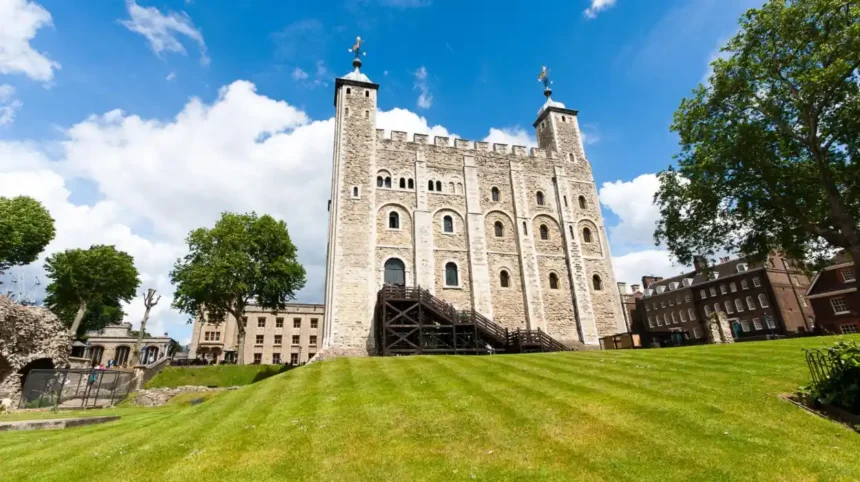
The Tower of London is the most prominent historic attraction. It is a World Heritage Site and one of England’s most important medieval fortress complexes. Historic England records its development from an 11th-century tower keep into a larger enclosure castle.
The White Tower began under William the Conqueror after the Norman Conquest. Later monarchs expanded the fortress with curtain walls, towers and palace buildings. The site subsequently served as a royal residence, prison, armoury, mint and repository.
Historic England identifies archaeological evidence representing more than 2,000 years of human activity at the site. The surviving complex therefore provides an unusually deep historical record within modern London.
Visitors interested in medieval architecture should allow substantial time for the Tower itself. It is not simply a single building. The complex contains multiple towers, walls, gates, chapels and historic spaces.
The area surrounding the Tower also works well for walking. Tower Hill, Tower Bridge and the Thames provide immediate opportunities to continue a heritage-focused itinerary.
The Tower of London World Heritage Site was inscribed by UNESCO in 1988. Historic England lists it under World Heritage status and identifies Greater London and the London Borough of Tower Hamlets among the authorities associated with the site.
As you explore these modern streets and riverside spaces, you are crossing land with a deep heritage. Read about the full to understand its origins.
How can you explore Tower Hamlets’ docklands heritage?
Docklands heritage is central to understanding Tower Hamlets because the River Thames, warehouses, docks and waterways shaped local employment, trade and urban development. Wapping, Limehouse, the Isle of Dogs and Canary Wharf reveal different stages of London’s maritime and commercial transformation.
Tower Hamlets developed a strong relationship with the River Thames because its southern geography provided access to London’s port.
Historic dock areas included commercial facilities associated with shipping, warehousing and international trade. The transition from traditional docks to modern commercial districts transformed the landscape dramatically during the late twentieth century.
Wapping is particularly useful for visitors interested in historic riverside London. Its streets contain former warehouse buildings and narrow routes leading towards the Thames.
Limehouse provides another historic waterfront experience. Limehouse Basin connects waterways associated with the Regent’s Canal and Limehouse Cut. The council identifies London’s canals, Limehouse Basin and the River Thames as sites important for nature conservation.
Canary Wharf represents the modern phase of Docklands redevelopment. High-rise towers now occupy an area once dominated by docks and warehouses.
This contrast makes the district useful for visitors who want to understand urban regeneration. The modern skyline is not separate from the history of the area. It occupies the physical landscape created by centuries of riverside commerce.
A walking route from historic Wapping towards Limehouse and then Canary Wharf provides a clear geographical progression. However, completing the entire route in one day requires careful time management, especially when combining it with museums or major paid attractions.
What can you do around Brick Lane and Spitalfields?
Brick Lane and Spitalfields provide one of the strongest cultural and food-focused sections of a Tower Hamlets day trip. Visitors can combine historic streets, markets, independent businesses, street art, cafés, restaurants and multicultural influences within a concentrated walking area.
Brick Lane runs through the eastern edge of the City of London and into Tower Hamlets. It is strongly associated with food, independent retail, street art and changing East London culture.
The surrounding Spitalfields area has an important market history. The City of London records a market tradition dating to the 13th century. In 1682, Charles II granted a Royal Charter allowing a market to operate around Spital Square.
The original Spitalfields market eventually became a major wholesale centre. Its former location remained important to the local urban landscape even after the wholesale operation moved to Leyton in 1991.
Today, Old Spitalfields Market provides a convenient starting point for visitors exploring the surrounding streets. Brick Lane is within easy walking distance, making it practical to combine shopping, food and architecture.
The area also demonstrates Tower Hamlets’ religious and cultural history. Historic England records Brick Lane Jamme Masjid as a building that previously served as a French Protestant chapel and synagogue before becoming a mosque.
This layered history is particularly valuable for cultural tourism because one building can represent several phases of migration and community development.
Visitors should allow additional time for food. Brick Lane is associated with restaurants, cafés and street-food options, while surrounding streets provide further choices.
Which markets are worth visiting during a Tower Hamlets day trip?
Tower Hamlets has several distinctive market areas, with Brick Lane, Old Spitalfields and Petticoat Lane offering different shopping environments. Market visits work best when matched with nearby attractions, because each market has its own trading pattern, location and surrounding neighbourhood character.
The borough officially promotes markets including Petticoat Lane and Columbia Road Flower Market as visitor attractions.
Petticoat Lane is associated with fashion and street-market traditions around Middlesex Street and Wentworth Street. It sits close to the City of London, making it practical for visitors approaching from Liverpool Street or Aldgate.
Old Spitalfields Market provides a more structured market environment. Its long trading history makes it especially relevant for visitors interested in the evolution of London markets.
Columbia Road Flower Market is another recognisable East London destination. Its location in the Bethnal Green and Shoreditch fringe makes it suitable for combining with Brick Lane and nearby cultural districts.
Market opening patterns vary by day. Visitors should check the relevant market’s current trading arrangements before travelling.
A Sunday itinerary can particularly benefit from combining market exploration with walking. However, market days can also be busy. Early arrival provides more time to explore before moving towards museums, parks or riverside attractions.
Which museums should you include in a Tower Hamlets itinerary?
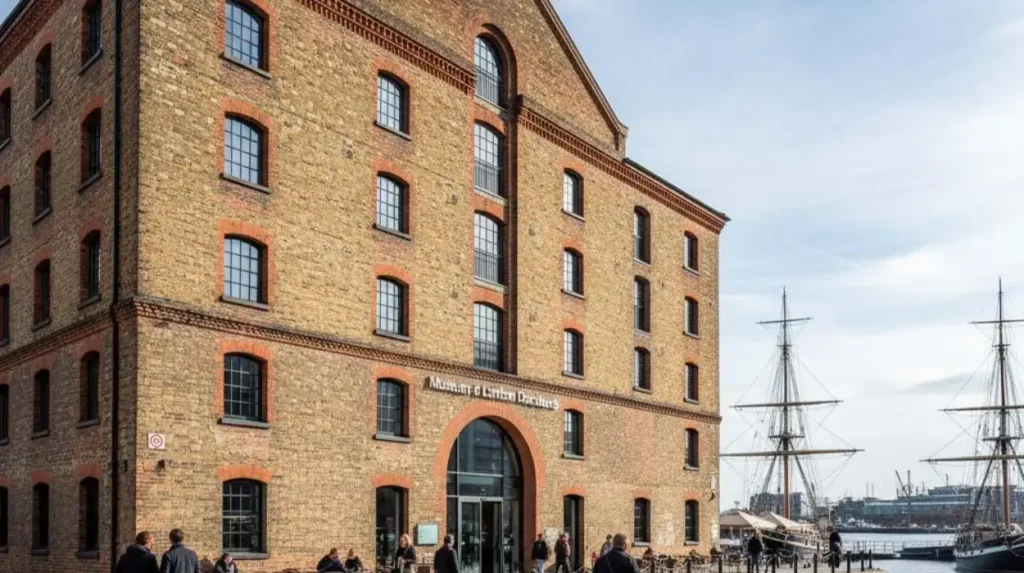
Museums provide the clearest way to understand Tower Hamlets beyond its streets and buildings. The Museum of London Docklands is especially relevant because it explains London’s port, trade, docks and Docklands transformation through collections, exhibitions and historical interpretation.
The Museum of London Docklands is one of the most relevant cultural attractions for a Tower Hamlets day trip. The council identifies it as a place where visitors can explore the borough’s more recent history as London’s port.
Its location in the Docklands makes the museum particularly effective when combined with a riverside itinerary.
Visitors interested in maritime history can use the museum to understand why the Thames became central to London’s economic development. The surrounding dock structures then provide physical evidence of that history.
The museum also helps explain the transition from working docks to modern Docklands. This gives visitors historical context before exploring Canary Wharf.
For a history-focused day, the Museum of London Docklands can be paired with the Tower of London. Both attractions address different periods and functions.
The Tower represents royal power, defence and medieval state authority. The Docklands museum represents commercial, maritime and industrial development.
That combination creates a broader understanding of East London without requiring travel to several distant parts of the city.
Where can you find green spaces during a Tower Hamlets day trip?
Tower Hamlets has an extensive network of parks and open spaces, including Victoria Park, Mile End Park, Tower Hamlets Cemetery Park and Mudchute Park and Farm. These spaces provide walking, recreation, nature and quieter breaks between urban attractions.
The council states that Tower Hamlets has more than 120 parks and green spaces, with 14 Green Flag Awards. Green Flag is a national standard recognising well-managed public parks and green spaces.
Victoria Park is the largest park in the borough at approximately 86 hectares. It opened in 1845 and was created for the benefit of the East End population. The council reports more than nine million visits annually.
The park includes historic lakes, monuments, a bandstand, sports facilities, gardens and walking routes. It also connects into a wider green corridor involving Mile End Park and surrounding waterways.
Victoria Park is therefore a strong choice for visitors who want a substantial outdoor section in their itinerary.
Mile End Park provides another option. It is a 32-hectare linear park following the Regent’s Canal between Victoria Park and Limehouse Basin. It was developed on land affected by Second World War bombing and later regeneration.
The park contains wildlife habitats, woodland and meadows. Its Green Bridge provides a distinctive pedestrian connection across Mile End Road.
For a quieter nature-focused visit, Tower Hamlets Cemetery Park and Mudchute Park and Farm are also important. The council identifies both as local nature reserves.
How can you include Canary Wharf in a one-day itinerary?
Canary Wharf works best as the modern section of a Tower Hamlets itinerary. Visitors can combine skyscraper views, public art, landscaped parks, waterways, restaurants and transport connections, creating a sharp contrast with the borough’s medieval and industrial heritage.
Canary Wharf is one of the most recognisable modern districts in East London. Its skyline represents the transformation of former Docklands into an international business centre.
The district is also more than office towers. Public spaces include Jubilee Park, Canada Square Park, Bank Street Park and Crossrail Place Roof Garden.
Crossrail Place Roof Garden provides an indoor-outdoor botanical environment beneath the distinctive Crossrail Place structure. Canary Wharf information states that the garden contains thousands of plants representing different global environments.
Public art is another defining feature. Canary Wharf’s current art information identifies more than 100 permanently displayed artworks across the estate.
This makes Canary Wharf particularly suitable for visitors who enjoy architecture and photography.
The area is also practical for travellers using public transport. The estate is served by the Jubilee line, Elizabeth line and Docklands Light Railway, providing connections towards central London and other East London districts.
For a one-day trip, Canary Wharf works particularly well towards late afternoon or early evening. Visitors can move from historic East London into the modern financial district without leaving Tower Hamlets.

What is a good walking route through Tower Hamlets?
A practical Tower Hamlets walking itinerary should connect nearby attractions rather than attempt to cover the entire borough. A strong route links Tower Hill, Wapping, Spitalfields, Brick Lane or Whitechapel, with transport used for longer connections to Canary Wharf.
Start near Tower Hill for the Tower of London and riverside views. Visitors interested in the fortress should allocate several hours rather than treating it as a quick photo stop.
Continue east towards Wapping. The riverside environment provides a change from the major visitor attractions.
From Wapping, move towards St Katharine Docks and then back towards Whitechapel or Aldgate. This creates a strong combination of maritime heritage and modern London.
The next section can focus on Spitalfields and Brick Lane. Old Spitalfields Market provides a logical starting point because it sits close to Brick Lane and surrounding streets.
Continue north towards Bethnal Green if time permits. Alternatively, use public transport towards Victoria Park.
Victoria Park is especially suitable for a longer outdoor break. The council states that the park is open from 7am until dusk throughout the year, although visitors should check current arrangements before travelling.
A separate itinerary can focus on Canary Wharf and the Isle of Dogs. This is more efficient than trying to combine every district in one continuous walk.
How should you plan a family-friendly Tower Hamlets day trip?
Families can build a Tower Hamlets itinerary around parks, open spaces, accessible attractions, food stops and manageable walking distances. Victoria Park and Mile End Park provide substantial outdoor facilities, while museums and historic sites add educational activities.
Victoria Park is particularly useful for families because it includes play areas, sports facilities, picnic areas, toilets and refreshments. The council also lists rowing boats and pedalos among available leisure facilities.
Mile End Park provides another family-friendly option with recreational and ecological facilities.
Weavers Fields also includes an adventure playground, accessible children’s play area, sports facilities and an outdoor gym.
For families interested in history, the Tower of London provides a structured heritage experience. The museum and historic attractions should be balanced with outdoor time because a full day of indoor sightseeing can become demanding for younger visitors.
Food planning is also important. Brick Lane and Spitalfields provide a broad range of food choices, while Canary Wharf has extensive restaurant facilities.
A family itinerary should prioritise fewer major attractions rather than attempting to visit every notable location.
Where should digital nomads and business travellers spend downtime in Tower Hamlets?
Digital nomads and business travellers can use Canary Wharf, Spitalfields and the wider East London café districts for structured downtime. These areas combine transport links, food, public spaces, cultural attractions and short walking routes between professional commitments.
Canary Wharf is particularly convenient for business travellers because it is a major commercial centre with strong transport connections.
The district provides restaurants, cafés, landscaped public spaces and cultural programming. Crossrail Place and nearby parks offer places to pause between appointments.
Spitalfields provides a different environment. Its proximity to Liverpool Street makes it practical for visitors with meetings in the City who want to extend their day into East London.
Brick Lane provides food and independent businesses within walking distance of Spitalfields.
For outdoor breaks, Victoria Park offers a much larger recreational environment. Its size and facilities make it suitable for visitors who want a longer walk rather than a short urban break.
The key planning principle is proximity. Business travellers should choose one neighbourhood cluster rather than crossing Tower Hamlets repeatedly.
When is the best time to visit Tower Hamlets for a day trip?
The best time depends on the itinerary rather than one universal season. Market-focused visits benefit from their scheduled trading days, while parks suit longer daylight hours. Museums and historic attractions provide stronger options when outdoor conditions are less favourable.
Spring and summer provide longer daylight for walking routes, parks and riverside exploration. Victoria Park and Mile End Park become particularly useful when visitors want to spend several hours outdoors.
Autumn provides strong conditions for combining museums with shorter walks.
Winter itineraries should place indoor attractions at the centre. The Tower of London and Museum of London Docklands can anchor the day, with shorter outdoor sections around Spitalfields, Brick Lane or Canary Wharf.
Market schedules are important. Columbia Road Flower Market, for example, has a distinct trading pattern, so visitors should check its current opening information before planning a market-focused day.
The same principle applies to paid attractions, temporary exhibitions and leisure facilities. Opening arrangements change, while permanent neighbourhood geography remains stable.
Explore More Area Guide
Top Places to Experience Tower Hamlets Like a Local 2026
Tower Hamlets Exploration Guide for Tourists | East London
How can you build a complete Tower Hamlets one-day itinerary?
A balanced itinerary can combine royal history, docklands heritage, multicultural East London, food, green space and modern architecture. The most efficient plan uses geographic clusters and public transport instead of attempting to walk between every attraction.
A heritage-focused itinerary can begin at the Tower of London, continue through Tower Hill and Wapping, then move towards Spitalfields and Brick Lane.
A culture-and-food itinerary can start around Old Spitalfields Market, continue through Brick Lane and Whitechapel, then finish at Canary Wharf.
A parks-focused itinerary can begin at Victoria Park, continue through Mile End Park towards Limehouse Basin, then use public transport towards Canary Wharf.
A modern architecture itinerary can focus on Canary Wharf, Crossrail Place Roof Garden, public art, Jubilee Park and the waterfront.
Visitors who want the widest range of experiences should divide the day into four broad sections: morning heritage, lunchtime markets or food, afternoon walking or museums, and evening riverside or Canary Wharf exploration.
The main planning constraint is attraction duration. The Tower of London alone can occupy several hours. Adding a museum, market and park requires realistic travel and visiting times.
Why is Tower Hamlets important for understanding modern East London?
Tower Hamlets demonstrates how East London developed through royal authority, migration, trade, industry, docks, regeneration and financial services. Its attractions provide physical evidence of these changes, making the borough particularly valuable for cultural, historical and urban tourism.
The borough’s identity is inseparable from its geography.
The Tower of London represents medieval royal authority. Historic markets represent commercial exchange and community life. The docks represent maritime trade and industrial employment. Brick Lane reflects successive cultural and religious communities. Canary Wharf represents modern financial development.
The council describes Tower Hamlets as a diverse and dynamic area where historic places coexist with major regeneration and modern Docklands.
Its green infrastructure adds another dimension. The council identifies numerous sites of ecological importance, including the River Thames, London’s canals, the Lea Valley, Mudchute Park and Farm, Mile End Park and Victoria Park.
This combination gives Tower Hamlets strong long-term relevance for visitors.
A day trip therefore does not need to focus on a single attraction. The borough works best as a connected destination where history, culture, food, nature and contemporary London are experienced within the same geographical area.
For tourists exploring East London, that combination creates a practical and information-rich itinerary. It also provides a direct way to understand how London’s eastern districts evolved from medieval settlements and working docks into one of the capital’s most diverse and economically significant urban areas.
Is Tower Hamlets good for a day trip?
Yes. Tower Hamlets is excellent for a day trip because it combines the Tower of London, Brick Lane, Spitalfields Market, historic docklands, museums, parks, riverside walks and Canary Wharf within East London.