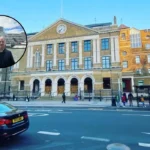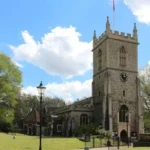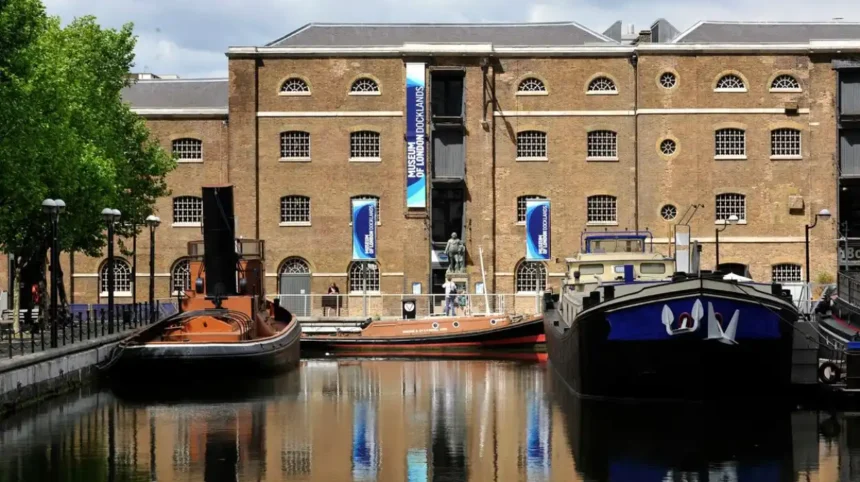
London’s Docklands preserves the history of Britain’s maritime trade, industrial expansion, migration and waterfront redevelopment. The London Museum Docklands, formerly known as the Museum of London Docklands, provides an opportunity to explore this heritage inside a historic warehouse at West India Quay, Canary Wharf, East London.
- What Is London Museum Docklands and Why Is It Historically Important?
- Where Is London Museum Docklands Located?
- How Did West India Docks Shape London’s Maritime History?
- What Can Visitors Explore Inside the Historic Warehouse?
- No. 1 Warehouse: Intro Gallery
- Trade Expansion: 1600–1800
- London, Sugar and Slavery: 1600 to the Present
- City and River: 1800–1840
- Sailortown: 1840–1850
- First Port of Empire: 1840–1880
- Warehouse of the World: 1880–1939
- Docklands at War: 1939–1945
- New Port, New City: 1945 to the Present
- Why Is the History of Sugar and Slavery Important to the Museum?
- What Makes the Historic Warehouses at West India Quay Special?
- How Can Visitors Explore the Historic Area Around West India Quay?
- How Did the Second World War Affect London’s Docklands?
- What Happened to London’s Docklands After Traditional Shipping Declined?
- When Is the Best Time to Visit London Museum Docklands?
- Is London Museum Docklands Suitable for Families and Educational Visits?
- Educational Value for Children
- Value for Students and Researchers
- Activities for Different Generations
- Which Nearby Attractions Can Visitors Combine with London Museum Docklands?
- West India Quay
- Crossrail Place Roof Garden
- Jubilee Park
- Canary Wharf Shopping District
- River Thames and Canary Wharf Pier
- How Can Visitors Plan a Walking Route Around London’s Historic Docklands?
- Why Does London Museum Docklands Matter to the Future of East London Heritage?
Located in No. 1 Warehouse, London Museum Docklands explores more than 400 years of London’s river and port history. Its nine free permanent galleries cover international trade, the transatlantic slave trade, Victorian dock communities, Britain’s imperial economy, wartime experiences and the transformation of the former docks into a modern commercial district.
The surrounding historic area adds another dimension to the experience. West India Quay retains surviving warehouse buildings, dockside architecture and sections of the former commercial waterfront. Visitors can combine a museum visit with a walk around Canary Wharf, explore the area’s industrial heritage and understand how maritime trade shaped modern East London.
The museum is particularly relevant to visitors interested in London’s economic development, Georgian architecture, maritime history and the social consequences of colonial trade. Its location also makes it accessible for families, independent travellers, students and visitors spending time in Canary Wharf.
What Is London Museum Docklands and Why Is It Historically Important?
London Museum Docklands is a free history museum inside No. 1 Warehouse at West India Quay, Canary Wharf. It documents over 400 years of London’s maritime development, international commerce, migration, slavery, wartime experiences and the redevelopment of the historic docklands.
The museum opened in 2003 inside a former dockside warehouse. Its location is significant because the building formed part of the commercial infrastructure that supported London’s expanding international trade during the early nineteenth century.
West India Docks opened in 1802 on the Isle of Dogs. The complex was developed to manage growing volumes of imported goods, particularly commodities arriving from Britain’s Caribbean colonies.
The warehouse system protected valuable cargo and improved the organisation of maritime deliveries. Ships unloaded goods directly into dockside storage facilities, where workers inspected, stored and distributed products.
Today, the museum interprets this history through original objects, historical records, architectural features and reconstructed environments.
Its permanent galleries cover several historical periods:
- Trade Expansion: 1600–1800.
- London, Sugar and Slavery: 1600 to the present.
- City and River: 1800–1840.
- Sailortown: 1840–1850.
- First Port of Empire: 1840–1880.
- Warehouse of the World: 1880–1939.
- Docklands at War: 1939–1945.
- New Port, New City: 1945 to the present.
The introductory gallery also examines the history of No. 1 Warehouse itself.
These exhibitions explain how London’s river economy connected the capital with international markets and influenced employment, migration, architecture and urban development.
Where Is London Museum Docklands Located?
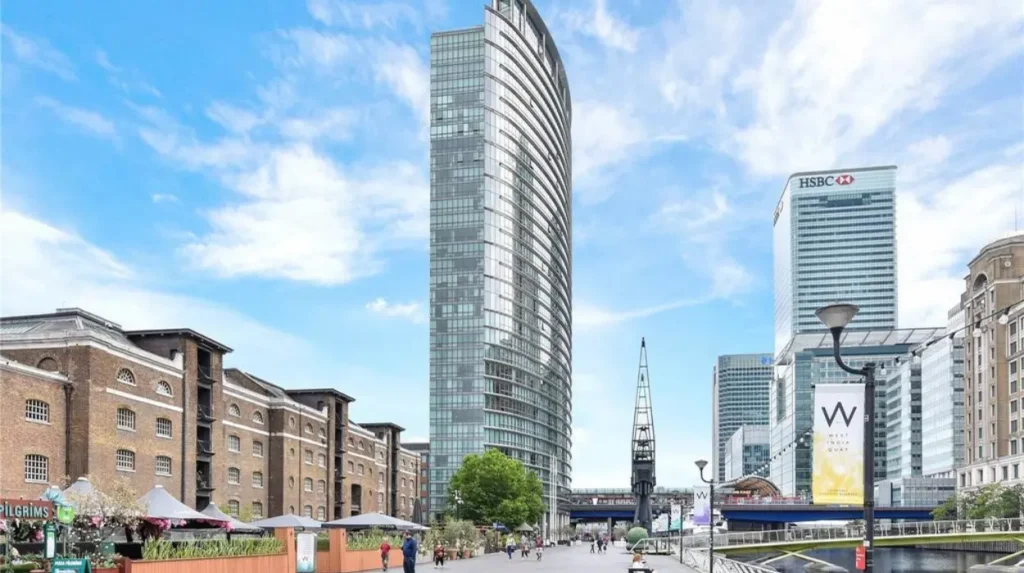
London Museum Docklands is located at No. 1 Warehouse, West India Quay, Canary Wharf, London E14 4AL. It stands beside the historic dock basin in the London Borough of Tower Hamlets, within easy walking distance of Canary Wharf.
The museum occupies a prominent position along the northern side of West India Quay. Its historic warehouse setting distinguishes it from museums housed in purpose-built modern buildings.
West India Quay forms part of the former West India Docks, which occupied a substantial area of the Isle of Dogs. The surrounding neighbourhood now contains commercial buildings, residential developments, restaurants and public waterfront spaces.
The museum’s location provides direct access to several important transport connections.
Nearby transport stations include:
- West India Quay DLR station, approximately three minutes on foot.
- Westferry DLR station, approximately seven minutes on foot.
- Canary Wharf station, approximately seven minutes on foot, with DLR, Jubilee line and Elizabeth line connections.
Visitors travelling by bus can use routes 135, 277, D3, D7, D8, N277, N550 and SL4, which stop close to the museum.
River transport provides another option. Uber Boat by Thames Clippers serves Canary Wharf Pier, approximately eight minutes on foot from the museum.
The location makes London Museum Docklands convenient for visitors travelling from central London, Stratford, Greenwich and other parts of the capital.
How Did West India Docks Shape London’s Maritime History?
West India Docks transformed London’s commercial waterfront after opening in 1802. They provided enclosed facilities for unloading, storing and distributing imported goods, particularly Caribbean commodities, and established an important model for London’s expanding dock infrastructure.
Before the construction of enclosed docks, ships arriving in London frequently experienced congestion along the River Thames. Existing unloading facilities struggled to manage increasing international trade volumes.
Merchants required more secure and organised facilities for valuable cargo. The West India Dock project addressed these problems by introducing a purpose-built enclosed dock system on the Isle of Dogs.
An Act of Parliament in 1799 authorised the development. The West India Dock Company organised the project, with Robert Milligan and George Hibbert among its principal promoters.
The first West India Docks opened in 1802. Their facilities included extensive dock basins, warehouses, loading areas and security infrastructure.
The dock complex handled several important commodities:
- Sugar imported from Caribbean plantations.
- Rum produced from sugar cane.
- Coffee arriving through international trade.
- Timber used in construction and manufacturing.
- Other imported goods distributed through London’s commercial networks.
The warehouses protected cargo from theft and weather damage. Their position beside the water also reduced the distance between ships and storage facilities.
West India Docks remained commercially important throughout the nineteenth and twentieth centuries. Their operations eventually declined as shipping technology and cargo-handling methods changed.
The Canal & River Trust records that West India and Millwall Docks stopped general cargo operations in 1980. Containerisation and the growth of larger coastal facilities shifted commercial shipping away from London’s traditional enclosed docks.
Understanding this development helps visitors recognise why the museum occupies such an important historic location.
As you explore the modern waterfront, you are crossing land shaped by centuries of maritime commerce. Discover the full [History of London’s West India Docks and Their Maritime Development] to understand how this industrial landscape developed.
What Can Visitors Explore Inside the Historic Warehouse?
Visitors can explore nine free permanent galleries inside London Museum Docklands. The exhibitions cover London’s trading expansion, slavery, Victorian dockside communities, imperial commerce, industrial storage, wartime experiences and the transformation of Docklands.
No. 1 Warehouse is one of the most important historic features of the museum. Its original function was to store imported goods arriving through West India Docks.
The building provides an architectural connection between the museum’s exhibitions and the commercial activities they describe.
The permanent galleries follow a chronological and thematic structure.
No. 1 Warehouse: Intro Gallery
This gallery introduces the warehouse building and its relationship with the surrounding dock infrastructure.
Visitors learn how warehouses supported the movement of goods between ships, storage facilities and inland markets.
The building itself demonstrates the scale of London’s early nineteenth-century commercial architecture.
Trade Expansion: 1600–1800
This gallery examines the growth of London’s international trading networks before the opening of West India Docks.
It introduces the merchants, sailors and commercial activities that contributed to London’s increasing influence in global trade.
London, Sugar and Slavery: 1600 to the Present
This exhibition explores London’s involvement in the transatlantic slave trade and the economic benefits generated by enslaved labour.
It examines the relationships between Caribbean plantations, imported commodities, financial institutions and British commercial development.
City and River: 1800–1840
This gallery explains how the River Thames and new infrastructure transformed London’s urban and commercial environment.
It covers dock construction, bridges, tunnels and the expansion of transport networks.
Sailortown: 1840–1850
Sailortown recreates aspects of a Victorian street in Wapping.
The exhibition introduces visitors to the everyday environments associated with sailors, dock workers and waterfront communities.
First Port of Empire: 1840–1880
This gallery examines London’s position within the British Empire and the international trade networks that connected the port with overseas territories.
Warehouse of the World: 1880–1939
The exhibition explores the enormous range of commodities handled by London’s docks and the importance of warehousing to the city’s economy.
Docklands at War: 1939–1945
This gallery documents the experiences of Docklands during the Second World War, including the effects of bombing and the area’s contribution to Britain’s wartime economy.
New Port, New City: 1945 to the Present
The final gallery follows the decline of traditional dock operations and the redevelopment of Docklands into a modern business and residential district.
Together, these galleries explain the relationship between London’s commercial past and its present-day urban identity.
Why Is the History of Sugar and Slavery Important to the Museum?
The history of sugar and slavery is central to understanding London’s Docklands because West India Docks handled commodities produced through enslaved labour in Caribbean plantations. The museum examines the economic benefits, human consequences and lasting legacy of this trade.
During the seventeenth, eighteenth and nineteenth centuries, London became an important centre of international commerce. Its merchants, financial institutions, shipping companies and manufacturers benefited from trade connected to Caribbean plantations.
Sugar was one of the most valuable commodities arriving through West India Docks. Caribbean plantations relied heavily on the forced labour of enslaved African people to cultivate and process sugar cane.
The museum’s London, Sugar and Slavery gallery explores how these commercial activities contributed to London’s wealth.
Its interpretation covers several connected subjects:
- The transatlantic trafficking of enslaved African people.
- The production and importation of Caribbean sugar.
- The commercial activities of plantation owners and merchants.
- The financial institutions connected with slave-trading profits.
- The resistance of enslaved people and the abolition movement.
- The continuing social and historical consequences of slavery.
The British Parliament passed the Slave Trade Act in 1807, which abolished the British slave trade. The Slavery Abolition Act received Royal Assent in 1833 and brought legal slavery in most British colonies to an end from 1834, although a coercive apprenticeship system continued until 1838.
The commercial history of West India Docks did not end with abolition. The docks continued handling Caribbean imports and other international cargo.
The museum also examines the history of Robert Milligan, a merchant and plantation owner associated with the development of West India Docks. His statue, previously displayed outside the warehouse, was removed in 2020 following public debate about Britain’s historical connections with slavery.
The statue is now part of the museum’s collection, providing an opportunity to examine how public attitudes towards historical monuments have changed.
This exhibition gives visitors a fuller understanding of London’s economic development by including the experiences of people whose forced labour contributed to its commercial prosperity.
What Makes the Historic Warehouses at West India Quay Special?
The warehouses at West India Quay are surviving examples of London’s early nineteenth-century dock architecture. Their brick construction, storage layouts and waterfront positions demonstrate how enclosed docks protected imported cargo and supported the city’s expanding maritime economy.
The warehouse buildings are among the most recognisable historical features surrounding London Museum Docklands.
No. 1 Warehouse was originally constructed to store commodities including sugar and rum. Its large internal spaces accommodated substantial quantities of imported goods.
The building initially contained three floors and a basement. An additional floor was added in 1827 to accommodate lighter products, including coffee.
Historic warehouse architecture served practical commercial purposes.
Its main characteristics included:
- Large storage areas for imported commodities.
- Loading openings facing the dock basin.
- Strong brick construction.
- Multiple floors for organising different cargoes.
- Direct access to waterfront loading facilities.
Dock workers transferred goods from ships into the warehouses using lifting equipment and internal handling systems.
No. 1 Warehouse is part of a surviving group of historic structures that also includes No. 2 Warehouse and the former Dock Office.
Historic England identifies the warehouse and office buildings at West India Docks as Grade I listed structures. The designation recognises their architectural and historical importance.
No. 2 Warehouse is particularly significant because it represents an early surviving example of a multi-storey warehouse within the Port of London.
The buildings also demonstrate the relationship between industrial architecture and Britain’s colonial trading economy.
Visitors should take time to examine the exterior brickwork, warehouse openings and relationship between the buildings and the water. These features explain how the dockside operated before modern cargo-handling systems replaced traditional warehousing.
The historic architecture also provides an important contrast with the contemporary commercial buildings of Canary Wharf.
How Can Visitors Explore the Historic Area Around West India Quay?
Visitors can explore West India Quay on foot by following the historic waterfront around the former dock basin. The surrounding area combines surviving warehouses, modern commercial buildings, public walkways and waterside spaces connected with London’s maritime heritage.
The area surrounding London Museum Docklands offers opportunities to understand the physical transformation of the former port.
West India Quay is the most immediate place to explore after visiting the galleries. Its historic buildings preserve the architectural character of the original commercial dock complex.
A waterfront walk allows visitors to observe the relationship between the old warehouses and the redeveloped Canary Wharf district.
West India Quay Waterfront
The waterfront provides views of the former dock basin and surrounding buildings.
Visitors can examine the surviving warehouse architecture and observe how the historic commercial landscape now accommodates restaurants, public spaces and contemporary developments.
The Former Dock Office
The historic Dock Office forms part of the surviving warehouse complex.
Its architectural features reflect the administrative requirements of the original dock operations. The building demonstrates that the dock system required management and record-keeping facilities as well as warehouses.
Canary Wharf
Canary Wharf is a major financial and commercial district developed within the former Docklands area.
Its modern towers, shopping facilities and transport infrastructure contrast with the historic warehouses.
The district demonstrates the economic transformation that followed the decline of traditional port operations.
Isle of Dogs
The Isle of Dogs is the historic peninsula containing West India Docks.
Exploring the wider area helps visitors understand the geographical relationship between the River Thames, dock basins, former industrial facilities and modern residential developments.
Poplar and Limehouse
Poplar and Limehouse contain additional connections to London’s maritime and industrial history.
Their historic streets, former dock infrastructure and surviving buildings provide further context for understanding the development of East London’s waterfront communities.
These locations can form part of a longer walking exploration of Docklands, particularly for visitors interested in industrial heritage and urban regeneration.
How Did the Second World War Affect London’s Docklands?
The Second World War transformed Docklands through bombing, infrastructure damage and major disruption to commercial shipping. The area remained important to Britain’s wartime economy, while its experiences influenced post-war reconstruction and the later redevelopment of London’s waterfront.
London’s docks played an important role in the movement of imported food, raw materials and industrial supplies.
Their strategic importance made them significant targets during the Second World War.
The Docklands area experienced extensive bombing during the Blitz, particularly in 1940 and 1941. Warehouses, industrial facilities, transport infrastructure and residential neighbourhoods suffered damage.
The consequences extended beyond physical destruction.
Dock workers faced dangerous working conditions while maintaining the movement of essential supplies. Local residents experienced displacement, disruption and damage to their homes.
The Docklands at War gallery at London Museum Docklands examines these experiences.
Its historical interpretation connects the local story with wider wartime events, including the evacuation of British forces from Dunkirk and the preparations for the D-Day landings.
The docks continued to support Britain’s wider wartime supply system.
After 1945, reconstruction became an important part of the area’s economic recovery. However, the long-term future of the traditional docks remained uncertain.
Changes in shipping technology eventually reduced the need for older enclosed dock facilities.
The museum’s wartime exhibition helps visitors understand that Docklands was not simply a commercial landscape. It was also a residential and industrial community affected by national and international events.
What Happened to London’s Docklands After Traditional Shipping Declined?
London’s traditional Docklands declined as containerisation changed international shipping during the twentieth century. West India and Millwall Docks stopped general cargo operations in 1980, leading to major redevelopment for commercial, residential, cultural and leisure activities.
For much of the nineteenth and twentieth centuries, London’s enclosed docks supported the capital’s international trading economy.
However, shipping technology changed significantly after the Second World War.
Containerisation introduced standardised cargo containers that allowed goods to move more efficiently between ships, lorries and railway networks.
Traditional warehouses and enclosed docks were not designed to accommodate the scale and handling requirements of this new system.
Shipping operations increasingly moved towards larger facilities with deeper water and better access for modern vessels.
The West India and Millwall Docks stopped general cargo operations in 1980. The Royal Docks followed in 1984.
The decline left extensive areas of former industrial land underused.
In 1981, the London Docklands Development Corporation was established to support the regeneration of the area.
Redevelopment introduced new commercial districts, housing, transport infrastructure and public spaces.
Canary Wharf became one of the most prominent examples of this transformation.
Its modern financial district developed around the former dock infrastructure, creating a new economic centre in East London.
The museum’s New Port, New City gallery documents this transition and explains how Docklands moved from traditional maritime employment towards a service-based economy.
The redevelopment also changed the area’s visitor appeal. Former industrial spaces became destinations for restaurants, cultural attractions, shopping and waterfront recreation.
London Museum Docklands preserves the historical context of this transformation by showing how the modern district developed from an internationally important port.
When Is the Best Time to Visit London Museum Docklands?
London Museum Docklands is open daily from 10 am to 5 pm, with free admission to its permanent galleries. Visitors should allow at least one hour to explore the exhibitions and additional time for the surrounding historic waterfront.
The museum provides an accessible indoor attraction throughout the year. Its galleries offer a useful option during rainy weather, while the surrounding dockside is suitable for outdoor exploration in favourable conditions.
The museum closes on 24, 25 and 26 December each year.
Visitors should check the official website before travelling for temporary exhibitions, special events and any changes to visitor arrangements.
Recommended visit duration
A short visit of approximately one hour provides time to explore selected galleries.
Visitors interested in the history of slavery, dockside communities, architecture and wartime experiences should allocate two hours or longer.
An extended visit also provides time to explore West India Quay and the nearby Canary Wharf waterfront.
The museum is particularly suitable for visitors combining cultural activities with business or leisure travel in East London.
Is London Museum Docklands Suitable for Families and Educational Visits?
London Museum Docklands provides educational experiences for families, school groups and independent learners. Its historical exhibitions introduce children and adults to maritime trade, Victorian communities, migration, slavery, industrial development and the changing character of East London.
The museum’s exhibitions cover subjects that connect directly with history, geography, economics and social studies.
Families can explore how goods travelled between countries, how warehouses operated and how dock workers supported London’s commercial economy.
The recreated Sailortown environment provides a different way to understand nineteenth-century waterfront communities.
The Mudlarks family gallery offers an additional interactive experience designed for younger visitors. Families should check the museum’s current visitor information for access arrangements and any age-related guidance.
Educational Value for Children
The museum provides opportunities to introduce children to several historical subjects:
- Maritime trade, including the movement of sugar, coffee and timber.
- Industrial architecture, including warehouses and enclosed docks.
- Social history, including the experiences of sailors and dock workers.
- British imperial history, including the consequences of slavery.
- Modern urban development, including the transformation of Canary Wharf.
Value for Students and Researchers
Students studying British history, colonial trade, industrialisation and urban geography can use the museum to understand how national economic changes affected individual communities.
The exhibitions also encourage visitors to examine historical evidence and consider different perspectives on London’s development.
For university students, the museum provides a useful starting point for exploring the relationship between the River Thames, international commerce and urban regeneration.
Activities for Different Generations
Older visitors interested in industrial history can examine the warehouse architecture and historical displays.
Younger visitors can explore the interactive family facilities, while adults can spend more time examining the social and economic context of the collections.
The combination of permanent galleries and family-focused activities makes the museum suitable for different types of educational visits.
Which Nearby Attractions Can Visitors Combine with London Museum Docklands?
Visitors can combine London Museum Docklands with nearby Canary Wharf attractions, historic waterfront locations and riverside transport connections. West India Quay, Canary Wharf’s public spaces and the River Thames provide convenient additions to a Docklands heritage itinerary.
The museum’s location makes it possible to explore several destinations within the same part of East London.
West India Quay
West India Quay is the most immediate attraction because it surrounds the museum itself.
Visitors can examine the historic warehouse buildings, walk along the waterfront and explore the area’s restaurants.
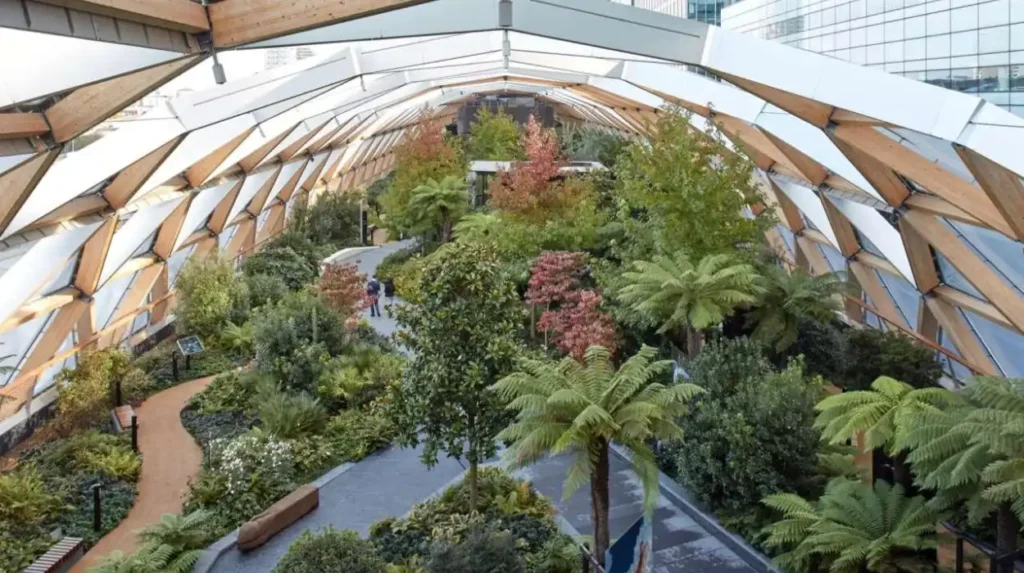
Crossrail Place Roof Garden
Crossrail Place Roof Garden is a landscaped public garden above Canary Wharf’s Elizabeth line station.
Its elevated location provides a green space within the modern commercial district. The garden offers an alternative environment after exploring the museum’s indoor galleries.
Jubilee Park
Jubilee Park is a landscaped public space in Canary Wharf.
Its gardens, water features and walking areas provide opportunities for visitors to take a break between cultural attractions.
Canary Wharf Shopping District
Canary Wharf contains shopping centres, restaurants, cafés and commercial facilities.
Visitors can combine a historical museum visit with shopping, dining and other leisure activities.
River Thames and Canary Wharf Pier
Canary Wharf Pier connects the district with London’s river transport network.
River services provide an alternative way to explore the capital and experience the Thames as an important part of London’s historical and modern transport systems.
These destinations create a practical half-day itinerary without requiring extensive travel between attractions.
Explore More Area Guide
Canary Wharf Public Art & Architecture | East London
Exploring Regent’s Canal: Mile End and Tower Hamlets Walking Guide
How Can Visitors Plan a Walking Route Around London’s Historic Docklands?
A walking route around West India Quay and Canary Wharf allows visitors to explore the museum, historic warehouses, former dock basins and modern waterfront developments. The area is well connected by public transport and supports a flexible half-day heritage itinerary.
The historic area is best explored by combining the museum’s indoor exhibitions with an outdoor walk.
A practical itinerary begins at West India Quay and gradually moves towards the modern Canary Wharf district.
Suggested half-day itinerary
- Start at London Museum Docklands: Explore the permanent galleries and learn about the history of West India Docks.
- Walk around West India Quay: Examine the surviving warehouse buildings and historic dockside architecture.
- Explore the former Dock Office area: Observe the administrative buildings associated with the original commercial dock system.
- Continue towards Canary Wharf: Compare the historic industrial landscape with the modern financial district.
- Visit Crossrail Place Roof Garden: Explore the landscaped public space and surrounding architecture.
- Finish at Canary Wharf Pier: Enjoy views of the Thames and consider using river transport for the next part of your London visit.
This route combines industrial heritage, social history, modern architecture and waterfront recreation.
Visitors with limited time can concentrate on the museum and West India Quay. Those with a full afternoon can extend the walk towards Poplar or Limehouse to explore more of the historic East End.
Practical Walking Advice
Wear comfortable footwear because the route includes public walkways and outdoor waterfront areas.
Check weather conditions before planning an extended outdoor visit. Keep additional time for temporary exhibitions, museum activities and breaks.
Visitors arriving by public transport should check Transport for London services before departure, particularly when travelling during weekends or engineering works.
The route also suits business travellers staying in Canary Wharf who want to explore the area’s history outside working hours. However, the museum itself closes at 5 pm, so an evening visit requires a separate waterfront itinerary.
Why Does London Museum Docklands Matter to the Future of East London Heritage?
London Museum Docklands preserves the physical and social history of an area transformed by international trade, industrial decline and urban regeneration. Its collections provide historical context for understanding contemporary Canary Wharf and future developments across East London’s waterfront.
Docklands represents a significant example of how major economic changes reshape urban environments.
Its history includes commercial expansion, colonial exploitation, industrial employment, wartime destruction, technological change and large-scale redevelopment.
Preserving this history provides context for understanding modern East London.
Protecting Industrial Heritage
Historic warehouses and dockside buildings demonstrate how London’s maritime economy operated.
Their preservation maintains architectural evidence of the industrial period and gives future generations access to the physical remains of the former port.
No. 1 Warehouse is particularly important because it continues to serve a public cultural purpose rather than losing its original historical identity.
Understanding Social and Economic Change
The museum’s exhibitions also preserve the experiences of people who lived and worked in Docklands.
These include sailors, merchants, dock workers, migrant communities and people affected by the slave trade.
Including these experiences creates a more complete understanding of the area’s development.
Connecting Historic and Modern London
Canary Wharf’s modern financial district stands within a landscape previously dominated by warehouses, ships and commercial docks.
The contrast demonstrates how changes in international trade, transportation and economic activity influence urban planning.
Supporting Cultural Tourism
London Museum Docklands strengthens East London’s cultural tourism offer.
Its free permanent galleries provide access to historical information without requiring an admission payment.
The museum also connects visitors with nearby waterfront spaces, public gardens, restaurants and modern commercial attractions.
This combination supports heritage tourism and encourages visitors to explore more of Tower Hamlets and the wider East End.
The museum therefore serves two important purposes: preserving evidence of London’s maritime past and helping visitors understand the historical foundations of its modern waterfront.
London Museum Docklands offers a detailed introduction to the history of London’s maritime economy and the communities that developed around the River Thames.
Its location inside No. 1 Warehouse at West India Quay creates a direct connection between the exhibitions and the historic landscape they interpret.
The nine permanent galleries cover more than 400 years of trade, slavery, migration, industrial activity, wartime experiences and urban transformation.
Visitors can also explore the surrounding historic warehouses, walk around West India Quay and discover the modern commercial district of Canary Wharf.
For tourists, students, families and local residents, the museum provides an accessible way to understand East London’s development.
A visit offers more than an introduction to historic buildings. It explains how international trade, industrialisation and social change shaped the waterfront and established the foundations of modern Docklands.
Where is London Museum Docklands located?
London Museum Docklands is located at No. 1 Warehouse, West India Quay, Canary Wharf, London E14 4AL, in the London Borough of Tower Hamlets.