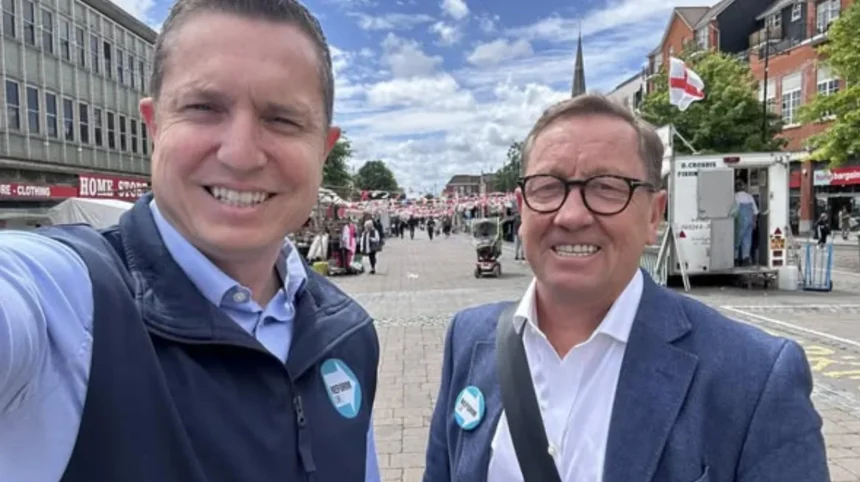
Philip Hyde served as chairman of Reform UK’s Havering and Barking branch from September 2024 through early 2026, advocating for council spending reform, immigration control, and fiscal responsibility before leaving the party to support Restore Britain over disagreements on health and budget priorities. Hyde’s political platform centered on addressing Havering Council’s financial crisis, reducing government waste, tightening immigration enforcement, and restoring local accountability through radical restructuring of borough funding mechanisms.
- Who Is Philip Hyde and What Is His Political Background?
- Early Career and Professional Background
- Entry into Reform UK Politics
- Electoral Candidacy in Havering
- What Core Policies Did Philip Hyde Advocate for in Reform UK?
- Immigration and Border Control Stance
- Fiscal Reform and Council Spending Reduction
- Healthcare and NHS Policy Positions
- Net Zero and Environmental Policy Opposition
- Why Did Philip Hyde Leave Reform UK and Support Restore Britain?
- Disagreements Over Health Policy
- Budget and Governance Concerns
- Alignment with Restore Britain
- What Were Philip Hyde’s Positions on Havering Council Governance?
- Council Financial Crisis Response
- Service Delivery and Privatization
- Staffing and Employment Policy
- Regulatory and Compliance Cost Reduction
- How Did Philip Hyde’s Immigration Views Compare to Reform UK National Policy?
- Border Enforcement and Deportation
- Benefits and Public Service Access Restrictions
- English Language and Integration Requirements
- Cultural and Religious Policy Positions
- What Electoral Impact Did Philip Hyde Have on Havering Politics?
- By-Election Successes in 2024
- Membership Growth and Organization Building
- 2026 Council Election Results
- Post-Election Political Positioning
- What Legacy Did Philip Hyde Leave in Havering Political Discourse?
- Fiscal Policy Discourse Shifts
- Immigration and Integration Debate Intensification
- Organizational Infrastructure Development
- Policy Implementation Influence
Who Is Philip Hyde and What Is His Political Background?
Philip Hyde is a retired banker and horticulturist from Havering who became chairman of Reform UK’s Havering and Barking branch in September 2024 before standing as an Independent candidate in May 2026. Hyde’s career began in the City of London in 1974, spanning banking and horticulture sectors before retirement, with continued involvement in marathon canoeing racing and local politics.
Early Career and Professional Background
Philip Joseph Hyde started his professional life in the City of London financial sector in 1974, working in banking for several decades before transitioning to horticulture. His LinkedIn profile identifies him as a retired banker, retired horticulturist, father, and grandfather who maintains active involvement in marathon canoeing training and racing. This financial sector background informed his later political focus on council budgeting, fiscal responsibility, and spending reform in Havering.
Entry into Reform UK Politics
Hyde joined Reform UK and quickly ascended to leadership roles within the party’s local structure. In September 2024, he assumed the position of chairman for Reform UK’s Havering and Barking branch, overseeing party organization and candidate selection across both boroughs. His LinkedIn profile lists this role as continuing through the present, though subsequent reporting in February 2026 indicated he had departed the party to back Restore Britain.
Electoral Candidacy in Havering
Hyde appeared on the ballot in Havering’s 7 May 2026 local elections as an Independent candidate rather than representing Reform UK. Election results show Philip Joseph Hyde received 100 votes in his ward contest, finishing behind candidates from Labour, Reform UK, and the Green Party. This Independent run followed his departure from Reform UK leadership and his public criticism of the party’s approach to Havering’s council challenges.
What Core Policies Did Philip Hyde Advocate for in Reform UK?
Hyde promoted Reform UK’s national platform of immigration reduction, net-zero policy reversal, NHS reform, and local council spending cuts while emphasizing Havering-specific fiscal crisis solutions. His tenure as branch chairman aligned with Reform UK’s broader messaging on border control, government size reduction, and economic deregulation during the 2024 to 2026 period.
Immigration and Border Control Stance
Hyde supported Reform UK’s immigration policy framework, which called for significant reductions in net migration and stricter enforcement of border controls. Reform UK’s national platform during Hyde’s chairmanship included proposals for large-scale deportation programs, English language requirements for residents, and restrictions on benefits access for non-citizens. These positions aligned with party leader Nigel Farage’s April 2025 immigration policy announcements that emphasized enforcement and removal of individuals not contributing economically.
Fiscal Reform and Council Spending Reduction
Hyde emphasized radical changes to Havering Council’s funding and spending structures, citing the borough’s proximity to bankruptcy as justification for aggressive reform. Reform UK under Hyde’s local leadership proposed cutting council expenditures, reducing regulatory burdens, and restructuring service delivery to address chronic budget shortfalls. Havering Council faced Section 25 robustness statement concerns in January 2026, reflecting ongoing financial instability that Hyde’s platform sought to address through spending discipline.
Healthcare and NHS Policy Positions
Hyde’s Reform UK advocacy included support for party proposals to reform NHS operations, reduce waiting lists, and increase private sector involvement in healthcare delivery. His eventual departure from Reform UK related partly to disagreements over how the party approached Havering’s health service challenges, with Hyde criticizing what he viewed as insufficient attention to local hospital and clinic funding issues.
Net Zero and Environmental Policy Opposition
Reform UK’s national platform during Hyde’s tenure called for abandoning net-zero carbon targets and reversing climate-related regulations on businesses and households. Hyde’s local advocacy aligned with this position, opposing environmental spending mandates that he argued strained council budgets without delivering proportional benefits to Havering residents.
Why Did Philip Hyde Leave Reform UK and Support Restore Britain?
Hyde departed Reform UK in early 2026 citing disagreements over the party’s approach to Havering’s health services and budget management, subsequently endorsing Restore Britain’s more hardline immigration and sovereignty platform. His transition reflected growing tensions between local Reform branches and national leadership over policy priorities and electoral strategy.
Disagreements Over Health Policy
Hyde publicly criticized Reform UK’s handling of health and hospital issues in Havering, arguing the party failed to adequately address local NHS funding crises. East London Times reporting in February 2026 quoted Hyde slamming the party over what he characterized as neglect of health service concerns affecting borough residents. These disagreements contributed to his decision to leave the Reform UK chairmanship and seek alternative political alignment.
Budget and Governance Concerns
Hyde’s departure also stemmed from frustrations with Reform UK’s council governance approach in Havering after the party gained electoral control. Reform UK won full control of Havering London Borough Council in May 2026 elections, with Facebook posts celebrating the victory as validation of Hyde’s earlier organizational work. However, Hyde’s public statements suggested he viewed the party’s subsequent budget decisions as inconsistent with his fiscal reform principles.
Alignment with Restore Britain
Hyde’s support for Restore Britain reflected his attraction to the party’s more uncompromising stance on immigration, sovereignty, and cultural policy. Restore Britain, led by MP Rupert Lowe, advocates for mass deportation programs, halal slaughter bans, sharia court prohibitions, and significant government size reduction. Hyde’s endorsement positioned him within Restore Britain’s emerging network of local activists seeking to push UK politics further rightward on immigration and identity issues.
What Were Philip Hyde’s Positions on Havering Council Governance?
Hyde advocated for radical restructuring of Havering Council’s budget processes, service delivery models, and staffing arrangements to address the borough’s near-bankruptcy status during his 2024 to 2026 tenure. His proposals emphasized spending cuts, privatization of council services, and reduced regulatory compliance costs as mechanisms to restore fiscal stability.
Council Financial Crisis Response
Hyde framed Havering Council’s financial troubles as requiring emergency-level intervention, citing the borough’s repeated proximity to formal bankruptcy declarations. Reform UK’s Havering branch under Hyde proposed fundamental changes to council funding mechanisms, including reduced central government dependency, increased local revenue generation, and dramatic cuts to non-essential services. The council’s January 2026 Section 25 statement reflected ongoing robustness concerns that Hyde’s platform sought to address through aggressive fiscal consolidation.
Service Delivery and Privatization
Hyde supported privatizing council services where feasible, arguing private sector providers could deliver equivalent or superior outcomes at lower cost than direct council provision. This position aligned with Reform UK’s broader preference for market-based solutions and reduced government involvement in service delivery. Hyde’s advocacy included proposals to outsource waste collection, leisure services, and administrative functions to private contractors.
Staffing and Employment Policy
Hyde’s council reform agenda included reducing council workforce size through attrition and voluntary redundancy programs, coupled with productivity improvements from remaining staff. He argued that Havering Council employed excessive administrative personnel relative to frontline service workers, creating inefficiencies that strained budgets without improving resident outcomes. These positions generated controversy with council unions and employee representatives who opposed workforce reduction targets.
Regulatory and Compliance Cost Reduction
Hyde advocated eliminating or reducing regulatory compliance requirements that he argued imposed unnecessary costs on council operations. His proposals included streamlining planning processes, reducing environmental reporting obligations, and limiting equality impact assessment requirements to cut administrative overhead. These positions aligned with Reform UK’s national deregulation agenda and Restore Britain’s subsequent calls to eliminate regulations visible from space.
How Did Philip Hyde’s Immigration Views Compare to Reform UK National Policy?
Hyde’s immigration positions largely mirrored Reform UK’s national platform on border control, deportation, and benefits restrictions, though he later endorsed Restore Britain’s more extreme mass deportation proposals. His local advocacy emphasized immigration’s fiscal impact on Havering Council resources and public services.
Border Enforcement and Deportation
Hyde supported Reform UK’s calls for enhanced border enforcement and expanded deportation programs targeting individuals without legal status or convicted of crimes. Reform UK’s April 2025 immigration policy announcements included proposals for large-scale removal operations and cooperation with origin countries to facilitate deportations. Hyde’s subsequent support for Restore Britain reflected his attraction to Rupert Lowe’s even more ambitious deportation plans described as the largest in British history.
Benefits and Public Service Access Restrictions
Hyde advocated restricting immigrants’ access to benefits, social housing, and non-emergency healthcare services during his Reform UK tenure. These positions aligned with Reform UK’s national platform calling for benefits restrictions for non-citizens and prioritization of British nationals in public service allocation. Hyde framed these proposals as necessary responses to Havering Council’s budget pressures and housing shortages.
English Language and Integration Requirements
Hyde supported Reform UK proposals requiring English language proficiency for residents and citizens, arguing language barriers undermined social cohesion and service delivery. Restore Britain’s platform under Rupert Lowe extended this position to mandate English learning for legal residents, with failure to comply resulting in deportation eligibility. Hyde’s endorsement of Restore Britain indicated his support for these more stringent integration requirements.
Cultural and Religious Policy Positions
Hyde’s alignment with Restore Britain suggested support for the party’s cultural policy positions including halal slaughter bans, sharia court prohibitions, and burka restrictions. Restore Britain’s March 2026 policy statements explicitly called for these measures as part of protecting British cultural identity. Hyde’s public statements on health and budget issues did not extensively address these cultural questions, but his party switch indicated growing alignment with hardline cultural conservatism.
What Electoral Impact Did Philip Hyde Have on Havering Politics?
Hyde’s organizational work as Reform UK branch chairman contributed to the party’s gains in Havering, including by-election wins in 2024 and full council control achieved in May 2026. His departure before the 2026 elections as an Independent candidate reflected internal party tensions but did not prevent Reform UK from securing electoral victories.
By-Election Successes in 2024
Reform UK Romford celebrated two local by-election victories from Labour in October 2024 during Hyde’s early chairmanship period. Branch announcements credited membership surges and organizational improvements for these wins, with Hyde’s leadership cited as a contributing factor in local momentum building. These victories signaled growing Reform UK support in Havering that preceded the party’s broader 2026 electoral breakthrough.
Membership Growth and Organization Building
Hyde’s tenure saw significant Reform UK membership increases in Havering and Barking, with October 2024 announcements highlighting soaring local membership numbers. The branch’s inaugural meeting on 17 October 2024 drew substantial attendance, reflecting growing activist engagement under Hyde’s chairmanship. This organizational infrastructure supported subsequent electoral campaigns and candidate recruitment efforts across the borough.
2026 Council Election Results
Reform UK won full control of Havering London Borough Council in the 7 May 2026 elections, with Facebook posts celebrating the victory as validation of years of local organizing work. Hyde’s earlier tenure as branch chairman contributed to this outcome, though he did not stand as a Reform UK candidate in the election. Instead, Hyde ran as an Independent, receiving 100 votes in his ward contest according to official council results.
Post-Election Political Positioning
Hyde’s post-2026 positioning aligned with Restore Britain rather than Reform UK, reflecting his view that the party’s council governance did not fully implement his preferred policy agenda. His continued political activity suggested ongoing engagement with Havering politics despite his reduced electoral profile compared to his Reform UK chairmanship period.

What Legacy Did Philip Hyde Leave in Havering Political Discourse?
Hyde’s tenure normalized more hardline fiscal and immigration policy discussions in Havering council debates, influencing subsequent Reform UK governance approaches even after his departure from party leadership. His emphasis on council bankruptcy risks and immigration’s fiscal impact shaped local political discourse through 2026 and beyond.
Fiscal Policy Discourse Shifts
Hyde’s persistent framing of Havering Council as near-bankruptcy forced other parties to address fiscal sustainability more directly in their platforms. Section 25 robustness statements and budget debates increasingly referenced the fiscal crisis narrative that Hyde had popularized during his Reform UK tenure. This discourse shift influenced subsequent council budget decisions and service restructuring regardless of which party held majority control.
Immigration and Integration Debate Intensification
Hyde’s advocacy contributed to more prominent immigration discussions in Havering local politics, with subsequent debates addressing border control, benefits access, and integration requirements more explicitly. His alignment with Restore Britain’s hardline positions further intensified these discussions, pushing local political discourse rightward on immigration questions.
Organizational Infrastructure Development
Hyde’s branch building work established Reform UK organizational capacity in Havering that persisted beyond his personal involvement. The membership growth and activist networks developed during his chairmanship supported subsequent electoral campaigns and candidate recruitment even after his departure. This infrastructure contributed to Reform UK’s 2026 council control victory and ongoing local political presence.
Policy Implementation Influence
Hyde’s policy proposals on council spending, service privatization, and regulatory reduction influenced Reform UK’s governance approach after winning council control in 2026. While Hyde’s departure reflected disagreements over implementation pace and priorities, his earlier advocacy shaped the policy framework within which Reform UK operated in council. This influence persisted through budget decisions and service restructuring initiatives undertaken by the Reform UK-controlled council.
Who is Philip Hyde?
Philip Hyde is a retired banker and horticulturist from Havering who served as chairman of Reform UK’s Havering and Barking branch from September 2024 until early 2026. He later left the party, supported Restore Britain, and stood as an Independent candidate in the May 2026 Havering local elections.