Key Points
- Professor Patrick Philip Vernon OBE has been awarded a knighthood in the 2026 King’s Birthday Honours for services to racial equality
- Vernon is a former Hackney Labour councillor who led the successful national campaign establishing Windrush Day (marked annually on 22 June)
- The honour caps three decades of work across voluntary, public, and community sectors campaigning on racial equality, health equity, and migrant rights
- Vernon currently serves as chair of Hackney Thinking Spaces, pro-chancellor for health at the University of Wolverhampton, commissioner for the UK Commission on Bereavement, and chair of the Windrush Advisory Group at the Black Equity Organisation
- His campaigning credits include convening the Windrush 75 Network, co-authoring 100 Great Black Britons, and co-founding the Majonzi Fund during Covid-19
- Vernon was previously awarded an OBE in 2012 for work combating health inequalities for ethnic minorities
- The first Windrush Day was held on 22 June 2018 after Vernon’s petition launched in 2013
- The Majonzi Fund provides £500 monetary grants to families for memorial events and supports BAMEstream for culturally relevant bereavement services
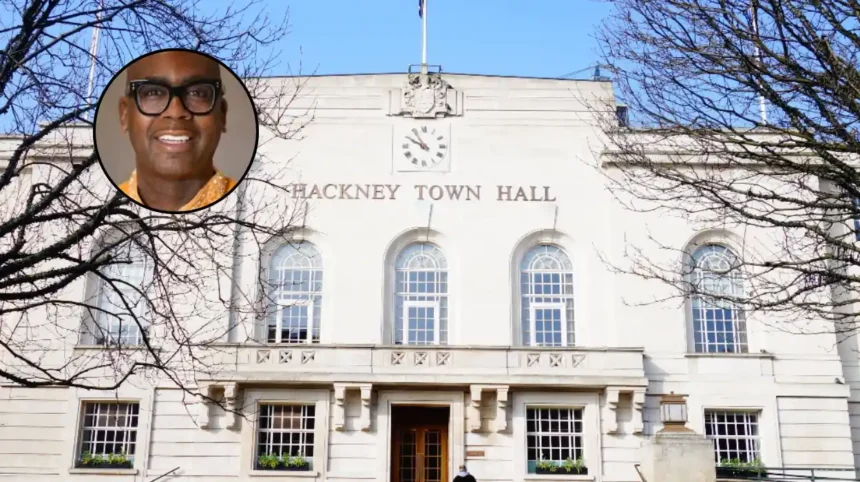
Hackney (East London Times) June 13, 2026 – Professor Patrick Philip Vernon OBE, the former Hackney Labour councillor who led the successful national campaign for Windrush Day, has been awarded a knighthood in the 2026 King’s Birthday Honours for services to racial equality and social justice.
- Key Points
- How Did Vernon’s Windrush Day Campaign Become National Recognition?
- What Was Vernon’s Role in the 100 Great Black Britons Campaign?
- How Did the Majonzi Fund Support Communities During Covid-19?
- What Current Roles Does Vernon Hold After His Councillor Career?
- What Is the Background of Patrick Vernon’s Campaigning Development?
- How Will This Knighthood Development Affect Black British Communities and Racial Equality Advocates?
As reported by The Independent,
“Professor Patrick Philip Vernon OBE. Campaigner for Racial Equality and Social Justice. For services to Racial Equality. (London, Greater London)”.
The official GOV.UK announcement states he is
“a leading campaigner tackling health inequalities and social justice. With over 30 years of experience, he led the successful campaign for 22 June to be recognised as Windrush Day and convened the Windrush 75 Network to mark the 75th anniversary in 2023”.
How Did Vernon’s Windrush Day Campaign Become National Recognition?
Patrick Vernon was the first to call for the commemoration of “Windrush Day,” to recognise the migrant contribution to UK society, on the day when the first big group of post-war migrants from the Caribbean arrived in Britain. As reported by National Today,
“The first Windrush Day was held on June 22, 2018, after a successful campaign led by Patrick Vernon. Since then, more and more people have started participating”.
Vernon first launched a petition to this effect in 2013, which was followed by another campaign in 2018, during the Windrush scandal. According to GOV.UK,
“Patrick has been a campaign leader for Windrush since 2010, launching a petition in 2013. In 2018, the year that the Windrush Scandal was heightened, his series of campaigns led to calling ‘Windrush Day’ as a yearly, national commemoration”.
Officials accepted the petition and the government declared June 22 as Windrush Day. As reported by Hackney Citizen, Vernon
“started one of the fastest growing petitions ever on Parliament’s website, appealing for an amnesty for any minors who arrived in Britain between 1948 and 1971, and calling for Windrush victims to be awarded compensation”.
What Was Vernon’s Role in the 100 Great Black Britons Campaign?
As reported by Hackney Citizen,
“It has its origins in 2001 when academic, activist and former Hackney councillor Patrick Vernon OBE conceived of the idea as a counterpoint to the BBC’s ‘100 Greatest Britons’ campaign (won by Winston Churchill)”.
In 2004, the pair launched ‘100 Great Black Britons’ as a campaign, having identified over 500 people whom they considered to merit this accolade.
According to Kids Kiddle,
“Because no Black people were on the BBC’s list, Patrick Vernon started his own campaign called 100 Great Black Britons. He launched it in October 2003 during Black History Month. His aim was to ‘show how much Black people have helped Britain.’ Vernon explained that Black history often isn’t recognized”.
More than 100,000 people voted online, choosing from many Black figures from history and today. In 2019, the 100 Great Black Britons poll was relaunched. As reported by Media Diversified,
“I soon realised the importance of role models for young black Britons and in 2003 100 Great Black Britons was launched to wide acclaim and saw Jamaican nurse and entrepreneur Mary Seacole voted number one”.
How Did the Majonzi Fund Support Communities During Covid-19?
As reported by iNottinghillBlackbird,
“The Majonzi fund was created to provide bereavement and grief support to members of communities affected by loss due to Covid-19. Fund recipients are provided with a monetary grant to use towards memorial events and tributes to commemorate the lives of those lost in a way that is meaningful to them, and through grieving and bereavement resources in partnership with BAMEstream”.
According to GOV.UK,
“In 2020 Patrick established the Majonzi Fund, which is providing grants to families and community organisations to hold commemoration events for individuals from Black and racialised communities who have died from COVID-19 during the pandemic”.
As reported by GoFundMe,
“The Majonzi Fund provides bereavement and grief support to members of the Black, Asian and Minoritised Ethnic (BAME) community affected by loss due to COVID-19. Evidence shows that BAME communities have been disproportionately affected throughout the course of the pandemic. Mortality rates are between two to four times higher than that of other ethnic groups, after accounting for demographic, socio-economic and health-related factors”.
Fund recipients are provided with a monetary grant of £500 to use towards celebrating and commemorating the lives of those they have lost.
The fund also supports BAMEstream, an alliance of BAME practitioners, therapists, policy experts, activists and academics who aim to raise awareness and address the urgent mental health and wellbeing needs of the BAME community in the UK.
What Current Roles Does Vernon Hold After His Councillor Career?
Vernon currently serves as chair of Hackney Thinking Spaces, alongside roles as pro-chancellor for health at the University of Wolverhampton, commissioner for the UK Commission on Bereavement, and chair of the Windrush Advisory Group at the Black Equity Organisation.
According to IWM Institute,
“Patrick was for many years a councillor for the London Borough of Hackney and he remains active in the fields of public health and diversity”.
He is also founder of Every Generation Media and 100 Great Black Britons.
As reported by Hackney Citizen, Vernon “was awarded an OBE in 2012 for his work in combating health inequalities for ethnic minorities in the UK”. The knighthood caps three decades of work across the voluntary, public and community sectors, in which Vernon has campaigned on racial equality, health equity and migrant rights, and helped to bring the Windrush Scandal to national attention.
Explore More Hackney News
20 Hackney Schools Choose Juniper Ventures Cleaning Hackney 2026
Hackney Art Week 2026: Free 130-Artist Festival Takes Over Hackney; Hackney, 2026
What Is the Background of Patrick Vernon’s Campaigning Development?
Patrick Vernon’s campaigning journey began in 2001 when he conceived the 100 Great Black Britons idea as a response to the BBC’s exclusion of Black figures from their 100 Greatest Britons list. His Windrush Day campaign launched with a petition in 2013, gaining momentum during the 2018 Windrush Scandal when government deportation policies threatened Caribbean migrants who had arrived legally after World War II.
The Majonzi Fund was established in 2020 in partnership with the Ubele Initiative, an African Diaspora-led infrastructure organisation, to address the disproportionate Covid-19 mortality rates affecting BAME communities.
Vernon’s OBE in 2012 recognised his earlier work on health inequalities, and his current roles include chairing multiple organisations focused on racial equality, bereavement support, and Black British history.
Vernon was born in Wolverhampton and is British with Jamaican heritage, which has influenced his lifelong commitment to racial equality and migrant rights advocacy. His work has been embedded in the educational curriculum by 2019, leading to official recognition of numerous eminent Black figures across the UK.
How Will This Knighthood Development Affect Black British Communities and Racial Equality Advocates?
The knighthood recognition of Patrick Vernon is likely to significantly boost the visibility and legitimacy of racial equality campaigns within Black British communities.
As Vernon’s work has already embedded 100 Great Black Britons in educational curricula, this honour may encourage further institutional support for Black history initiatives in schools.
For Windrush families and descendants, Vernon’s knighthood represents validation of their ongoing struggle for justice and compensation following the Windrush Scandal. His campaign for amnesty and compensation for Windrush victims may gain additional momentum with this royal recognition.
The Majonzi Fund’s work supporting BAME communities affected by Covid-19 bereavement could attract increased funding and partnerships following Vernon’s elevated status.
With mortality rates two to four times higher for BAME communities, continued support for culturally relevant bereavement services remains critical.
For racial equality advocates and activists across the UK, Vernon’s knighthood demonstrates that sustained campaigning over three decades can achieve recognition at the highest levels of British society. This may inspire younger campaigners to pursue long-term advocacy work on health equity, migrant rights, and social justice issues.
The honour also strengthens the Black Equity Organisation’s Windrush Advisory Group, where Vernon now serves as chair, potentially increasing the organisation’s influence in policy discussions on racial equality. University students at the University of Wolverhampton may benefit from Vernon’s expanded role as pro-chancellor for health, bringing greater attention to health inequality issues in educational settings.