The World Health Organization has warned that ongoing conflict in the Democratic Republic of Congo is severely undermining efforts to contain a growing Ebola outbreak, raising fears of a wider regional health emergency.
WHO Director-General Dr Tedros Adhanom Ghebreyesus described the situation in eastern DR Congo as a “catastrophic collision of disease and conflict” as violence, displacement, and insecurity continue disrupting medical operations in the region.
The outbreak is centred in Ituri province, an area that has faced years of armed conflict involving multiple militia groups and ongoing military operations.
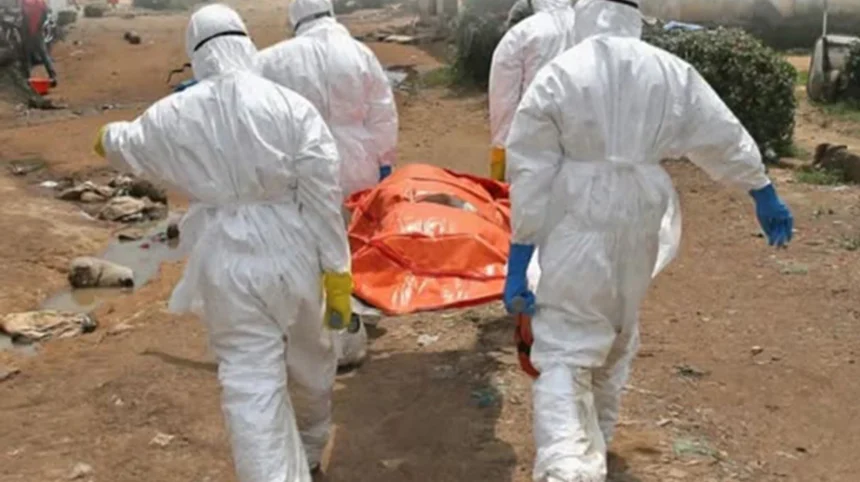
Health officials say the violence is making it extremely difficult for aid workers to track infections, isolate patients, and reach vulnerable communities.
In a statement posted on X, Dr Tedros warned that humanitarian teams cannot effectively contain the outbreak while fighting continues.
“We cannot build community trust or isolate the sick while bombs are falling,”
he said.
The WHO chief is expected to travel to DR Congo this week to help coordinate international efforts aimed at controlling the spread of the virus.
The outbreak has already caused widespread alarm across neighbouring countries, prompting several governments to impose emergency travel restrictions.
Uganda announced on Wednesday that it would temporarily close its border with DR Congo with immediate effect. Only essential workers, including humanitarian staff, food transporters, medical personnel, and security officials, will be allowed to cross under strict conditions.
Canada has also introduced a 90-day entry ban affecting travellers from DR Congo, Uganda, and South Sudan, while the United States recently imposed restrictions on non-citizens who had travelled through the affected countries.
The Bahamas has also implemented quarantine and isolation measures for foreign nationals arriving from the region.
Congolese health authorities say around 1,000 people are currently showing symptoms consistent with Ebola, although testing challenges mean many suspected cases have not yet been officially confirmed.
So far, 220 suspected deaths have been linked to the outbreak, but laboratory tests have only confirmed 17 Ebola-related fatalities.
Medical teams are also racing to trace approximately 3,600 people believed to have come into contact with infected individuals.
Aid agencies warn that poor road infrastructure, insecurity, and mass displacement are creating major obstacles for health workers trying to contain the virus.
Ituri province has remained under military rule since 2021 after the civilian administration was replaced in response to escalating violence from armed groups operating in the region.
Médecins Sans Frontières, also known as Doctors Without Borders, said emergency teams are struggling to gain full control of the outbreak because of limited testing capacity and difficulties reaching affected communities.
Ewald Stals, the organisation’s director in DR Congo, warned that the virus is still spreading faster than containment efforts.
“We still do not have a full picture of what is happening,”
he said.
“As long as that is the case, we can say that the virus is still ahead of us.”
The current outbreak involves the rare Bundibugyo strain of Ebola, for which there are currently no approved vaccines or dedicated treatments available.
However, health officials say experimental therapies, including antibody-based treatments developed in the United States, could soon be introduced to help contain the crisis.
The European Centre for Disease Prevention and Control has also announced plans to increase its presence in DR Congo by deploying additional experts through the EU Health Task Force.
The WHO is now urging all parties involved in the conflict to agree to an immediate ceasefire to allow humanitarian teams safe access to affected communities before the outbreak escalates further.