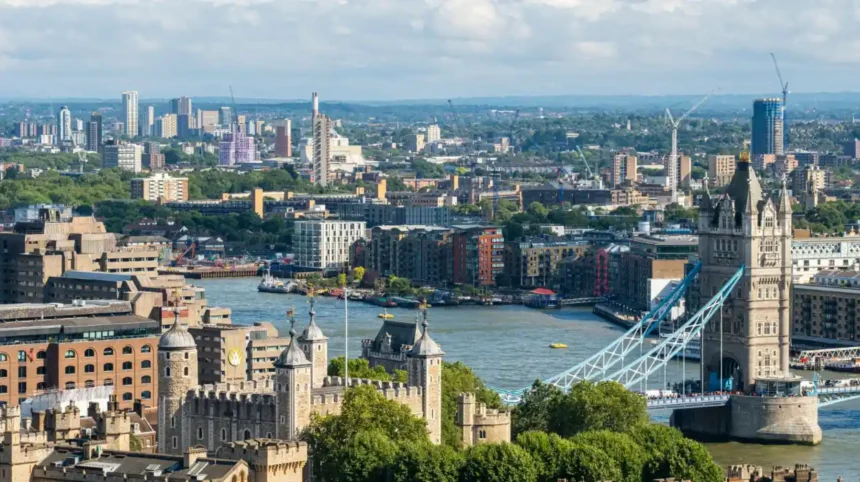
Tower Hamlets is one of East London’s most historically significant and geographically varied boroughs. It combines major London landmarks, former docklands, historic neighbourhoods, cultural institutions, markets, canals, riverside spaces and extensive public parks.
- Which places should you discover first in Tower Hamlets?
- Why is the Tower of London one of Tower Hamlets’ most important attractions?
- What makes Tower Bridge worth visiting during a London holiday?
- What can visitors discover at the Museum of London Docklands?
- Which markets are worth visiting in Tower Hamlets?
- What can you see around Brick Lane and Spitalfields?
- Where can you experience nature in Tower Hamlets?
- What makes Canary Wharf an interesting place to explore?
- Where can visitors explore the history of Wapping and Limehouse?
- Which cultural attractions should visitors include in Tower Hamlets?
- What can families do in Tower Hamlets?
- How can visitors explore Tower Hamlets on foot?
- Why is Tower Hamlets important for understanding modern London?
- What is the best way to plan a Tower Hamlets holiday itinerary?
- Why should Tower Hamlets be included in a London holiday?
The borough sits immediately east of the City of London and extends north and east from the River Thames. Its best-known districts include Whitechapel, Spitalfields, Bethnal Green, Stepney, Wapping, Limehouse, Poplar, Bow, the Isle of Dogs and Canary Wharf.
Tower Hamlets Council describes the borough as the heart of London’s East End and highlights its combination of ancient heritage, markets, museums and modern Docklands architecture.
For holidaymakers, this makes Tower Hamlets particularly useful for combining several types of London experiences within one borough. Historic attractions sit close to financial districts, while markets, parks and cultural venues provide different experiences away from the capital’s traditional West End attractions.
The borough also has a substantial green-space network. Tower Hamlets Council records more than 120 parks and green spaces, including Victoria Park, Mile End Park, Mudchute Park and Farm and Tower Hamlets Cemetery Park.
Which places should you discover first in Tower Hamlets?
Tower Hamlets combines internationally recognised landmarks, historic neighbourhoods, museums, markets, parks and riverside destinations, making it possible to experience royal history, East End culture, Docklands regeneration, shopping, nature and architecture within one London borough during a holiday.
The best starting point depends on the type of experience you want. First-time visitors often prioritise the Tower of London and Tower Bridge because both are among London’s most recognisable landmarks.
Visitors interested in social history can continue towards Whitechapel, Spitalfields and the former docklands. These districts reveal the borough’s connections with immigration, trade, industry and working-class East London.
For architecture and modern London, Canary Wharf provides a contrasting environment. Its towers, waterways, public spaces and transport connections demonstrate the transformation of former docklands into a major commercial district.
For outdoor time, Victoria Park and Mile End Park provide extensive green space. Tower Hamlets Council states that Victoria Park receives around nine million visits each year.
Why is the Tower of London one of Tower Hamlets’ most important attractions?
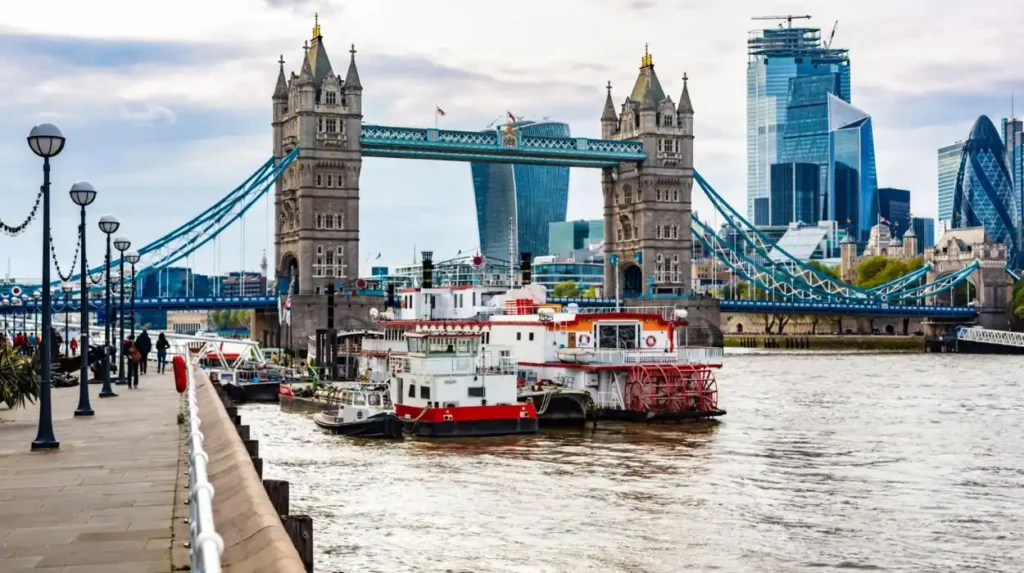
The Tower of London is a historic fortress on the River Thames that has served as royal residence, prison, armoury, treasury and ceremonial site. Founded after the Norman Conquest, it remains one of Britain’s most significant surviving medieval royal complexes.
Tower of London stands beside Tower Hill and the Thames. Its history stretches across almost a millennium of English and British history.
William the Conqueror ordered the construction of the White Tower in the late 11th century. The complex expanded substantially during subsequent reigns, creating defensive walls, towers and inner and outer wards.
The site has served several functions. It was a royal residence, defensive fortress, prison, armoury and treasury. It is also associated with executions and political imprisonment.
The Crown Jewels are one of its most prominent visitor attractions. The collection represents centuries of British coronation tradition and includes regalia used during royal ceremonies.
The Tower also provides a direct connection between London’s medieval history and the modern capital. Its position beside the Thames explains why this part of London became strategically important for defence, trade and administration.
Tower Hamlets Council identifies the Tower of London as one of the borough’s major historic attractions.
As you explore the modern site, you are crossing land with a deep heritage. Read about the full [Insert Anchor Text for History Article Here] to understand its origins.
What makes Tower Bridge worth visiting during a London holiday?
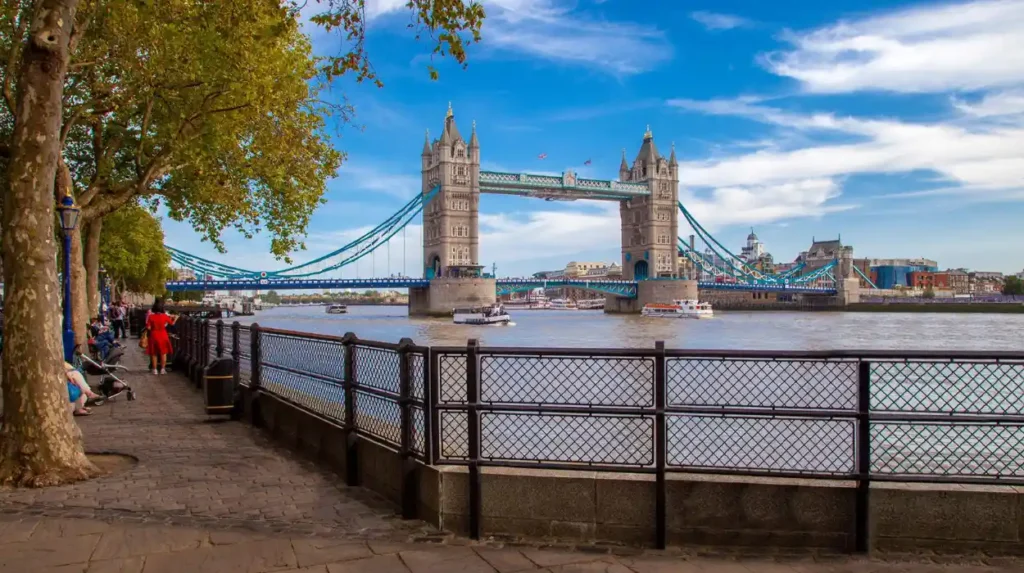
Tower Bridge is a combined bascule and suspension bridge crossing the River Thames beside the Tower of London. Opened in 1894, its towers, walkways and lifting mechanism provide one of London’s most recognisable examples of Victorian engineering.
Tower Bridge is one of the defining landmarks of the Thames waterfront.
The bridge was completed in 1894 to improve connections across the river while allowing tall vessels to reach London’s docks. Its central bascules lift to allow river traffic through.
The bridge consists of two substantial towers connected by high-level walkways. The architecture combines practical engineering with the elaborate visual style associated with late Victorian London.
Visitors can access the Tower Bridge Exhibition, which explains the bridge’s construction, engineering and history. Glass floor sections provide views towards the Thames and roadway below.
Its location makes Tower Bridge particularly useful as part of a walking itinerary. The bridge connects the Tower of London area with the south bank and provides views towards the City, the Thames and the historic riverside.
The surrounding riverside also provides opportunities for photography, walking and sightseeing without requiring a separate journey across London.
What can visitors discover at the Museum of London Docklands?
The Museum of London Docklands explains how the River Thames, London’s docks, global trade, migration and industrial development shaped the capital. Its galleries use historic objects, documents, reconstructions and exhibitions to interpret London’s relationship with its waterfront.
Museum of London Docklands is located at West India Quay in the Docklands.
The museum occupies a historic warehouse associated with London’s former port. Its location provides an important physical connection to the history it interprets.
Collections examine London’s development as a major trading port. They cover subjects including the Thames, slavery, commerce, migration, industry, dock work and the transformation of the Docklands.
The museum is particularly valuable for understanding why East London developed differently from central London. The docks supported international commerce and created employment while also producing densely populated industrial communities.
The building itself contributes to the experience. Historic warehouse architecture contrasts directly with the modern towers of Canary Wharf nearby.
This makes the museum an effective stop for visitors who want historical context before exploring the surrounding Docklands.
Which markets are worth visiting in Tower Hamlets?
Tower Hamlets contains several established markets that reflect the borough’s commercial and cultural diversity, including Columbia Road Flower Market, Brick Lane, Spitalfields and Petticoat Lane. Each market has a distinct location, trading tradition, product range and visitor experience.
Markets are central to the identity of East London. Tower Hamlets Council specifically highlights Petticoat Lane and Columbia Road Flower Market among the borough’s visitor attractions.
Columbia Road Flower Market is known for flowers, plants and independent shops along Columbia Road. The market operates on Sundays and transforms the street into a concentrated horticultural trading area.
Brick Lane is associated with street food, vintage retail, independent businesses, art and the cultural history of the East End. Its surrounding streets also contain significant examples of street art and historic architecture.
Old Spitalfields Market provides a covered market environment near Liverpool Street and the City. Its setting combines historic market architecture with contemporary retail and food businesses.
Petticoat Lane is traditionally associated with clothing and bargain shopping around Middlesex Street and surrounding streets.
Market opening days and individual trader participation vary, so visitors should verify current arrangements before travelling.
What can you see around Brick Lane and Spitalfields?
Brick Lane and Spitalfields form a culturally significant part of East London, combining historic streets, markets, independent businesses, food, galleries, religious buildings and street art. The area demonstrates how successive immigrant communities shaped the social identity of Tower Hamlets.
The Brick Lane area has experienced several major phases of settlement and commerce.
Huguenot communities established themselves in Spitalfields from the late 17th century. Jewish migration later shaped the district, followed by significant Bangladeshi settlement during the 20th century.
These communities influenced local businesses, religious buildings, food traditions and commercial activity.
The area is particularly associated with the development of Banglatown around Brick Lane. Tower Hamlets Council identifies Bangla Town as a major visitor attraction that attracts thousands of tourists each year.
The street also connects with the broader cultural landscape of contemporary East London. Independent shops, galleries, cafés, restaurants and creative businesses occupy buildings that reflect different periods of the district’s history.
Visitors can therefore combine food, shopping, architecture and cultural heritage within a relatively compact walking area.
Where can you experience nature in Tower Hamlets?
Victoria Park, Mile End Park, Tower Hamlets Cemetery Park and Mudchute Park and Farm provide major opportunities to experience nature within the borough. They offer landscaped gardens, wildlife habitats, walking routes, recreation areas and distinctive local heritage.
Tower Hamlets has an extensive network of green spaces. The council records more than 120 parks and green spaces and states that 14 parks hold Green Flag Awards.
Victoria Park is the borough’s oldest and largest park. It opened in 1845 and was created to provide public recreation space for East London communities.
The park covers more than 200 acres and includes lakes, gardens, monuments, open lawns and historic features. The council records around nine million visits annually.
Mile End Park forms a linear green corridor through the borough. It includes the Ecology Pavilion, Art Pavilion, sports facilities and other recreational spaces.
Tower Hamlets Cemetery Park provides a different environment. It is a historic cemetery and local nature reserve containing mature vegetation, paths, monuments and wildlife habitat.
Mudchute Park and Farm on the Isle of Dogs combines open countryside-style space with a working urban farm.
Tower Hamlets identifies both Mudchute Park and Farm and Tower Hamlets Cemetery Park as local nature reserves.
What makes Canary Wharf an interesting place to explore?
Canary Wharf is a major financial and commercial district developed on former London docklands. Its high-rise buildings, public squares, waterways, retail spaces, restaurants and transport connections demonstrate the large-scale transformation of East London from industrial port to modern business centre.
Canary Wharf occupies part of the Isle of Dogs and developed around former West India Docks.
The docks opened in the early 19th century and became important for international trade. Their decline during the 20th century left large areas of underused industrial waterfront.
The redevelopment of Canary Wharf transformed this landscape. Modern office towers, public spaces, shops, restaurants and transport infrastructure now occupy much of the former dockland environment.
Canary Wharf is particularly relevant to visitors interested in contemporary architecture.
The district also contains waterways and public art. Visitors can walk between the docks while viewing skyscrapers, historic dock structures and modern commercial buildings.
Canary Wharf also works well for visitors with limited time because the area has strong public transport connections, including the London Underground, Elizabeth line and Docklands Light Railway.
Its contrast with nearby historic districts demonstrates the breadth of Tower Hamlets as a destination.
Where can visitors explore the history of Wapping and Limehouse?
Wapping and Limehouse preserve important connections with London’s maritime history. Their riverside streets, warehouses, docks, churches, canals and surviving industrial structures reveal how shipping, trade and waterfront employment influenced East London for centuries.
Wapping occupies the Thames waterfront west of Limehouse. Its history is strongly connected with maritime employment and the former London docks.
St Katharine Docks sits close to the Tower of London and represents another surviving part of the historic dockland landscape.
Limehouse developed as an important riverside industrial and maritime district. The area became associated with pottery production, shipbuilding and later canal and dock activity.
Limehouse Basin connects the Regent’s Canal with the Limehouse Cut and the Thames. It provides an important example of the canal infrastructure that supported industrial London.
The council identifies the Regent’s Canal, Limehouse Cut and Limehouse Basin as part of a metropolitan Site of Importance for Nature Conservation.
Walking these areas provides a different experience from visiting major landmarks. The emphasis is on streetscapes, waterways and surviving structures connected with London’s working waterfront.
Explore more Area Guide
Hidden Gems in Tower Hamlets Every Visitor Should Experience at Least Once
Where to Explore in Tower Hamlets: History, Food & Views
Which cultural attractions should visitors include in Tower Hamlets?
Tower Hamlets has a substantial cultural network that includes galleries, music venues, community spaces and educational institutions. Whitechapel Gallery, Wilton’s Music Hall, Rich Mix and the Young V&A represent different aspects of the borough’s contemporary and historical cultural landscape.
Whitechapel Gallery is an established contemporary art institution near Whitechapel High Street. It opened in 1901 and has played an important role in presenting modern and contemporary art.
Wilton’s Music Hall in Wapping is one of London’s best-known historic performance spaces. The building preserves elements of a 19th-century music hall environment and hosts theatre, music and other performances.
Rich Mix in Bethnal Green provides cinema, arts, performance and community programming.
The Young V&A in Bethnal Green focuses on children and young people and occupies the historic building originally associated with the Bethnal Green Museum.
These institutions demonstrate that Tower Hamlets is not simply a destination for historic sightseeing. It also has an established cultural infrastructure serving residents and visitors.
What can families do in Tower Hamlets?
Families can combine major landmarks with parks, museums, markets and child-friendly cultural attractions across Tower Hamlets. Victoria Park, Mile End Park, the Young V&A, Museum of London Docklands and Mudchute Park and Farm provide varied options.
Victoria Park contains playgrounds, open lawns, lakes and recreational facilities. The council also operates more than 60 playgrounds across the borough.
Mile End Park provides additional outdoor space and includes sports and play facilities.
The Young V&A provides an indoor cultural attraction focused on design, creativity and objects relevant to children and families.
Museum of London Docklands offers historical exhibitions in a former warehouse, giving families an opportunity to understand London’s maritime development.
Mudchute Park and Farm provides an urban countryside experience on the Isle of Dogs. Its location is particularly distinctive because the farm sits close to Canary Wharf’s high-rise commercial district.
Families can therefore build an itinerary around one indoor attraction, one historic landmark and one green space rather than spending the entire day at a single venue.
How can visitors explore Tower Hamlets on foot?
Walking is an effective way to understand Tower Hamlets because several attractions sit within connected historic and cultural districts. Routes can link the Tower of London, Tower Bridge, Wapping, Whitechapel, Spitalfields, Brick Lane, Bethnal Green and Victoria Park.
A riverside itinerary can begin at the Tower of London and continue towards Tower Bridge and St Katharine Docks.
A central East End route can connect Whitechapel with Brick Lane and Spitalfields. This route focuses on markets, food, religious heritage, architecture, galleries and street culture.
A longer northern route can continue towards Bethnal Green and Victoria Park.
A Docklands route can begin at the Museum of London Docklands and continue around West India Quay and Canary Wharf.
Canal and riverside walks provide another way to experience the borough. Tower Hamlets’ designated nature conservation sites include the River Thames, Bow Creek, Lea Valley, canals, Limehouse Basin and several dockland habitats.
Visitors should allow additional time for photography, museum visits and market browsing rather than treating these routes purely as transport connections.
Why is Tower Hamlets important for understanding modern London?
Tower Hamlets demonstrates how London developed through migration, trade, industry, transport, finance, regeneration and cultural change. Its historic docks and East End communities now exist alongside global business districts, major cultural venues, transport infrastructure and extensive public green spaces.
The borough has long been shaped by migration. Tower Hamlets Council describes a history involving communities arriving from different parts of the world and identifies significant Bangladeshi heritage within the borough.
The former docks provide another major historical layer. Port activity connected London with international trade and contributed to the development of East London communities.
The decline of the docks created substantial economic and physical change. Canary Wharf represents the subsequent redevelopment of part of this former industrial landscape into a major financial district.
Meanwhile, neighbourhoods such as Whitechapel, Spitalfields, Bethnal Green and Brick Lane retain strong connections with community history, independent commerce and cultural institutions.
The borough’s green infrastructure adds another dimension. Its parks and nature sites provide recreation and ecological value within one of London’s densely populated urban areas.
For holidaymakers, this concentration of different historical periods makes Tower Hamlets particularly valuable as a London destination. A single day can include medieval royal history, Victorian engineering, dockland heritage, immigrant history, contemporary art, modern finance and urban nature.
What is the best way to plan a Tower Hamlets holiday itinerary?
The most efficient itinerary groups attractions by location rather than crossing London repeatedly. Combine the Tower of London with Tower Bridge, Brick Lane with Spitalfields, and Museum of London Docklands with Canary Wharf for geographically efficient sightseeing.
A first-day itinerary focused on historic London can centre on the Tower of London, Tower Bridge and St Katharine Docks.
A second itinerary can focus on East End culture by connecting Whitechapel, Brick Lane, Spitalfields and Bethnal Green.
A third option can focus on Docklands, combining the Museum of London Docklands with Canary Wharf and nearby waterways.
Visitors who want more green space can substitute Victoria Park or Mile End Park into an East London itinerary.
Market visits require attention to trading days. Columbia Road Flower Market is particularly associated with Sundays, while other markets operate according to different schedules.
Museum opening hours, exhibitions, ticket arrangements and special events change over time. Checking official attraction websites before travelling provides the most reliable current information.
Tower Hamlets is also well connected to the rest of London, so visitors can combine it with attractions in the City, Stratford, South Bank or central London.
Why should Tower Hamlets be included in a London holiday?
Tower Hamlets offers one of London’s strongest combinations of historic landmarks, East End culture, markets, museums, parks, waterways and modern architecture. Its compact geographical relationship with central London makes these experiences practical additions to a wider London holiday itinerary.
The borough provides a clear sequence of London’s development. The Tower of London represents medieval royal power. Tower Bridge represents Victorian engineering. The former docks represent global commerce and industrial London. Brick Lane and Whitechapel demonstrate migration and cultural change. Canary Wharf represents modern financial London.
Its parks provide a further contrast. Victoria Park opened in 1845, while newer and regenerated spaces such as Mile End Park provide contemporary recreation and ecological functions.
Tower Hamlets Council identifies more than 120 parks and green spaces and records 14 Green Flag Awards, demonstrating the scale of its public open-space network.
The borough therefore works for different types of London visitors. History-focused travellers can prioritise the Tower and docklands. Culture-focused visitors can explore galleries, music venues and markets. Families can combine museums and parks. Business travellers can explore Canary Wharf and nearby cultural districts during downtime.
Tower Hamlets is ultimately best understood as a destination where several layers of London exist side by side. Its historic streets, waterways, markets, landmarks, cultural institutions and modern skyline provide a broad and fact-rich introduction to East London.
What are the best places to visit in Tower Hamlets?
The best places to visit in Tower Hamlets include the Tower of London, Tower Bridge, Brick Lane, Spitalfields, Columbia Road Flower Market, Victoria Park, Museum of London Docklands, Canary Wharf, Limehouse and Wapping.