Tower Hamlets in East London is a destination for contemporary art, public installations, independent galleries, street art and creative exhibitions. From the internationally recognised Whitechapel Gallery to the historic streets of Brick Lane and the cultural spaces around Canary Wharf, the borough offers visitors different ways to experience London’s visual arts scene.
- Which art galleries should visitors explore in Tower Hamlets?
- Where can visitors see street art in Tower Hamlets?
- What creative work can visitors discover at the Old Truman Brewery?
- Where can visitors find contemporary art and cultural events near Bethnal Green Road?
- Where can visitors explore art around Canary Wharf?
- Where can visitors discover community-led art in Tower Hamlets?
- How does Tower Hamlets’ history influence its art scene?
- What types of creative work can visitors see in Tower Hamlets?
- How can visitors plan an art walk through Tower Hamlets?
- How can visitors find free art and affordable exhibitions in Tower Hamlets?
- When is the best time to explore art in Tower Hamlets?
- How can tourists reach Tower Hamlets’ main art destinations?
- What should visitors know before visiting Tower Hamlets’ art venues?
- Why should art lovers include Tower Hamlets in an East London visit?
This guide covers established galleries, outdoor artwork, exhibition venues and creative neighbourhoods. It also explains how to plan an art-focused visit, understand the area’s artistic heritage and discover work by emerging artists.
Which art galleries should visitors explore in Tower Hamlets?
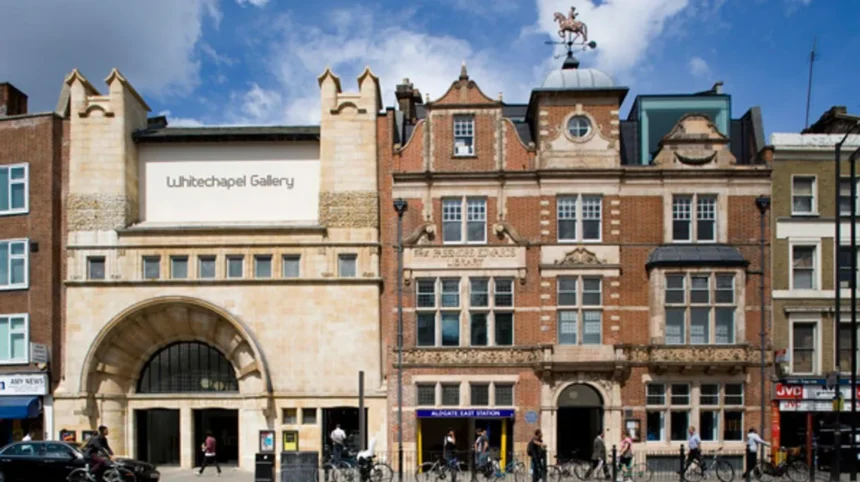
Tower Hamlets has established galleries and independent exhibition spaces that introduce visitors to contemporary art, photography and experimental visual culture. Whitechapel Gallery is a key destination, while galleries and cultural venues around the borough provide opportunities to explore changing exhibitions and local creative work.
The borough’s gallery scene reflects East London’s long relationship with immigration, industry, community activism and artistic experimentation. Visitors encounter established institutions alongside smaller spaces that support emerging practitioners.
Whitechapel Gallery
Whitechapel Gallery is one of East London’s best-known public art institutions. Founded in 1901, it presents modern and contemporary art through temporary exhibitions, public programmes, talks and learning activities.
The gallery has a significant place in British art history. Its exhibition programme has introduced London audiences to influential international artists and changing artistic movements. Its location near Whitechapel High Street also makes it accessible as part of a wider walking visit through the neighbourhood.
Visitors should check the current exhibition programme before travelling. Admission arrangements, opening hours and access to individual exhibitions vary according to the programme.
Independent galleries and artist-led spaces
Independent galleries and artist-led projects offer a different perspective on Tower Hamlets. These spaces often focus on emerging artists, experimental formats, photography, installation and work connected to local communities.
Brick Lane, Shoreditch’s eastern edges and surrounding streets have long attracted artists, designers and creative businesses. However, individual venues change frequently, so visitors should verify that a gallery is currently operating and open to the public before making a special journey.
For a useful visit, compare exhibition descriptions, artist biographies and event listings. This approach helps distinguish permanent collections from temporary shows and private studios that require advance booking.
Where can visitors see street art in Tower Hamlets?
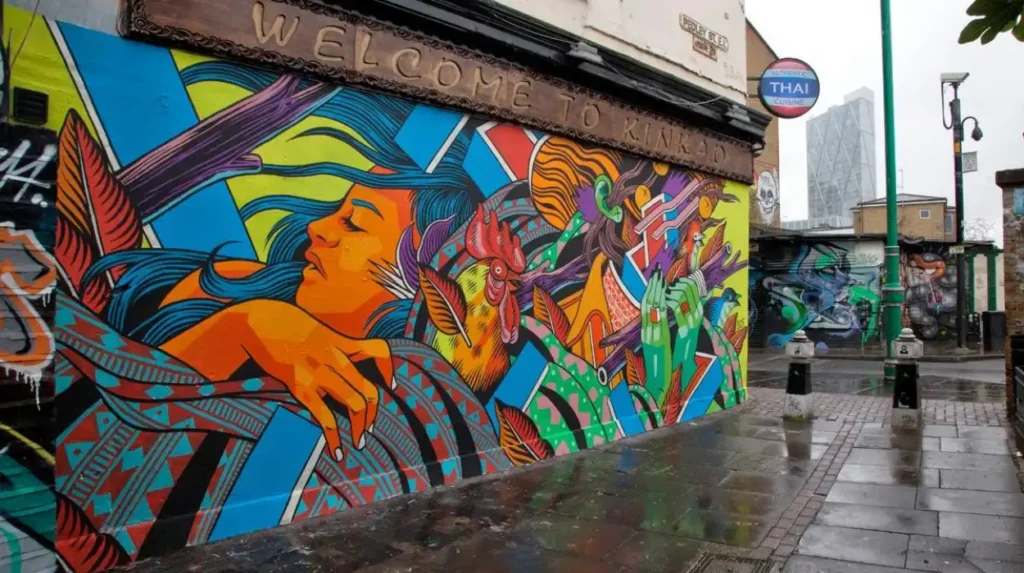
Brick Lane and the surrounding streets are central places to explore East London’s street-art culture. Visitors encounter murals, painted shutters, commissioned walls and changing urban artwork. The work reflects local communities, independent businesses and the area’s wider history of creative experimentation.
Street art is visual work created in public or publicly visible spaces. It includes murals, stencils, paste-ups, lettering and commissioned paintings. Unlike gallery exhibitions, street art is integrated into the built environment and is often exposed to weather, redevelopment and changes in ownership.
Brick Lane and its surrounding streets
Brick Lane is a practical starting point for an outdoor art walk. The street connects markets, independent shops, restaurants and historic buildings with a changing collection of visual work.
Look closely at side streets and building elevations rather than concentrating only on the main road. Murals and smaller pieces appear on shutters, walls and entrances, although individual works are not permanent.
Brick Lane’s visual culture is closely connected to its history as a place of migration, trade and cultural exchange. Jewish, Bangladeshi and other communities have helped shape the neighbourhood’s identity. Food businesses, religious buildings, market activity and street art together reveal how the area has changed.
What should visitors know about photographing street art?
Public visibility does not automatically mean unrestricted permission to enter private property or reproduce artwork commercially. Visitors should photograph from public areas, avoid blocking doorways and respect residents and businesses.
Street art also changes rapidly. A photograph published online several years ago does not guarantee that the same mural remains in place. Treat the walk as an opportunity to observe the neighbourhood’s current visual character rather than follow a fixed list of supposedly permanent pieces.
What creative work can visitors discover at the Old Truman Brewery?
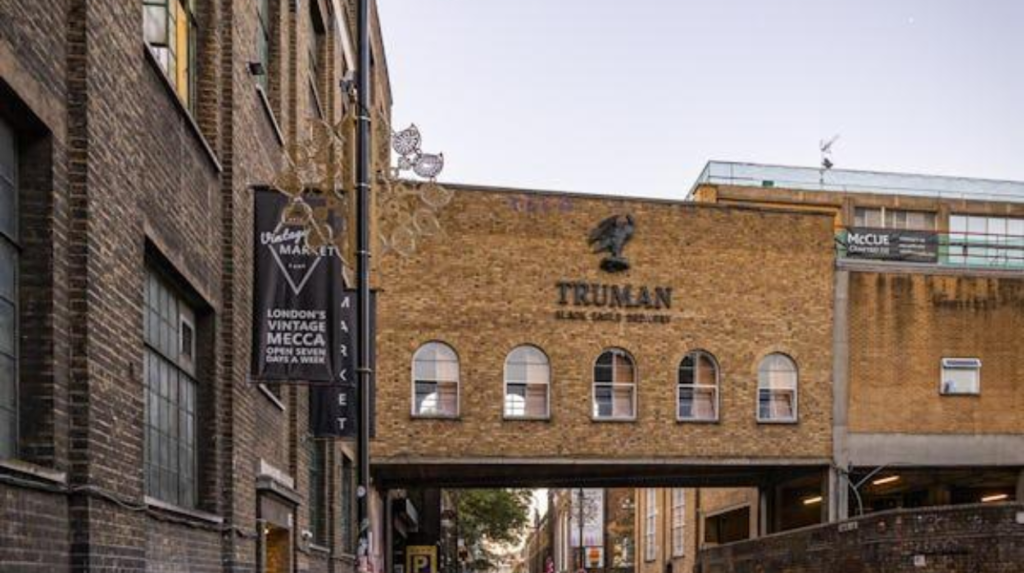
The Old Truman Brewery is a former industrial complex on Brick Lane that now hosts creative businesses, exhibitions, markets and cultural events. Its mix of historic buildings and contemporary activity demonstrates how former commercial premises support East London’s changing creative economy.
The Old Truman Brewery occupies buildings associated with the area’s brewing industry. Its redevelopment introduced commercial and cultural uses into a historic industrial setting.
The site is associated with exhibitions, independent retail, design businesses and market activity. Its programme changes, so visitors should check event listings to establish whether an exhibition, art market or creative event is running on their chosen date.
The brewery also helps explain a broader pattern in East London. Former warehouses and industrial buildings provide spaces for businesses and cultural organisations that need flexible interiors, public access and distinctive architectural settings.
Visitors interested in urban regeneration should look at the relationship between the original brickwork, later alterations and current uses. This reveals how a historic commercial site can remain part of the neighbourhood while serving a different economic purpose.
Where can visitors find contemporary art and cultural events near Bethnal Green Road?
Bethnal Green Road connects visitors with creative venues, independent galleries and cultural organisations in the wider Tower Hamlets area. Rich Mix and Espacio Gallery provide distinct ways to encounter contemporary culture, from multidisciplinary programming to exhibitions by independent artists.
Rich Mix
Rich Mix is a cultural centre at 35–47 Bethnal Green Road, associated with film, performance, exhibitions and community activities. It offers an alternative to a conventional gallery visit because its programme brings visual culture into a wider schedule of events.
The venue’s multidisciplinary approach suits visitors who want to combine an exhibition with cinema, talks or live performance. Its programme changes throughout the year, so check the official listings for current events and ticket requirements.
Espacio Gallery
Espacio Gallery is an independent gallery listed by Tower Hamlets Council in its local arts and entertainment information. It has provided an exhibition setting for artists working outside the largest institutional galleries.
Independent galleries are useful for discovering emerging practitioners and group exhibitions. Before visiting, confirm the venue’s current address, opening arrangements and exhibition schedule, as small galleries often organise shows for limited periods.
These venues also demonstrate that artistic activity extends beyond painting and sculpture. Film, photography, digital media, performance and community-led projects form part of the wider creative scene.
Where can visitors explore art around Canary Wharf?
Canary Wharf offers a different public-art experience from Brick Lane, with contemporary sculpture and artworks integrated into a commercial district of office towers, landscaped spaces and waterfront routes. Visitors can explore publicly accessible areas while checking individual artwork locations and access arrangements.
Canary Wharf’s public realm includes pedestrian squares, waterside promenades and landscaped spaces. Public art adds visual interest to these environments and connects architecture with movement through the district.
Unlike a gallery, outdoor artwork is encountered within everyday public space. Visitors can observe the scale, materials, positioning and relationship between an artwork and its surroundings. These details are particularly relevant to people interested in sculpture, urban design and contemporary architecture.
Allow time to walk between the waterfront and the district’s public squares. Check current estate information for artwork locations and any access restrictions. Some buildings and internal spaces remain private even when surrounding walkways are accessible.
Canary Wharf is also useful for comparing different approaches to urban art. The public realm of a financial district differs from Brick Lane’s street-based visual culture, where painted walls and independent businesses shape the experience. Both demonstrate how artwork acquires meaning from its location.
Where can visitors discover community-led art in Tower Hamlets?
Community-led art appears through local exhibitions, workshops, cultural centres and projects created with neighbourhood groups. Tower Hamlets Council’s arts listings help visitors identify activities beyond major galleries, including temporary exhibitions, family programmes and events led by local organisations.
The borough’s arts infrastructure includes community venues as well as larger institutions. These spaces give artists and residents opportunities to share work, organise activities and explore local experiences through visual and performing arts.
Tower Hamlets Council maintains information about arts events, cultural organisations, creative opportunities and local venues. Its listings provide a starting point for finding smaller exhibitions that do not receive the same attention as major galleries.
A community exhibition often differs from a commercial gallery show in its purpose. It can document neighbourhood history, present work by local residents or explore questions of identity, migration and belonging. The subject matter depends on the organisers and artists involved.
How can visitors find temporary exhibitions?
Check council event listings, venue websites and community-centre announcements before travelling. Search by date and neighbourhood, then confirm whether the event is open to the public and whether booking is necessary.
Temporary programmes are especially useful for repeat visitors. A local arts calendar reveals activities that are not represented by permanent collections or established tourist itineraries.
How does Tower Hamlets’ history influence its art scene?
Tower Hamlets’ artistic identity reflects its history as an East London district shaped by migration, trade, industry and community change. Historic streets, converted warehouses and long-established cultural institutions provide context for understanding contemporary exhibitions, murals and artist-led projects.
The borough’s creative culture is inseparable from its urban history. Docklands commerce, manufacturing, migration and changing housing patterns influenced how neighbourhoods developed and how their identities were represented in art.
Whitechapel Gallery provides a clear historical example. Founded in 1901 by Samuel and Henrietta Barnett, it was established to bring art to East End residents. Its early programme included international exhibitions and work by local schoolchildren. In 1939, Pablo Picasso’s Guernica was exhibited at the gallery during its only visit to Britain.
Brick Lane offers another view of this history. The area has been home to French Huguenot and Jewish immigrants and later became a centre of London’s Bangladeshi community. Its historic buildings, food businesses, markets and street art reflect successive periods of settlement and economic change.
As you explore today’s galleries, murals and creative venues, the neighbourhood’s earlier uses remain part of the experience. Read about the full [Insert Anchor Text for Tower Hamlets History Article Here] to understand the historical background behind its modern creative spaces.
This connection matters because public art is not simply decoration. Artists respond to the physical environment, local stories and social conditions. Understanding the past provides context for interpreting the work displayed in the present.
What types of creative work can visitors see in Tower Hamlets?
Tower Hamlets’ creative scene includes contemporary painting, sculpture, photography, murals, installation art, film and community-based projects. Visitors encounter these forms in galleries, converted industrial buildings, public spaces and cultural centres, with availability depending on each venue’s current programme.
Gallery exhibitions display works ranging from traditional painting to experimental approaches using colour, texture and mixed materials. Group shows also introduce visitors to artists at different career stages.
Sculpture uses three-dimensional forms, while installation art transforms a space through objects, sound, light or other materials. These formats encourage visitors to consider how an artwork occupies and changes its surroundings.
Murals, stencils and painted shutters bring art into everyday streets. Brick Lane is a useful area for observing this work alongside independent businesses and historic buildings.
Photography exhibitions document people, places and social change. Film and video installations use moving images and sound to present artistic ideas through time-based media.
Photography exhibitions document people, places and social change. Film and video installations use moving images and sound to present artistic ideas through time-based media.
The distinction between these forms helps visitors choose appropriate venues. Someone interested in large-scale outdoor work can prioritise Brick Lane and Canary Wharf, while visitors seeking curated exhibitions can begin with Whitechapel Gallery and independent gallery listings.
How can visitors plan an art walk through Tower Hamlets?
Visitors can plan an art walk by grouping venues into nearby neighbourhoods, checking exhibition opening times and allowing time for outdoor discoveries. A Whitechapel and Brick Lane route combines an established gallery, historic streets, street art and creative venues.
A practical route begins at Whitechapel Gallery, continues towards Brick Lane and finishes around the Old Truman Brewery and Bethnal Green Road. The sequence brings together institutional exhibitions, street-based art and independent cultural venues.
The suggested durations are planning estimates rather than venue opening hours. The overall visit takes approximately three to four hours, excluding substantial meal breaks and any additional exhibitions.
Visitors should verify the opening hours of every indoor venue, as not all spaces open daily. Markets and temporary events also follow individual schedules.
How can visitors find free art and affordable exhibitions in Tower Hamlets?
Visitors can discover free and affordable art by checking public gallery admission policies, council arts listings and community event programmes. Street art offers an outdoor option without an exhibition ticket, while individual workshops, special events and temporary shows have separate costs.
Whitechapel Gallery, independent venues and community organisations have different admission arrangements. Some exhibitions and public activities are free, while others require tickets or advance registration. Check the relevant venue’s current information rather than assuming every exhibition has the same entry policy.
Outdoor exploration around Brick Lane provides an accessible way to experience urban art without paying for gallery admission. Visitors should budget separately for food, transport, paid exhibitions and any organised workshop.
The Tower Hamlets Council arts and entertainment listings are particularly useful for locating local events, workshops and cultural activities. They also help visitors identify programmes outside the best-known destinations.
For a lower-cost visit, combine a street-art walk with one indoor exhibition. This approach balances free public artwork with the more structured experience of a gallery, without requiring multiple paid admissions.
When is the best time to explore art in Tower Hamlets?
The best time depends on whether visitors prioritise indoor exhibitions, outdoor murals or scheduled cultural events. Gallery visits require checking individual opening days, while outdoor art walks are easier to plan around daylight, weather and the opening hours of nearby businesses.
Spring and summer provide longer daylight hours for exploring Brick Lane and photographing outdoor artwork. Autumn and winter visits benefit from a stronger focus on indoor galleries, cinemas and cultural centres, with outdoor walks arranged around daylight and weather conditions.
Weekdays are useful for visitors who prefer quieter streets, although individual gallery schedules determine when exhibitions are accessible. Weekends offer opportunities to combine art with markets and other activities, but busy streets can make close observation and photography more difficult.
Check local event listings shortly before travelling. Exhibition openings, artist talks, workshops and community festivals introduce additional opportunities, but their dates and availability change throughout the year.
How can tourists reach Tower Hamlets’ main art destinations?
Tower Hamlets is served by London’s Underground, Overground, Docklands Light Railway and bus networks. Visitors can reach Whitechapel, Brick Lane, Bethnal Green and Canary Wharf through different transport connections, then explore nearby galleries and public artwork on foot.
Whitechapel is served by Underground and Elizabeth line connections. Brick Lane is within walking distance of several East London transport hubs, while Bethnal Green Road connects cultural venues with surrounding neighbourhoods. Canary Wharf has Underground, Elizabeth line and Docklands Light Railway services.
For an art walk, select a starting station near the first venue and finish near a convenient transport connection. Check Transport for London journey information before departure, particularly when engineering works or service disruptions affect routes.
Walking between nearby venues often provides the best opportunity to discover smaller pieces of street art. Allow additional time for pedestrian crossings, busy market streets and stops at temporary exhibitions.
Explore More Area Guide
Tower Hamlets Guide to Festivals, Arts and Cultural Events
Where to Experience Tower Hamlets’ Diverse Communities and Culture
What should visitors know before visiting Tower Hamlets’ art venues?
Visitors should verify exhibition dates, admission fees, photography rules and accessibility information before travelling. Gallery schedules change, street art is frequently replaced, and independent venues have different opening arrangements. Advance planning helps visitors avoid closed doors and select suitable exhibitions.
Check these details before setting out:
- Opening hours: Confirm the venue’s current schedule, including bank holidays and seasonal closures.
- Admission: Establish whether entry is free, ticketed or restricted to registered visitors.
- Photography: Follow the gallery’s rules on cameras, flash photography and commercial use.
- Accessibility: Check step-free access, lifts, accessible toilets and any exhibition-specific restrictions.
- Events: Confirm booking requirements for artist talks, workshops and special programmes.
- Outdoor artwork: Expect murals and street pieces to change as buildings are redeveloped or new work appears.
Visitors interested in the artistic process should also check whether a venue offers public studio visits or organised workshops. Working studios are not automatically open to the public, and some require advance arrangements.
Why should art lovers include Tower Hamlets in an East London visit?
Tower Hamlets brings together historic art institutions, street art, independent galleries, community exhibitions and contemporary public sculpture. These experiences reveal different aspects of East London’s cultural identity, allowing visitors to explore artistic practice alongside the neighbourhoods and buildings that shape it.
The borough offers several complementary ways to encounter art. Whitechapel Gallery provides an institutional perspective on modern and contemporary practice. Brick Lane presents a changing outdoor environment shaped by street art and local commerce. The Old Truman Brewery demonstrates the reuse of industrial buildings, while Rich Mix connects visual culture with film and performance.
Canary Wharf adds a contrasting setting in which artwork forms part of a contemporary commercial district. Community venues provide further opportunities to encounter local artists and cultural projects.
The most useful approach is to combine one or two established venues with a neighbourhood walk and a check of current local events. This creates a balanced visit that covers both curated exhibitions and art encountered in public space.
Tower Hamlets’ creative scene continues to evolve alongside its communities, buildings and businesses. For tourists, residents and business travellers, exploring its art provides a practical way to understand East London’s cultural life beyond its major landmarks.
What are the best places to see art in Tower Hamlets?
Whitechapel Gallery, Brick Lane, the Old Truman Brewery, Rich Mix and Canary Wharf are notable places to explore art and creative work in Tower Hamlets, East London.