Tower Hamlets is one of East London’s most varied boroughs for a short stopover. It combines historic riverside landmarks, major museums, markets, canals, parks, food streets and modern Canary Wharf within a relatively compact part of London.
- What can visitors see in Tower Hamlets during a short stopover?
- Which Tower Hamlets attractions are closest together?
- Is the Tower of London suitable for a limited-time visit?
- What can visitors do around Tower Bridge if they have little time?
- Why are Spitalfields and Brick Lane useful for a short East London visit?
- Which markets can visitors visit when they have limited time?
- Where can visitors find green space during a short Tower Hamlets stopover?
- What can visitors see in Canary Wharf with limited time?
- Which Tower Hamlets places suit food-focused stopovers?
- Which cultural places work well for a quick visit?
- How can business travellers use a short Tower Hamlets stopover?
- What is a practical two-hour Tower Hamlets itinerary?
- What is a practical half-day itinerary in Tower Hamlets?
- How should visitors plan transport during a short Tower Hamlets stopover?
- Which Tower Hamlets stopover works best for different types of travellers?
- What should visitors prioritise when they have only one hour?
- Why does Tower Hamlets work particularly well for short visits?
The borough sits east of the City of London and extends from the historic Tower of London area through Whitechapel, Spitalfields, Bethnal Green, Mile End and Bow to the Isle of Dogs and Canary Wharf. The council describes Tower Hamlets as the heart of London’s East End, with a long history shaped by trade, immigration, industry, docks and regeneration.
For travellers with limited time, the key is to choose attractions according to location rather than attempting to cover the entire borough. A short visit works particularly well when visitors combine nearby landmarks, food and public spaces into one compact route.
What can visitors see in Tower Hamlets during a short stopover?
Visitors can combine major landmarks, historic streets, markets, museums, parks and riverside areas during a short Tower Hamlets stopover. Tower Bridge, the Tower of London, Spitalfields, Brick Lane, Canary Wharf and Victoria Park provide distinct experiences across the borough.
Tower Hamlets has an unusually broad concentration of attractions. The southern edge follows the River Thames, while canals and historic commercial districts extend northwards.
The Tower of London provides the strongest option for visitors interested in medieval history. Tower Bridge provides a major architectural landmark and riverside viewpoint. Brick Lane and Spitalfields provide food, markets, street culture and historic buildings.
Canary Wharf offers a contrasting modern environment of skyscrapers, docks, public spaces, shops and restaurants.
Victoria Park and Mile End Park provide green-space alternatives for travellers who prefer walking rather than museums or shopping.
The borough council lists markets, museums, historic attractions, cultural trails and parks among its principal visitor experiences.
The most efficient strategy is to select one geographical cluster. Travellers staying near Tower Hill should focus on the Tower of London and Tower Bridge. Visitors arriving around Liverpool Street can concentrate on Spitalfields and Brick Lane. Those using Canary Wharf can combine the docks with riverside walks and nearby attractions.
Which Tower Hamlets attractions are closest together?
Tower Bridge and the Tower of London form a compact historic cluster, while Spitalfields and Brick Lane form another walkable visitor area. Canary Wharf provides a separate modern cluster with docks, architecture, shops, restaurants and public spaces.
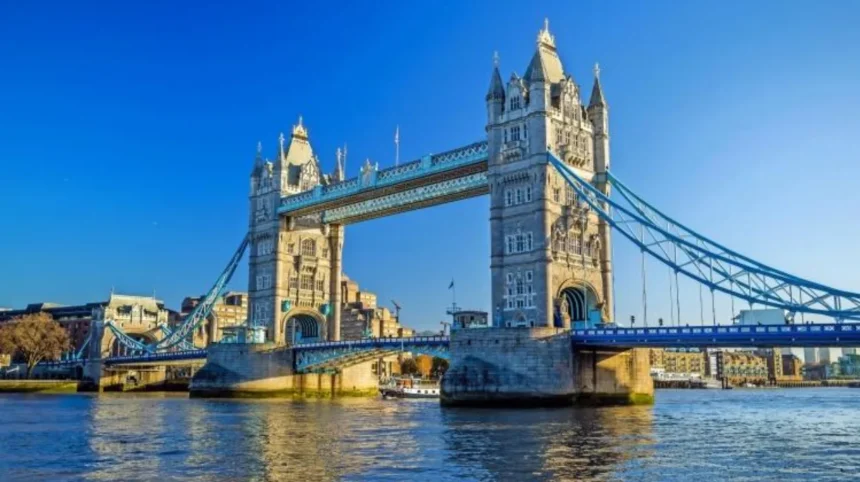
The Tower Bridge and Tower of London area is particularly efficient for a short visit. Tower Bridge opened in 1894 and is a Grade I listed structure. Its design combines a bascule bridge with suspended approaches and high-level footways.
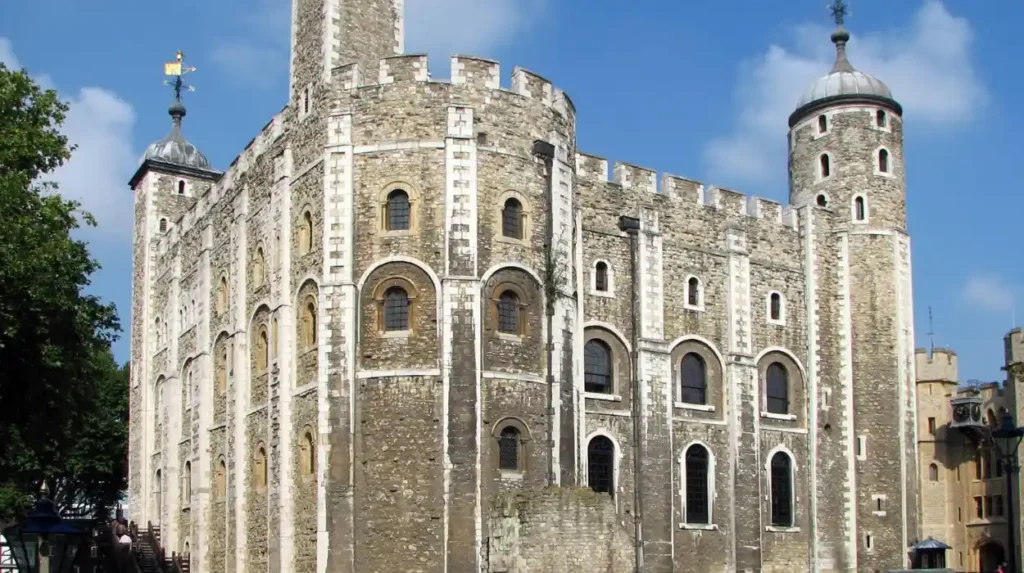
The Tower of London stands immediately nearby. Historic England identifies it as a nationally important scheduled monument and a World Heritage Site. The complex developed from a Norman tower keep into a larger enclosure castle through successive medieval expansions.
This area allows visitors to experience architecture, military history and the Thames without making a long cross-borough journey.
Spitalfields and Brick Lane provide a second compact cluster. Tower Hamlets Council’s Spitalfields walking route includes Brick Lane, Fournier Street, Christ Church, Spitalfields Market and several historic streets.
The modern visitor experience therefore works particularly well around two principles: landmark clustering and short walking connections.
Travellers with only a few hours should avoid crossing the entire borough unless transport connections make the journey necessary.
Is the Tower of London suitable for a limited-time visit?
The Tower of London suits travellers who want a concentrated experience of London’s medieval and royal history. The site contains the White Tower, medieval defences, historic royal buildings and archaeological remains, making it one of Tower Hamlets’ most significant heritage destinations.
The Tower of London originated after the Norman Conquest. William the Conqueror ordered a castle in the south-eastern corner of London, and the White Tower was completed around 1100. Later monarchs expanded the fortress with additional walls, towers and defensive features.
The site subsequently served several functions. These included royal residence, fortress, arsenal, Royal Mint, prison and menagerie. Its history therefore extends beyond medieval military architecture.
For a short stopover, visitors should decide before arrival whether they want an internal visit or an external heritage walk.
An internal visit requires more time because the complex contains multiple buildings and historical displays. A shorter itinerary can instead use the surrounding public areas to appreciate the Tower, Tower Bridge and the Thames.
The Tower also provides a useful starting point for understanding the wider history of East London.
As you explore the modern site, you are crossing land with a deep heritage. Read about the full to understand its origins.
What can visitors do around Tower Bridge if they have little time?
Visitors can view Tower Bridge from the Thames riverside, walk across its public roadway, photograph its towers and combine it with the Tower of London. The bridge provides a concentrated architectural and riverside experience without requiring a full-day visit.
Tower Bridge was constructed between 1886 and 1894. Sir John Wolfe Barry served as engineer and Sir Horace Jones as architect. The bridge uses a bascule mechanism, allowing its central sections to rise for river traffic.
Historic England identifies the bridge as an outstanding example of late Victorian engineering. The structure remains one of the defining visual landmarks of the Thames in East London.
A short stopover can focus on the exterior. Visitors can walk around the Tower Bridge approach, view the bridge from riverside paths and continue towards the Tower of London.
Those with more time can visit the Tower Bridge exhibition and high-level walkways. The bridge’s historic hydraulic machinery is also part of its visitor interpretation.
The riverside location also makes Tower Bridge useful as a transition point between historic attractions and the wider Thames walking network.
Why are Spitalfields and Brick Lane useful for a short East London visit?
Spitalfields and Brick Lane combine food, markets, historic architecture, independent retail and cultural landmarks within a compact walking area. They are particularly useful for short visits because travellers can experience several aspects of East London without travelling between distant attractions.
Brick Lane has a long commercial and migration history. Tower Hamlets Council records its establishment as a market in 1888 and identifies its connections with French Huguenot, Jewish and Bangladeshi communities.
The street is associated with food, fashion, art, vintage goods and Sunday market activity. The surrounding Spitalfields area adds historic architecture and former commercial buildings.
Old Spitalfields Market occupies a site where a market was licensed by King Charles II in 1682. The present historic market buildings were constructed between 1883 and 1893.
Fournier Street and Christ Church Spitalfields add architectural interest. Christ Church was designed by Nicholas Hawksmoor and completed in 1729.
This district works well when the stopover priority is a combination of food, shopping and heritage.
A visitor can begin around Spitalfields Market, continue through Fournier Street, walk towards Brick Lane and finish with food or drinks nearby.
Which markets can visitors visit when they have limited time?
Brick Lane, Spitalfields and Columbia Road provide different market experiences within Tower Hamlets. Brick Lane focuses strongly on food, fashion, art and vintage goods, while Columbia Road is associated with flowers and plants, giving short-stay visitors distinct choices.
Tower Hamlets contains a substantial network of street markets. The council identifies ten markets, including Brick Lane, Bethnal Green Road, Columbia Road, Petticoat Lane, Roman Road, Watney Market and Whitechapel Market.
Market choice should depend on the day and the traveller’s location.
Brick Lane is particularly associated with Sunday activity. The council describes its Sunday market as a place for fashion, food, art, household goods, jewellery and retro clothing.
Columbia Road is focused on flowers and plants. It provides a different atmosphere from the food and vintage orientation of Brick Lane.
Petticoat Lane and Whitechapel provide further market options closer to the City and Whitechapel areas.
Because markets operate according to specific trading days and hours, visitors should check current opening information before travelling. This is especially important during a short stopover because a closed market can significantly change the usefulness of an itinerary.
Where can visitors find green space during a short Tower Hamlets stopover?
Victoria Park and Mile End Park provide accessible green-space options for short visits. Victoria Park covers more than 80 hectares, while Mile End Park is a 32-hectare linear park following the Regent’s Canal between Victoria Park and Limehouse Basin.
Tower Hamlets contains more than 120 parks and green spaces, according to the borough council. Victoria Park is its oldest and largest park and receives more than nine million visits each year.
Victoria Park contains historic lakes, a bandstand, memorial features, cafés, sports facilities and open lawns. It is also a Grade II* registered park and garden.
Mile End Park offers a different landscape. It is a linear park created on former industrial land and follows the Regent’s Canal from Victoria Park towards Limehouse Basin. The park contains the Ecology Park, Art Pavilion, play areas, sports facilities, a skate park and climbing facilities.
Mile End Park is particularly useful for visitors using the Central, District or Hammersmith & City lines because Mile End Underground station is nearby.
These parks are better suited to a relaxed stopover than an attraction-heavy itinerary.
What can visitors see in Canary Wharf with limited time?
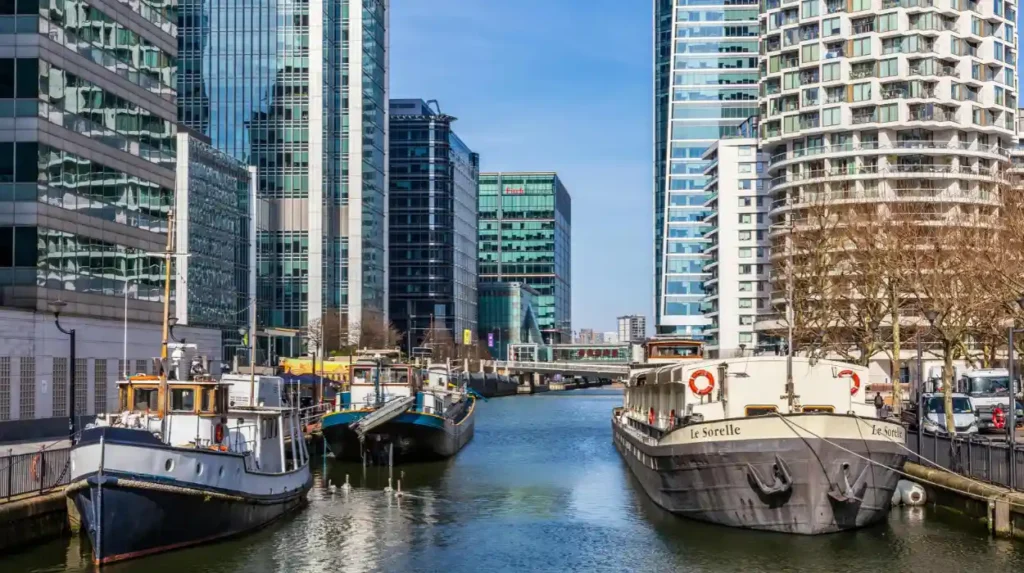
Canary Wharf provides a concentrated modern East London experience built around high-rise architecture, former docklands, public spaces, shops, restaurants and riverside areas. It is suitable for visitors who want contemporary London rather than a traditional historic sightseeing route.
Canary Wharf developed from the historic Docklands landscape and became a major financial district. Tower Hamlets Council identifies the area as a major European financial centre within the borough’s wider regeneration landscape.
The area is particularly practical for business travellers because offices, shops, restaurants, transport connections and public spaces occupy a relatively compact district.
Visitors with limited time can walk around the dock basins and public squares, observe the skyline and use the area for a meal or coffee stop.
Canary Wharf also provides a useful contrast with Brick Lane and Spitalfields. The two areas represent different phases of East London’s urban development: historic commercial neighbourhoods on one side and regenerated Docklands on the other.
The Jubilee line, Elizabeth line and Docklands Light Railway provide important connections around Canary Wharf, making it a practical stop for travellers already moving through East London.
Which Tower Hamlets places suit food-focused stopovers?
Brick Lane and Spitalfields provide the strongest concentrated food experience for short-stay visitors, with restaurants, cafés, street-food options and market activity close to historic streets. Whitechapel and Canary Wharf provide additional dining choices in different urban settings.
Food is one of the easiest ways to use a limited stopover because eating can be combined with sightseeing.
Brick Lane has a particularly strong association with South Asian food and East London’s Bangladeshi heritage. Its wider market environment also adds street food and independent food businesses.
Spitalfields provides restaurants and cafés around the market and historic streets.
Whitechapel offers another food-focused area, particularly for travellers moving between the City, Aldgate and East London.
Canary Wharf provides a more modern commercial dining environment. It works well for business travellers with a short gap between meetings.
Visitors should select food venues according to opening hours rather than relying on a fixed itinerary. Market trading patterns and individual restaurant hours vary.
For a very short stop, combining one meal with one nearby attraction reduces unnecessary travel time.
Which cultural places work well for a quick visit?
The Museum of London Docklands, historic Spitalfields and the cultural trail around Brick Lane provide concentrated ways to understand East London’s history and identity. These locations connect London’s port, migration, commerce, religion, industry and urban redevelopment.
The Museum of London Docklands is particularly relevant to understanding the relationship between Tower Hamlets and the River Thames.
The borough’s history is strongly connected to London’s port. Docks, warehouses, waterways and trading communities shaped the physical and social development of the area.
The Spitalfields cultural trail adds another layer. Tower Hamlets Council identifies 20 sites on its trail, including the Boundary Estate, Brick Lane Sunday Market, Old Truman Brewery, Brick Lane Jamme Masjid, Christ Church Spitalfields, Old Spitalfields Market, Whitechapel Art Gallery and Toynbee Hall.
Brick Lane Jamme Masjid is particularly significant because the building has served different religious communities. Historic England records its earlier use as a French Protestant chapel, followed by use as a synagogue and later as a mosque.
This makes the area useful for visitors seeking cultural context rather than only conventional sightseeing.
How can business travellers use a short Tower Hamlets stopover?
Business travellers can use spare hours around meetings for a compact combination of Canary Wharf, riverside walking, local food or nearby cultural districts. Transport connections allow short excursions without requiring a full-day commitment across East London.
Canary Wharf is the natural focus for business travellers based in the borough’s financial district.
A short break can include a walk around the docks, a meal, coffee and a brief visit to a nearby public space.
Travellers with longer gaps can use the Jubilee line or Elizabeth line to reach central London connections and other East London districts.
Those working closer to the City can instead walk towards Spitalfields, Whitechapel or the Tower Bridge area.
The most practical approach is to calculate the complete journey rather than only the sightseeing time. A 30-minute attraction becomes less useful when transport and return journeys consume another hour.
For this reason, local attractions near the traveller’s workplace, accommodation or transport interchange provide the strongest stopover structure.
What is a practical two-hour Tower Hamlets itinerary?
A two-hour itinerary should concentrate on one area rather than crossing the borough. Tower Bridge and the Tower of London suit heritage-focused visitors, while Spitalfields and Brick Lane suit food, markets and architecture. Canary Wharf suits modern urban sightseeing.
For a heritage-focused two-hour stopover, start around Tower Bridge. Walk along the riverside and continue towards the Tower of London.
For a food and culture-focused stopover, begin at Spitalfields Market. Continue along Fournier Street towards Brick Lane and use the surrounding cafés or restaurants for food.
For a contemporary London experience, stay around Canary Wharf. Walk beside the docks, explore public spaces and finish with food or coffee.
For a green-space visit, Victoria Park provides the largest park environment. Mile End Park offers another option closer to Mile End Underground station.
The choice should reflect the traveller’s starting point. A short stopover is most efficient when the first attraction is already close to the arrival point.
What is a practical half-day itinerary in Tower Hamlets?
A half-day gives visitors enough time to combine two nearby experiences. Tower Bridge and the Tower of London work as one heritage route, while Spitalfields, Brick Lane and a market provide a separate food-and-culture route with limited cross-town travel.
A heritage half-day can centre on Tower Bridge and the Tower of London. Visitors can add a Thames-side walk and food nearby.
A culture-focused half-day can combine Spitalfields Market, Fournier Street, Christ Church Spitalfields and Brick Lane. The council’s cultural trail provides a framework for exploring the area’s historic sites.
A green-space half-day can combine Victoria Park with part of Mile End Park. The two parks are connected within the borough’s wider green network, although visitors should allow sufficient walking time between them.
A modern half-day can focus on Canary Wharf and the Docklands waterfront.
The key principle remains geographical concentration. Visitors gain more sightseeing time when attractions are selected within the same district.
How should visitors plan transport during a short Tower Hamlets stopover?
Visitors should choose attractions close to their arrival station and use London’s Underground, Elizabeth line, Docklands Light Railway, buses and walking routes to reduce transfer time. Checking the route before departure helps protect limited sightseeing time.
Tower Hamlets is served by several major transport corridors. Underground stations connect areas such as Tower Hill, Aldgate East, Whitechapel and Mile End. The Docklands Light Railway provides important connections through Docklands and the Isle of Dogs.
Mile End Underground is particularly useful for Mile End Park. The council identifies the station as being served by the Central, District and Hammersmith & City lines.
Walking is practical within compact visitor districts. Spitalfields and Brick Lane work particularly well on foot. Tower Bridge and the Tower of London are also closely connected.
Visitors should avoid planning attractions on opposite sides of the borough during a very short stop. The borough covers a broad area, and journey time becomes a significant part of the itinerary.
Which Tower Hamlets stopover works best for different types of travellers?
Heritage visitors can focus on the Tower of London and Tower Bridge, food-focused travellers can choose Spitalfields and Brick Lane, business travellers can use Canary Wharf, and visitors seeking open space can choose Victoria Park or Mile End Park.
Tourists with only a few hours benefit from landmark clustering.
Residents can use the same principle to explore neighbourhoods they usually pass without stopping. Local markets, parks and cultural trails provide alternatives to major tourist attractions.
Digital nomads can combine cafés and work-friendly commercial districts with nearby walking areas. Canary Wharf provides a strong business environment, while Spitalfields and Brick Lane offer a more neighbourhood-oriented setting.
Domestic business travellers can choose an attraction close to their meeting location. The Tower Bridge area works well for City-based schedules, while Canary Wharf suits meetings in the Docklands financial district.
Families can prioritise parks and open spaces. Victoria Park contains play areas, sports facilities and refreshments, while Mile End Park includes children’s facilities and other recreational infrastructure.
Explore More Area Guide
Exploring Tower Hamlets Between London Sightseeing Stops
Tower Hamlets for Short Visits: Top Attractions & Things to Do
What should visitors prioritise when they have only one hour?
With only one hour, visitors should choose one landmark or neighbourhood rather than attempting a multi-stop itinerary. Tower Bridge, Brick Lane, Spitalfields, Canary Wharf or a nearby park each provides a focused experience without requiring extensive cross-borough travel.
A one-hour visit works best when the destination is already nearby.
At Tower Bridge, visitors can concentrate on exterior views, the bridge structure and the riverside.
At Spitalfields, visitors can walk around the market and historic streets.
At Brick Lane, visitors can experience the street environment and nearby food businesses.
At Canary Wharf, visitors can walk around the docks and modern public spaces.
At Victoria Park, visitors can take a short walk around the lakes, lawns or historic features.
Trying to visit Tower Bridge, Brick Lane and Canary Wharf in one hour creates unnecessary transport time. A single well-defined district produces a more practical stopover.
Why does Tower Hamlets work particularly well for short visits?
Tower Hamlets works well for short visits because its attractions represent several major aspects of London within one borough. Visitors can experience medieval heritage, Victorian engineering, markets, migration history, green space, former docks and modern finance without travelling far across London.
The borough contains a distinctive combination of historic and modern landscapes.
The Tower of London represents centuries of royal, military and political history. Tower Bridge represents late Victorian engineering. Brick Lane and Spitalfields demonstrate the continuing influence of migration, commerce and cultural change. Victoria Park and Mile End Park provide major green spaces. Canary Wharf represents modern financial London.
This variety gives travellers flexibility.
A stopover does not require a complete tour of Tower Hamlets. The most effective itinerary is built around the traveller’s available time, arrival point and primary interest.
For two hours, select one cluster. For half a day, combine two connected experiences. For a longer stay, connect historic East London with the parks, waterways and Docklands districts.
Tower Hamlets therefore works as both a destination and a practical London stopover area. Its dense mix of attractions gives visitors multiple ways to use limited time while maintaining a clear sense of place.
What are the best places to visit in Tower Hamlets with limited time?
Tower Bridge, the Tower of London, Spitalfields, Brick Lane and Canary Wharf are strong options for a short Tower Hamlets visit. Each area offers attractions close together, reducing travel time.