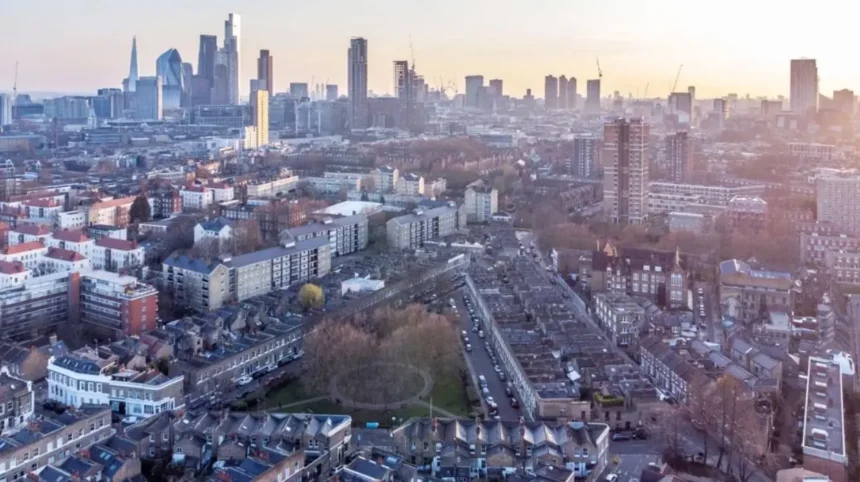
Tower Hamlets extends far beyond the glass towers, financial offices and riverside promenades of Canary Wharf. The East London borough contains historic markets, Victorian neighbourhoods, cultural institutions, parks, waterways, former docklands and distinctive streets shaped by centuries of migration, trade and industry.
- What can visitors explore in Tower Hamlets beyond Canary Wharf?
- Why are Brick Lane and Spitalfields important places to visit?
- Which markets can visitors explore outside Canary Wharf?
- What can visitors see in Whitechapel?
- What historic places can visitors explore in Bethnal Green and Mile End?
- Where can visitors experience East London’s parks and nature?
- What can visitors explore on the Isle of Dogs beyond Canary Wharf?
- How can visitors explore Tower Hamlets through walking routes?
- How should visitors plan a Tower Hamlets itinerary beyond Canary Wharf?
- Why should visitors explore Tower Hamlets beyond Canary Wharf?
For visitors, this creates a broad choice of experiences without leaving the borough. Brick Lane and Spitalfields provide historic streets, food and markets. Whitechapel combines contemporary art with layers of religious and migrant history. Bethnal Green and Bow offer museums, independent businesses and traditional East End streets. Victoria Park provides one of London’s largest urban green spaces, while the Isle of Dogs contains waterfront parks and views towards Greenwich.
Tower Hamlets Council describes the borough as the heart of London’s East End and highlights its combination of historic and modern places. The borough also contains the River Thames along its southern boundary and the regenerated Docklands around Canary Wharf.
Visitors therefore gain more by treating Canary Wharf as one part of Tower Hamlets rather than the entire destination.
What can visitors explore in Tower Hamlets beyond Canary Wharf?
Visitors can explore historic neighbourhoods, markets, museums, galleries, parks, canals, riverside walks and cultural districts across Tower Hamlets, including Brick Lane, Spitalfields, Whitechapel, Bethnal Green, Bow, Victoria Park, Mile End and the Isle of Dogs.
The borough’s attractions are distributed across several distinct areas. Each has a different physical character and historical background.
Brick Lane and Spitalfields are concentrated around narrow streets, historic buildings, markets, restaurants, galleries and creative businesses. Whitechapel provides a major cultural corridor around Whitechapel Road and Whitechapel High Street. Bethnal Green and Bow contain residential streets, community markets, museums and large green spaces.
Victoria Park covers about 86 hectares and is Tower Hamlets’ largest park. The council states that it receives more than nine million visits each year. It opened in 1845 as a public park for the East End and remains an important recreational destination.
The Isle of Dogs provides a different experience. Visitors can combine Island Gardens, Mudchute Park and Farm, Millwall Park and riverside routes with views towards Greenwich and Canary Wharf. Island Gardens itself provides approximately three acres of waterfront parkland.
This geographical spread makes Tower Hamlets suitable for several types of visitor. A cultural day can focus on galleries and historic streets. A market-focused visit can connect Brick Lane with Spitalfields. A green-space itinerary can use Victoria Park, Mile End Park or Mudchute. A riverside route can connect Island Gardens with the wider Docklands landscape.
Why are Brick Lane and Spitalfields important places to visit?
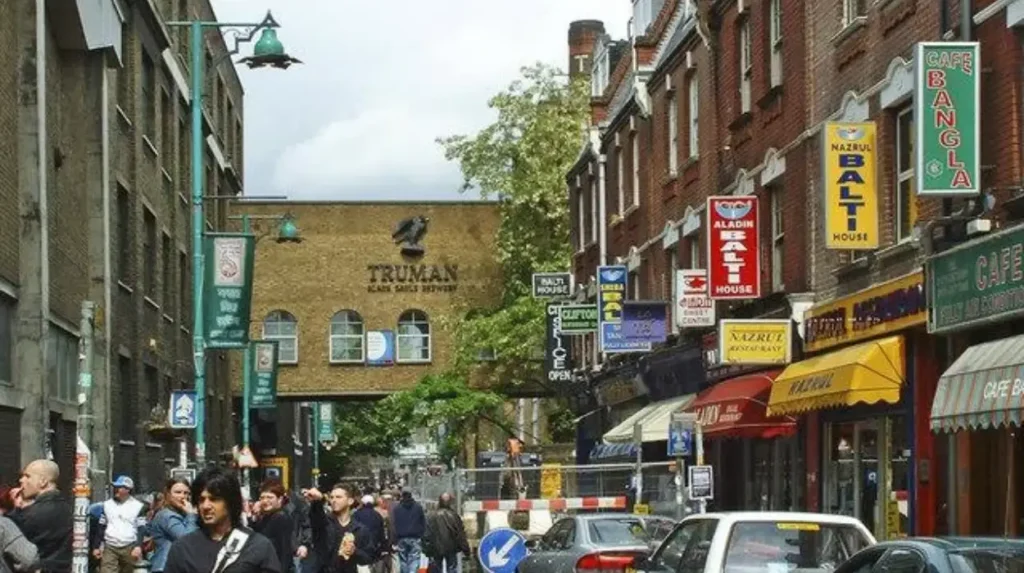
Brick Lane and Spitalfields combine historic architecture, immigration history, markets, food, religious buildings, street art and creative businesses. The area preserves evidence of French Huguenot, Jewish and Bangladeshi communities alongside surviving eighteenth-century buildings and later industrial development.
Brick Lane is one of East London’s most recognisable streets. Its history stretches back to at least the 1500s, when it existed as a field path outside the medieval City of London. Its name developed from brickmaking activity associated with early Flemish settlers.
From the 1680s, French Huguenot refugees settled in Spitalfields and introduced silk-weaving skills. The district subsequently became an important centre for silk production and garment making. Jewish communities later established a strong presence, followed by the growth of the Bangladeshi community that remains central to Brick Lane’s identity today.
The architecture records this changing population. Fournier Street contains surviving early eighteenth-century houses with classical façades, sash windows and elaborate doorways. These buildings form part of the protected historic environment around Brick Lane and Spitalfields.
Christ Church Spitalfields is another major landmark. Designed by Nicholas Hawksmoor, it was completed in 1729 and stands at the junction of Commercial Street and Fournier Street. Its architecture provides a direct connection with the large-scale redevelopment of Spitalfields during the eighteenth century.
Old Spitalfields Market also connects the modern visitor experience with earlier commerce. The present market buildings were constructed between 1883 and 1893 on a site associated with a market licensed by King Charles II in 1682. The market historically traded fruit and vegetables before its closure in 1986 and later redevelopment for retail and commercial use.
Brick Lane also contains the Old Truman Brewery complex. Brewing activity began in the area around 1666, while Joseph Truman acquired the brewery in 1679. The brewery eventually closed in 1988, and the buildings were subsequently reused for offices, arts, shopping and media businesses.
The area is therefore more than a food and shopping destination. Its streets form a physical record of migration, manufacturing, religion and commerce.
As you explore the modern streets, you are crossing land with a deep heritage. Read the full to understand its origins.
Which markets can visitors explore outside Canary Wharf?
Tower Hamlets contains a wide network of established markets, including Brick Lane Market, Columbia Road Flower Market, Roman Road Market, Whitechapel Market, Chrisp Street Market, Petticoat Lane Markets and Watney Market, each serving a distinct local area.
Markets remain one of the defining visitor experiences in East London. Tower Hamlets Council identifies ten street markets across the borough, including Brick Lane, Bethnal Green Road, Chrisp Street, Columbia Road, Petticoat Lane, Roman Road, Roman Road Square, Sclater Street, Watney Market and Whitechapel Market.
Brick Lane Market is particularly relevant to visitors exploring the area beyond Canary Wharf. The council records its establishment in 1888 and describes its Sunday offer as including fashion, food, art, household goods, jewellery and retro clothing.
Columbia Road Flower Market provides a different market environment. It operates on Sundays and focuses on flowers and plants. The surrounding street contains independent shops, galleries, antique sellers, cafés and pubs. The market therefore works as part of a wider Bethnal Green and Shoreditch-area walking itinerary rather than as an isolated attraction.
Roman Road Market provides another historic East London experience. Tower Hamlets Council records that the market was established in 1888. The conservation area is characterised by the market street, small retail premises, modest houses and buildings of generally two to four storeys.
Whitechapel Market offers another route through the borough’s commercial history. It sits within a neighbourhood shaped by long-term migration, trade and changing communities. The surrounding Whitechapel Road corridor also provides access to cultural venues and historic sites.
Markets work particularly well for visitors who want to understand everyday East London rather than focus only on major tourist landmarks. Their significance comes from the relationship between stalls, surrounding shops, residential streets and local communities.
What can visitors see in Whitechapel?
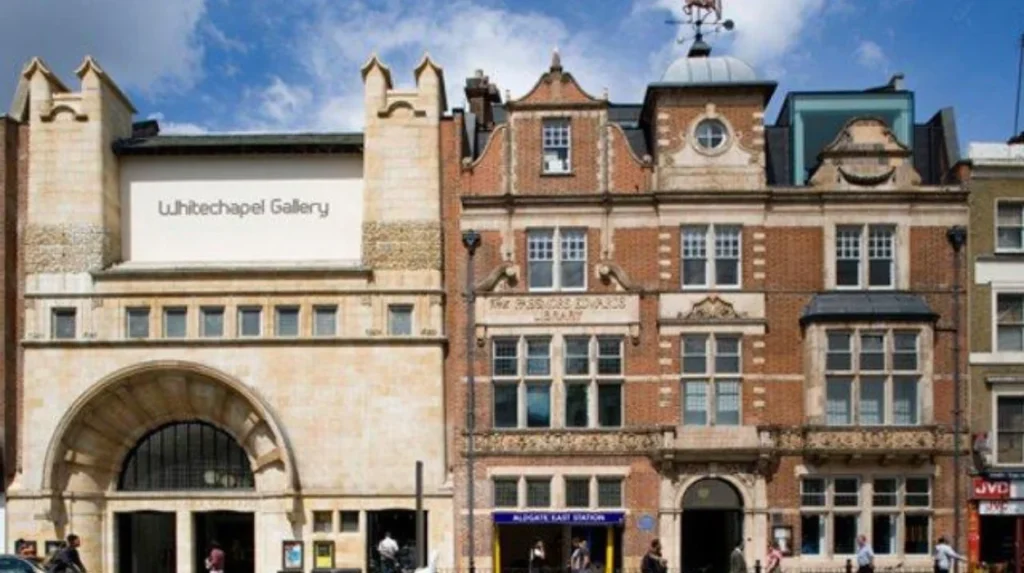
Whitechapel offers visitors contemporary art, historic streets, religious heritage, markets, public spaces and evidence of successive migrant communities. Its major cultural landmark is Whitechapel Gallery, founded in 1901 as an institution designed to bring major art exhibitions to East London.
Whitechapel sits between the historic City of London and the wider East End. Its location made it an important route for trade, migration and urban expansion.
Whitechapel Gallery provides one of the borough’s most significant cultural destinations. Founded in 1901 by Samuel and Henrietta Barnett, the gallery was created to provide access to high-quality art for East London’s communities. The institution’s archive records its long history of exhibitions, education and community activity.
The gallery’s history includes exhibitions associated with major twentieth-century artists. Pablo Picasso’s Guernica was displayed there in 1939 during its only visit to Britain. The gallery also presented important exhibitions involving artists including Jackson Pollock, Mark Rothko, Barbara Hepworth and Frida Kahlo.
The building itself is significant. The original gallery was designed by Charles Harrison Townsend and opened in 1901. A major expansion completed in 2009 incorporated the adjoining former Whitechapel Public Library, creating additional exhibition, education, archive and community spaces.
Whitechapel also provides access to Altab Ali Park and the wider Brick Lane cultural trail. Tower Hamlets Council’s cultural trail identifies twenty sites of particular interest around Brick Lane and Spitalfields. These include the Boundary Estate, Redchurch Street, Brick Lane Market, Old Truman Brewery, Christ Church Spitalfields, Fournier Street, Whitechapel Gallery, Altab Ali Park and Toynbee Hall.
This concentration allows visitors to construct a walking route rather than travelling between isolated attractions.
What historic places can visitors explore in Bethnal Green and Mile End?
Bethnal Green and Mile End contain historic parks, canalside heritage, museums, residential streets and former social institutions that explain how East London developed around industry, transport, housing, education and working-class communities.
Bethnal Green provides an important transition between the market streets of the central East End and the larger open spaces towards Victoria Park.
Victoria Park is the area’s principal green landmark. It opened in 1845 and was created to provide public open space for East London’s growing working population. At approximately 86 hectares, it remains the largest park in Tower Hamlets.
The park contains historic lakes, a bandstand, the Burdett Coutts Memorial and two original London Bridge stone alcoves. It also forms part of a wider green corridor linking areas around the Regent’s Canal, Mile End Park and the Queen Elizabeth Olympic Park.
Mile End Park provides another major open-space destination. The council identifies its Ecology Park, Arts Pavilion, sports facilities and other recreational infrastructure as important components. The park also hosts a weekly free 5-kilometre community parkrun on Saturdays, subject to advance registration.
For visitors interested in social history, the Ragged School Museum on Copperfield Road provides a particularly useful destination. It occupies former canalside buildings that once housed the Copperfield Road Free School, established by Thomas Barnardo in 1877. The school provided free education for children in the East End and operated until 1908.
The museum opened in 1990 after local people campaigned to preserve the buildings. Its Victorian classroom provides an educational interpretation of nineteenth-century life and schooling. The museum states that around 16,000 children each year experience its reconstructed Victorian school lesson.
This part of Tower Hamlets therefore combines large green spaces with detailed social history. Visitors can move from parks to canalside heritage and then into established neighbourhood streets within a relatively compact area.
Where can visitors experience East London’s parks and nature?
Tower Hamlets has several significant green spaces, including Victoria Park, Mile End Park, Mudchute Park and Farm, Tower Hamlets Cemetery Park, Island Gardens and Wapping Woods, providing recreation, biodiversity, historic landscapes and riverside views.
Green space is an important part of Tower Hamlets beyond the commercial environment of Canary Wharf. The council identifies two local nature reserves: Mudchute Park and Farm and Tower Hamlets Cemetery Park. It also identifies Victoria Park, Mile End Park, Wapping Woods, King Edward Memorial Park and Weavers Fields as spaces with biodiversity value.
Mudchute Park and Farm occupies more than ten hectares on the Isle of Dogs. It combines a farm, open land and nature conservation facilities. The park is managed by the Mudchute Park and Farm Trust and holds Green Flag status.
The name Mudchute has a direct industrial connection. In the nineteenth century, the Millwall Dock Company used the site for depositing dredged material from the docks. The system involved transporting dock silt to settling areas, which explains the unusual name.
Island Gardens provides a smaller but highly distinctive riverside setting. The park covers approximately three acres and faces Greenwich across the Thames. Its location was historically protected to preserve the view towards Greenwich, and the landscape remains strongly connected with that historic sightline.
Visitors can also reach the Greenwich Foot Tunnel from Island Gardens. The pedestrian tunnel passes beneath the Thames and connects the Isle of Dogs with Greenwich. Tower Hamlets describes the tunnel as running for approximately 390 metres.
These green spaces demonstrate the range of landscapes within the borough. Some are formal Victorian parks. Others are former industrial land, cemeteries, ecological areas or riverside gardens.
What can visitors explore on the Isle of Dogs beyond Canary Wharf?
The Isle of Dogs offers visitors riverside parks, historic dockland landscapes, Mudchute Park and Farm, Island Gardens, Millwall Park, waterfront paths and views across the Thames towards Greenwich, creating a different experience from Canary Wharf’s commercial centre.
Canary Wharf occupies only one part of the Isle of Dogs. The peninsula extends south towards Island Gardens and contains residential districts, former docklands and extensive open spaces.
Island Gardens is an important starting point because of its relationship with Greenwich. The park provides views across the Thames towards the Royal Naval Hospital, Queen’s House, National Maritime Museum and Royal Observatory.
Mudchute adds a strong contrast. The open landscape contains farm animals, fields and conservation areas, while Canary Wharf’s high-rise skyline remains visible nearby. The coexistence of working agricultural space and modern commercial development is a distinctive feature of this part of Tower Hamlets.
Millwall Park also forms part of the peninsula’s green network. Walking routes through the area reveal former dock infrastructure, residential development and waterfront spaces.
The area’s industrial history remains visible in its geography. The docks transformed the Isle of Dogs during the nineteenth century, while later redevelopment created the modern Docklands skyline. Visitors therefore encounter several layers of urban development within a relatively small area.
The Isle of Dogs is particularly suitable for visitors who want a slower walking itinerary. A route can begin at Island Gardens, continue through riverside areas and reach Mudchute before connecting with the central Docklands.
How can visitors explore Tower Hamlets through walking routes?
Walking is an effective way to explore Tower Hamlets because its major cultural areas, historic streets, parks and markets form connected districts. Routes can combine Spitalfields, Brick Lane, Whitechapel, Bethnal Green, Victoria Park, Mile End and the Isle of Dogs.
Tower Hamlets has several official walking routes and cultural trails. The council’s Spitalfields walk includes sites such as Sandy’s Row, Artillery Passage, Brick Lane, Truman’s brewery complex, Fournier Street, Christ Church, Ten Bells and Spitalfields Market.
A central East London walking route can therefore begin around Spitalfields and continue south-east towards Whitechapel. This creates a progression from eighteenth-century architecture to nineteenth- and twentieth-century commercial development and contemporary cultural venues.
Another route can focus on Brick Lane and its surrounding streets. The council’s cultural trail identifies twenty locations of particular interest, providing a structured way to examine architecture, markets, religious buildings and industrial heritage.
For green-space visitors, Mile End Park provides a route towards Victoria Park. Victoria Park itself connects with the Regent’s Canal and wider green corridors.
On the Isle of Dogs, Island Gardens and Mudchute form a separate walking experience. The council’s Island Gardens and Mudchute route highlights the riverside landscape, Greenwich views, Millwall Park, the former Mudchute and the farm.
Walking also provides an efficient way to combine visitor interests. A market visit can be followed by historic architecture. A gallery visit can connect with a food district. A park visit can lead into a canal or riverside route.
This makes Tower Hamlets suitable for self-guided exploration without concentrating the entire itinerary around Canary Wharf.
Explore More Area Guide
Exploring Tower Hamlets by Neighbourhood: Visitor Guide
Tower Hamlets Visitor Map: Areas, Attractions and Markets
How should visitors plan a Tower Hamlets itinerary beyond Canary Wharf?
Visitors should plan Tower Hamlets by grouping nearby attractions into geographic routes rather than attempting to cover the entire borough in one trip. Spitalfields and Brick Lane suit culture and markets, while Victoria Park, Mile End and the Isle of Dogs suit parks and walking.
A one-day cultural itinerary can concentrate on Spitalfields, Brick Lane and Whitechapel. Visitors can combine Old Spitalfields Market, Fournier Street, Christ Church Spitalfields, Brick Lane and Whitechapel Gallery. The close geographical relationship between these destinations reduces unnecessary travel.
A market-focused Sunday can combine Brick Lane Market with Columbia Road Flower Market. Tower Hamlets Council confirms that Brick Lane Market operates on Sundays, while Columbia Road Flower Market also operates on Sundays. Columbia Road is within walking distance of Brick Lane, making the two markets compatible with a single-day East London itinerary.
A green-space itinerary can focus on Victoria Park and Mile End Park. Victoria Park’s size, historic features, sports facilities and cafés support a longer visit, while Mile End Park provides an additional route towards the canal and surrounding neighbourhoods.
An Isle of Dogs itinerary can begin at Island Gardens and continue through the riverside landscape towards Mudchute Park and Farm. The route provides historical context, open space, wildlife and views towards Greenwich and Canary Wharf.
Visitors should also check current opening arrangements for individual museums, galleries, markets and attractions before travelling. Market days and venue schedules vary, while parks have their own opening arrangements and facilities.
For digital nomads and business travellers, the same districts provide useful downtime options. Cafés, markets, galleries, parks and riverside walks create alternatives to spending the entire visit inside the Canary Wharf business district.
Why should visitors explore Tower Hamlets beyond Canary Wharf?
Exploring beyond Canary Wharf reveals the wider identity of Tower Hamlets through its markets, historic buildings, migrant heritage, museums, galleries, parks, canals, docks and riverside landscapes, providing a fuller understanding of East London’s cultural, social and physical development.
Canary Wharf represents the borough’s modern financial and commercial identity, but Tower Hamlets contains a much longer history.
Spitalfields records Huguenot migration, silk production and later Jewish and Bangladeshi communities. Brick Lane preserves evidence of these changing populations through buildings, religious sites, food businesses, markets and street patterns.
Whitechapel adds another layer through art, education and social reform. Whitechapel Gallery has operated since 1901 and continues to provide an international contemporary-art programme from its East London base.
Bethnal Green and Mile End reveal the history of public parks, canals, education and working-class neighbourhoods. The Ragged School Museum connects visitors with nineteenth-century education and poverty, while Victoria Park demonstrates the importance of public recreation during London’s rapid nineteenth-century expansion.
The Isle of Dogs demonstrates the transformation of industrial docklands into a mixed urban landscape containing financial districts, residential areas, parks, farms and riverside paths.
The result is a borough where historic and contemporary environments sit close together. Visitors can see eighteenth-century houses, nineteenth-century market streets, Victorian parks, former industrial buildings and twenty-first-century skyscrapers within the same broad area.
For travellers looking beyond conventional London sightseeing, this geographic and historical variety is the main reason to explore Tower Hamlets beyond Canary Wharf.
What are the best places to visit in Tower Hamlets beyond Canary Wharf?
Popular places include Brick Lane, Spitalfields, Whitechapel, Victoria Park, Mile End Park, Columbia Road, Roman Road, Mudchute Park and Farm, and Island Gardens. Each area offers a different combination of history, markets, culture, green space and riverside scenery.